Guerrilla Combatants: The Yugoslav Partizanke
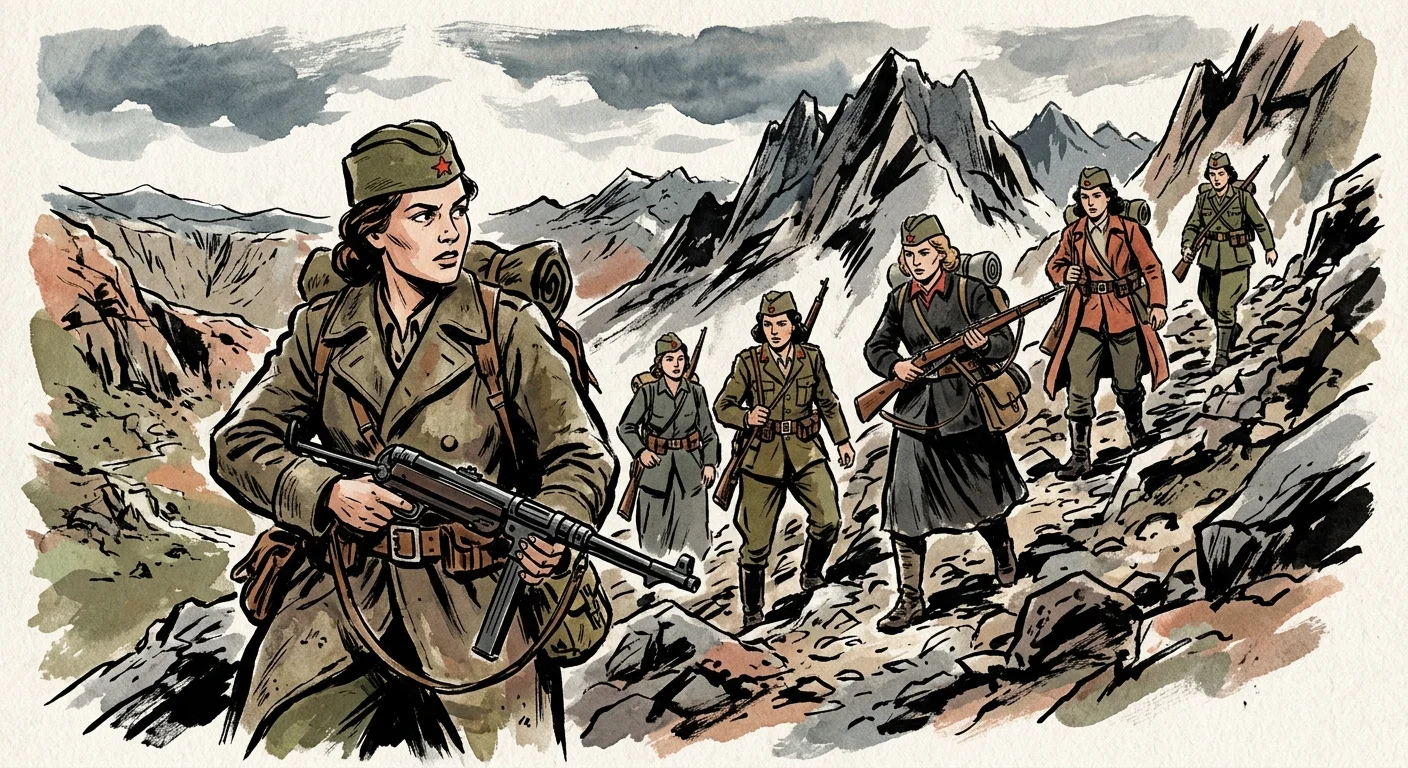
In the Balkan theater, female combatants formed an indispensable foundation of the largest guerrilla resistance movement in occupied Europe. Following the Axis invasion and partition of Yugoslavia in April 1941, Josip Broz Tito established the National Liberation Army, commonly known as the Partisans, to wage asymmetric warfare against German, Italian, and regional collaborationist forces. Unlike Western military establishments that restricted women to non-combat auxiliary roles, the Yugoslav Partisans fully integrated female volunteers into frontline infantry units, artillery crews, and command structures.
Approximately 100,000 women served as active combatants and field medical personnel within Tito’s National Liberation Army during the multi-year conflict. Known as the Partizanke, these women engaged in brutal mountain warfare, enduring harsh winter conditions, chronic supply shortages, and relentless counter-insurgency operations conducted by Axis occupying forces. They carried rifles, threw hand grenades during ambush operations, managed complex supply networks, and extracted wounded comrades under direct enemy mortar fire.
The human cost among female partisans was exceptionally heavy. Historical records document that an estimated 25,000 female partisans died in combat during the war, while another 40,000 sustained severe combat injuries. Demonstrating extraordinary tactical capability, over 2,000 female fighters earned officer ranks within the Partisan military hierarchy, commanding mixed-gender squads and company-level tactical formations across rugged terrain.
The active combat participation of the Partizanke fundamentally transformed traditional social structures across the Balkan region. Before World War II, patriarchal cultural norms severely restricted female political participation and social autonomy. By proving their military effectiveness alongside male guerrillas, female partisans established an unassailable argument for social equality. When Tito’s forces established the Federal People’s Republic of Yugoslavia following the defeat of Axis forces, the newly drafted 1946 constitution granted women full legal equality, equal pay, and full voting rights, proving how wartime frontline service accelerated postwar social restructuring.