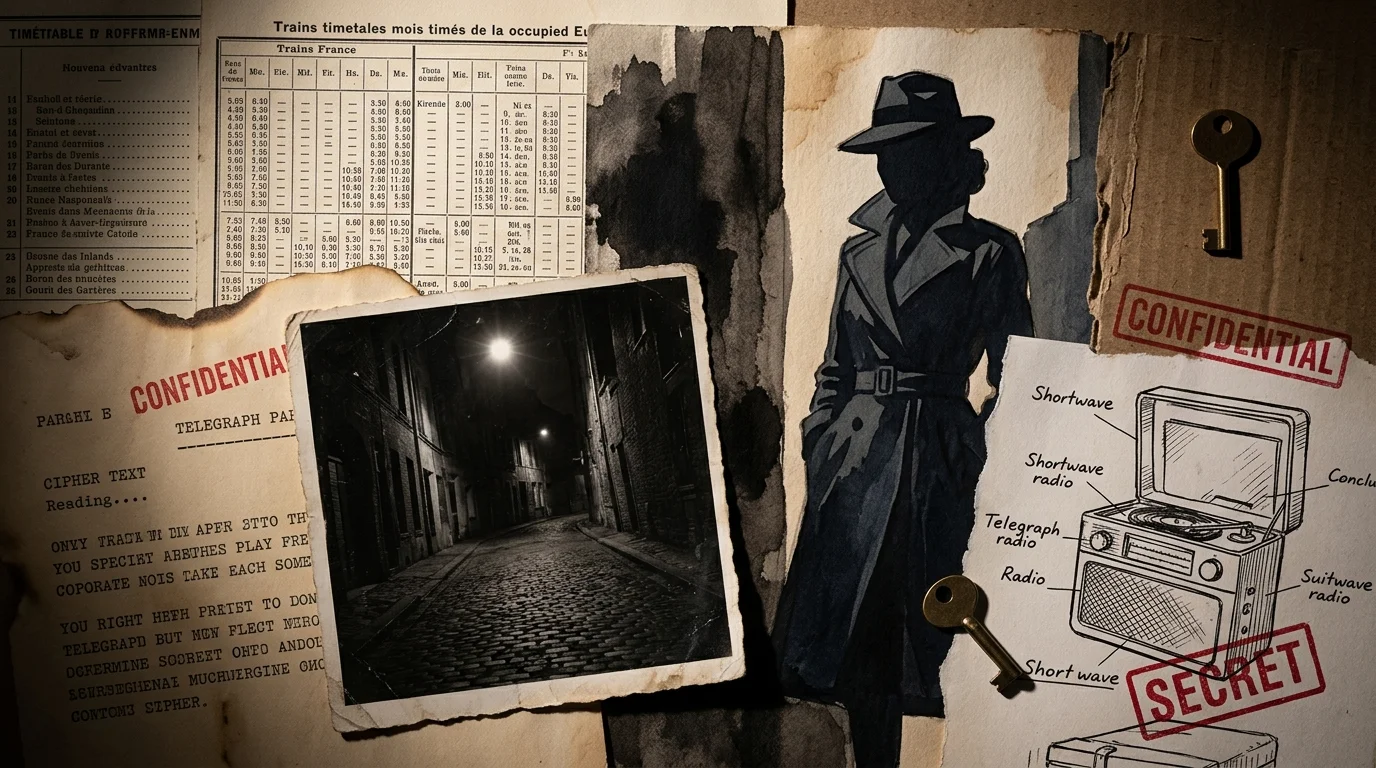
Shadow Warriors: Female Covert Operatives of the British SOE
While Soviet women engaged Axis armies in direct open combat, British intelligence recruited female operatives for high-risk clandestine warfare behind enemy lines. In 1940, Prime Minister Winston Churchill established the Special Operations Executive (SOE) with the explicit directive to coordinate guerrilla warfare and intelligence gathering in Axis-occupied territories. To support operations in Nazi-occupied France, the SOE’s “F Section” deployed 39 (by some historical counts, up to 41) female secret agents to work directly alongside local French Resistance networks between 1942 and 1944.
The decision to deploy female agents stemmed from practical operational necessity. Nazi military authorities and the Gestapo subjected young men in occupied Europe to strict curfews, mandatory labor identification checks, and immediate military roundups. Female operatives, operating as couriers, radio operators, and circuit organizers, moved with greater tactical flexibility. You can trace how these women carried concealed codebooks, radio transmitters, and weapons through heavily guarded checkpoints by posing as local shoppers, farm workers, or sales representatives.
Despite their covert civilian appearance, female SOE operatives assumed extraordinary personal risks. Wireless radio operators faced extreme danger, as German military intelligence operated mobile direction-finding vans (*Peilabschnitt*) capable of pinpointing clandestine radio signals within minutes of transmission. The operational life expectancy of a covert radio operator in occupied Paris averaged less than six weeks. Operatives maintained constant mobility, establishing makeshift transmission locations in attics, farmhouses, and remote rural cottages to evade detection.
Sixteen female SOE agents deployed into France lost their lives during operations, with twelve executed inside Nazi concentration camps after enduring brutal Gestapo interrogations. Agents such as Noor Inayat Khan, an Indian-descended pacifist and musician who served as the first female wireless operator sent into occupied France, maintained operational communications in Paris despite widespread arrests within her network. Captured after betrayal in late 1943, she refused to divulge encryption keys or operational details under torture and was ultimately executed at Dachau concentration camp in September 1944.
Other agents, such as Violette Szabo and Nancy Wake, demonstrated tactical combat leadership during underground engagements. Szabo organized sabotage missions against German supply lines near Limoges following the Normandy landings before being captured during an armed firefight; she was executed at Ravensbrück concentration camp in early 1945. Nancy Wake, nicknamed “The White Mouse” by the Gestapo due to her evasive skill, commanded thousands of French Maquis resistance fighters in the Auvergne region, orchestrating raids on Gestapo headquarters and sabotaging industrial production lines. Their intelligence gathering and direct sabotage operations significantly disrupted Axis troop movements during critical Allied land offensives.