When you examine World War II through traditional history textbooks, you often discover narratives focused exclusively on male combatants at the front and women filling industrial roles on the home front. Yet hundreds of thousands of female service members breached the traditional boundaries of combat, espionage, and aviation to active battlefields across Europe, Asia, and the Pacific. You will discover that women did not merely support the war effort from afar; they flew combat sorties, executed covert intelligence missions behind enemy lines, sniper-targeted Axis officers, and commanded frontline medical units under artillery fire. Understanding their direct combat and covert contributions fundamentally transforms how you view twentieth-century military history and gender dynamics during global total war.
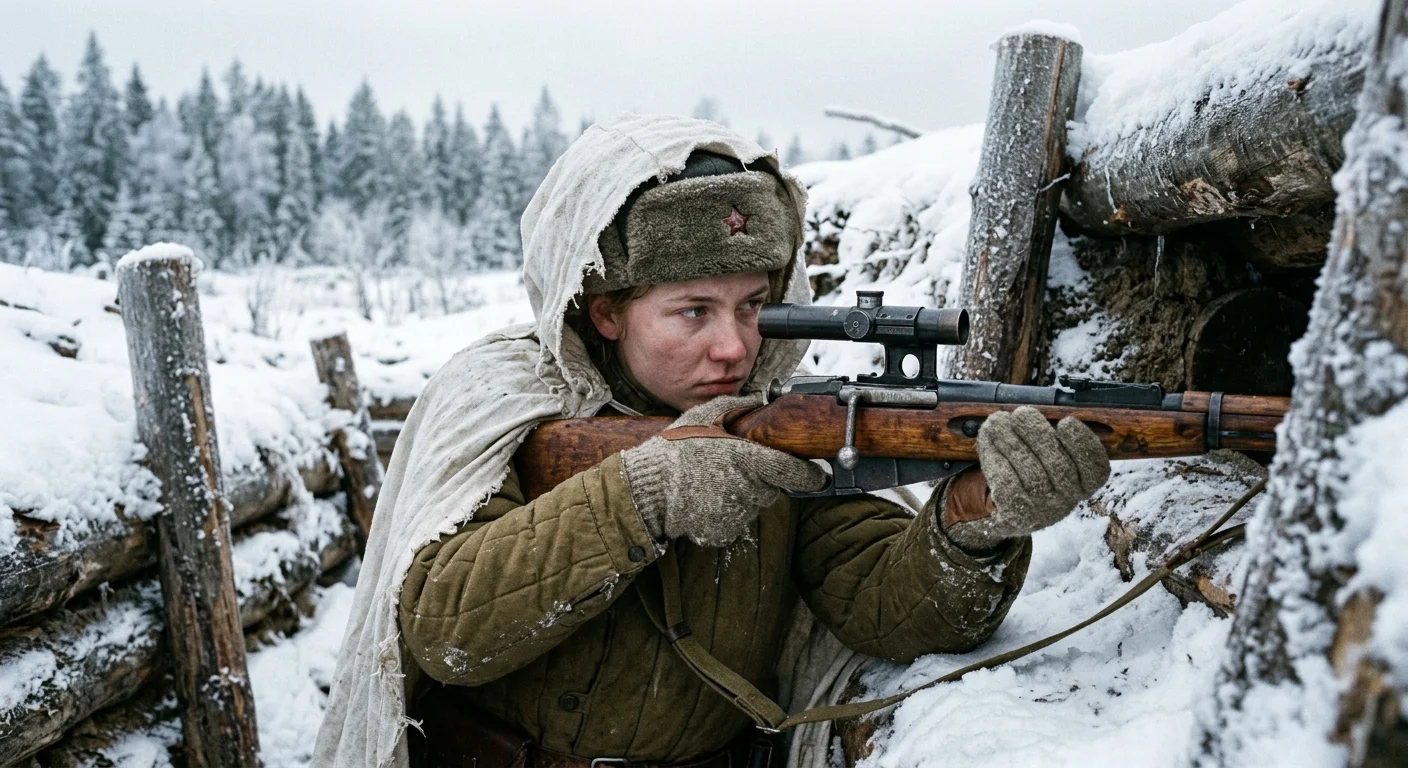
Soviet Combat Integration: Women on the Eastern Front Line
When Nazi Germany launched Operation Barbarossa in June 1941, the Soviet Union faced immediate existential destruction. The Red Army sustained massive troop casualties in the opening months of the invasion, forcing Soviet leadership to take unprecedented steps regarding military personnel. The Soviet Union became the only major power during World War II to systematically recruit, train, and deploy women directly into active frontline combat roles. Approximately 800,000 Soviet women entered the Red Army between 1941 and 1945; they took up arms as infantry snipers, fighter and bomber pilots, tank commanders, machine gunners, and frontline combat medics.
Among the most formidable female combatants was Lyudmila Pavlichenko, an history student from Kyiv who volunteered for military service immediately following the Axis invasion. Assigned to the Red Army’s 25th Rifle Division, Pavlichenko underwent specialized marksman training and deployed to the sieges of Odessa and Sevastopol. Armed with a Mosin-Nagant bolt-action rifle, she recorded 309 confirmed kills between 1941 and 1942, including 36 enemy snipers, making her the deadliest female sniper in recorded military history. After sustaining mortar shrapnel wounds in June 1942, Soviet command pulled her from combat duty to utilize her strategic prestige. She toured the United States to build political backing for an Allied second front in Europe, becoming the first Soviet citizen received by a sitting U.S. President, Franklin D. Roosevelt. During her tour, she directly challenged Western skepticism regarding female military capability, asking crowds in Chicago how long they intended to hide behind her back.
In the air, Soviet female aviators shattered conventional aviation limits through specialized combat formations. In October 1941, Joseph Stalin ordered the creation of three all-female military aviation regiments following persistent campaign efforts by Major Marina Raskova, a celebrated Soviet navigator. The most famous of these units, the 588th Night Bomber Regiment, conducted low-altitude night raids against German encampments and supply depots. The aviators flew obsolete, wood-and-canvas Polikarpov Po-2 biplanes—aircraft originally designed for crop dusting and pilot instruction—that offered zero armor protection against anti-aircraft fire or freezing weather conditions.
To carry out successful bombing runs without alerting enemy radar or ground spotters, these aviators throttled their engines near targets and glided silently through the darkness before releasing their explosive payloads. The distinct rustling sound made by their canvas wings reminded German soldiers of sweeping broomsticks, leading Axis troops to nickname them Nachthexen, or the “Night Witches.” The unit flew over 24,000 combat sorties and dropped more than 3,000 tons of explosives during the war, with many pilots completing up to eighteen bombing runs in a single night. Dozens of these aviators earned the highest military distinction of Hero of the Soviet Union.
Soviet women also demonstrated tactical leadership within armored divisions. Mariya Oktyabrskaya, whose husband died fighting on the Eastern Front in 1941, sold her personal belongings to fund the construction of a T-34 medium tank. She donated the armored vehicle to the Red Army under the strict condition that she command and drive it into battle. Naming her tank the “Fighting Girlfriend,” Oktyabrskaya served with distinction in heavy combat maneuvers, repeatedly repairing her damaged tank treads while under heavy machine-gun fire before sustaining fatal combat injuries in early 1944. Her tactical bravery earned her posthumous recognition as a Hero of the Soviet Union, illustrating how women served on the frontlines of armored warfare.