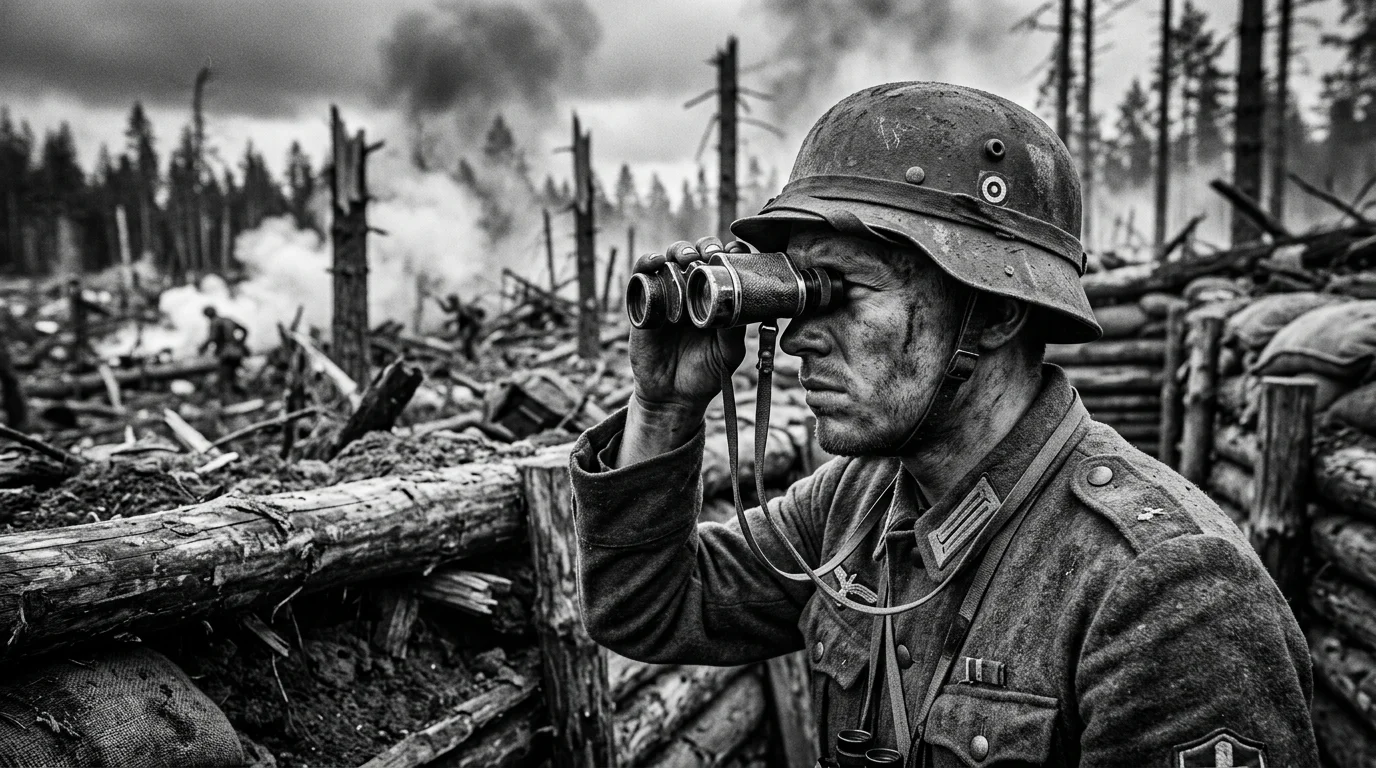
The Battle of Tali-Ihantala: Preserving Nordic Sovereignty
In June 1944, as Western Allies landed in Normandy, Soviet dictator Joseph Stalin launched a massive strategic offensive on the Karelian Isthmus to knock Finland out of World War II once and for all. Fought between June 25 and July 9, 1944, near the Finnish town of Viipuri, the Battle of Tali-Ihantala became the largest land battle ever fought in Nordic history. Approximately 50,000 Finnish soldiers faced an overwhelming Red Army force of roughly 150,000 troops, supported by massive armor columns, heavy artillery concentrations, and hundreds of combat aircraft.
Finnish commander Lieutenant General Karl Lennart Oesch reorganized defensive lines around the narrow lakes and forests of Ihantala. Utilizing newly delivered German handheld anti-tank weapons like the Panzerfaust, Finnish infantry destroyed dozens of Soviet tanks at close range. Simultaneously, Finnish artillery experts coordinated unprecedented concentrated artillery fire, firing thousands of precise shells into Soviet assembly areas within minutes. Crucial air support provided by Gefechtsverband Kuhlmey—a specialized German Luftwaffe detachment—helped break up Red Army armored formations before they could penetrate Finnish defensive positions.
Despite sustaining nearly 8,750 casualties, Finnish forces successfully repulsed the Soviet offensive, inflicting over 27,500 casualties on the Red Army and destroying hundreds of Soviet tanks. Realizing that conquering Finland would require immense military resources needed for the final race to Berlin, Stalin abandoned his goal of unconditional Finnish surrender and total occupation. The tactical defensive victory at Tali-Ihantala allowed Finland to negotiate an armistice under relatively favorable terms, preserving its national sovereignty, democratic system, and economic independence throughout the Cold War era.