The Battle of Drøbak Sound: A Fortress Saves a Nation’s Treasury
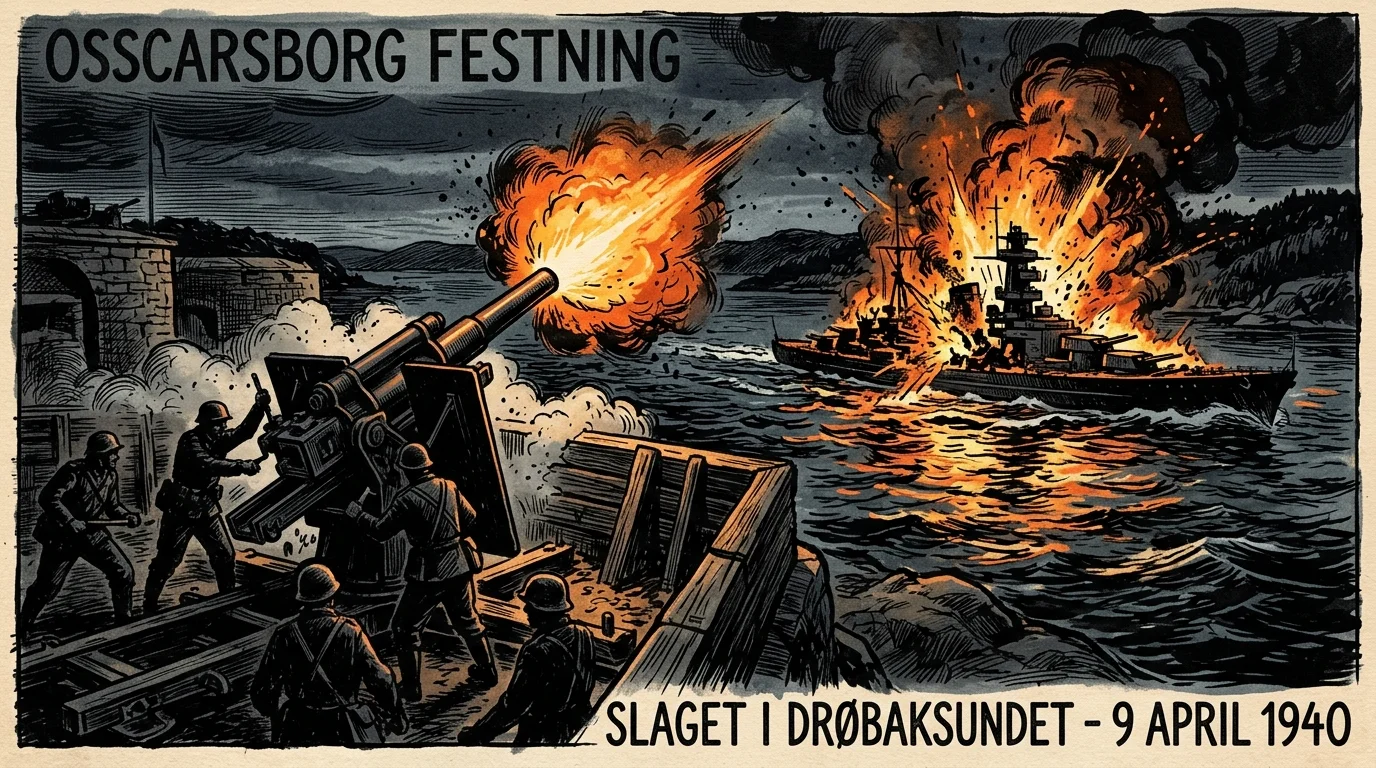
In the early morning hours of April 9, 1940, Nazi Germany launched Operation Weserübung, a surprise invasion designed to secure Norway’s coastline and vital shipping lanes. As the German naval task force steamed up the narrow Oslofjord to capture the Norwegian capital, they encountered Oscarsborg Fortress at Drøbak Sound. The fortress commander, 64-year-old Colonel Birger Eriksen, faced an agonizing decision without clear orders from high command. Armed only with 40-year-old main artillery pieces manufactured by Krupp and underwater torpedo batteries dating back to 1900, Eriksen chose to fire upon the approaching warships.
Eriksen famously commanded his gunners to hold their fire until the enemy flagship, the modern heavy cruiser Blücher, reached point-blank range. At under 2,000 meters, the fortress opened fire, striking the heavy cruiser with heavy artillery shells that ignited onboard aviation fuel and ammunition stores. As the damaged ship drifted down the fjord, Norwegian hidden torpedo batteries launched two land-based torpedoes, striking the cruiser and causing catastrophic internal explosions. The Blücher capsized and sank, taking between 600 and 1,000 German soldiers, naval personnel, and Gestapo administrative officials down with it.
This localized tactical triumph produced enormous geopolitical consequences for the Allied cause. Sinking the invasion fleet’s vanguard delayed the German capture of Oslo by roughly fourteen critical hours. That brief window allowed King Haakon VII, the Norwegian cabinet, and parliamentary leaders to evacuate the capital via train, taking Norway’s entire national gold reserves with them. The Norwegian government successfully established a government-in-exile in London, ensuring that Norway’s massive merchant navy remained committed to supporting Allied logistical supply lines throughout the war.