The Battle of Narvik: Striking Germany’s Iron Supply
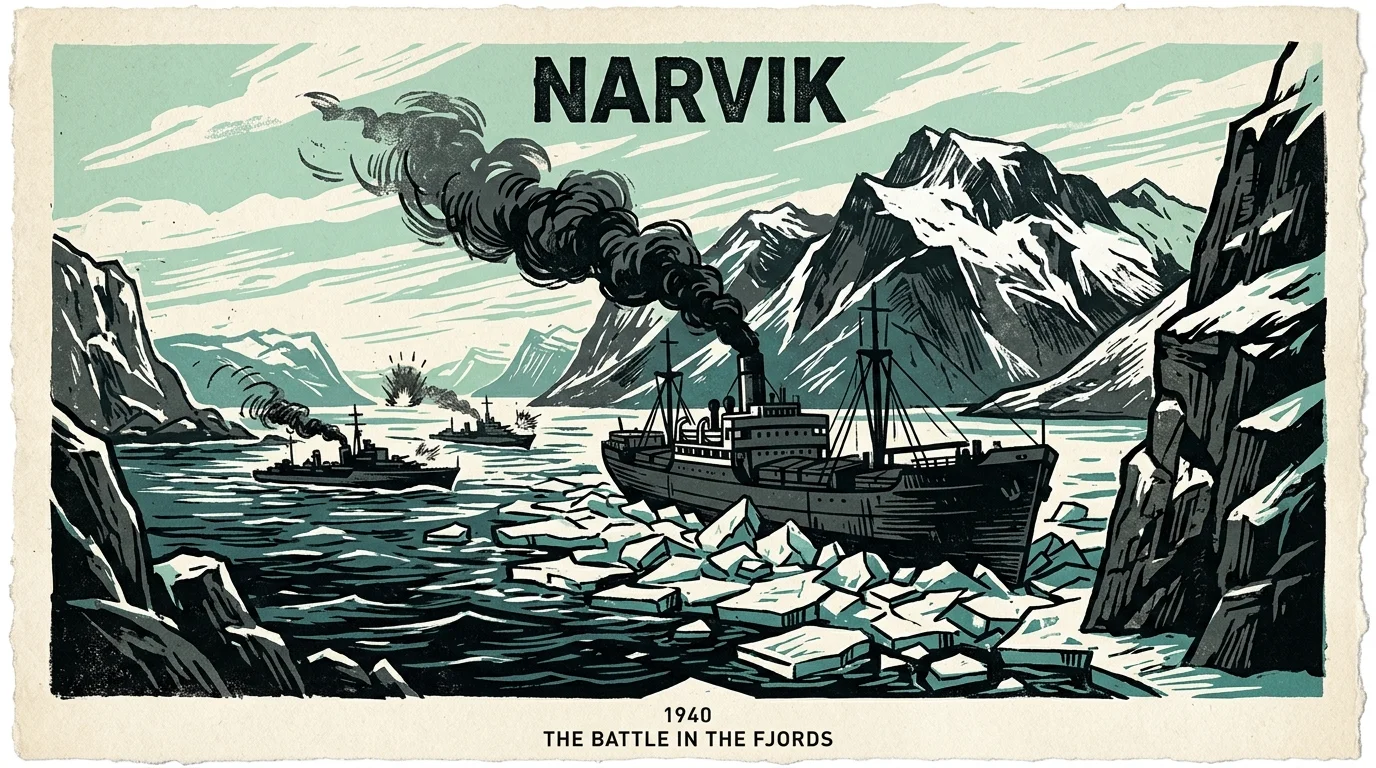
Fought between April 9 and June 8, 1940, the Battle of Narvik unfolded around an isolated ice-free port in northern Norway. Narvik possessed immense strategic value because Swedish iron ore—essential for German steel production and war manufacturing—was transported through its harbor during winter months. Recognizing this vulnerability, British and French forces intervened to seize the port and cut off Nazi access to Swedish raw materials. The battle quickly evolved into a ferocious, multi-phased conflict combining naval bombardments, amphibious landings, and mountain warfare across brutal Arctic terrain.
In two dramatic naval engagements, the British Royal Navy sailed into the narrow fjords surrounding Narvik and systematically engaged the German fleet. British warships sank ten modern German destroyers—representing nearly half of the Kriegsmarine’s total destroyer fleet—alongside several support vessels. On land, a combined Allied force of approximately 24,500 British, French, Polish, and Norwegian troops squeezed roughly 5,600 German mountain infantry and stranded naval crews into narrow footholds along the Swedish border, ultimately capturing Narvik in late May 1940.
The Battle of Narvik delivered the Allies their first major land victory against German forces during World War II, proving that Hitler’s Wehrmacht was not invincible. Though the rapid collapse of France forced Allied commanders to evacuate Narvik in early June, the victory produced lasting naval consequences. The destruction of so many German destroyers severely crippled the Kriegsmarine’s surface capabilities, leaving Nazi Germany without sufficient naval escort vessels to execute Operation Sea Lion—the planned invasion of Great Britain—later that summer.