The Battles of Kohima and Imphal: The Turning Point in South Asia
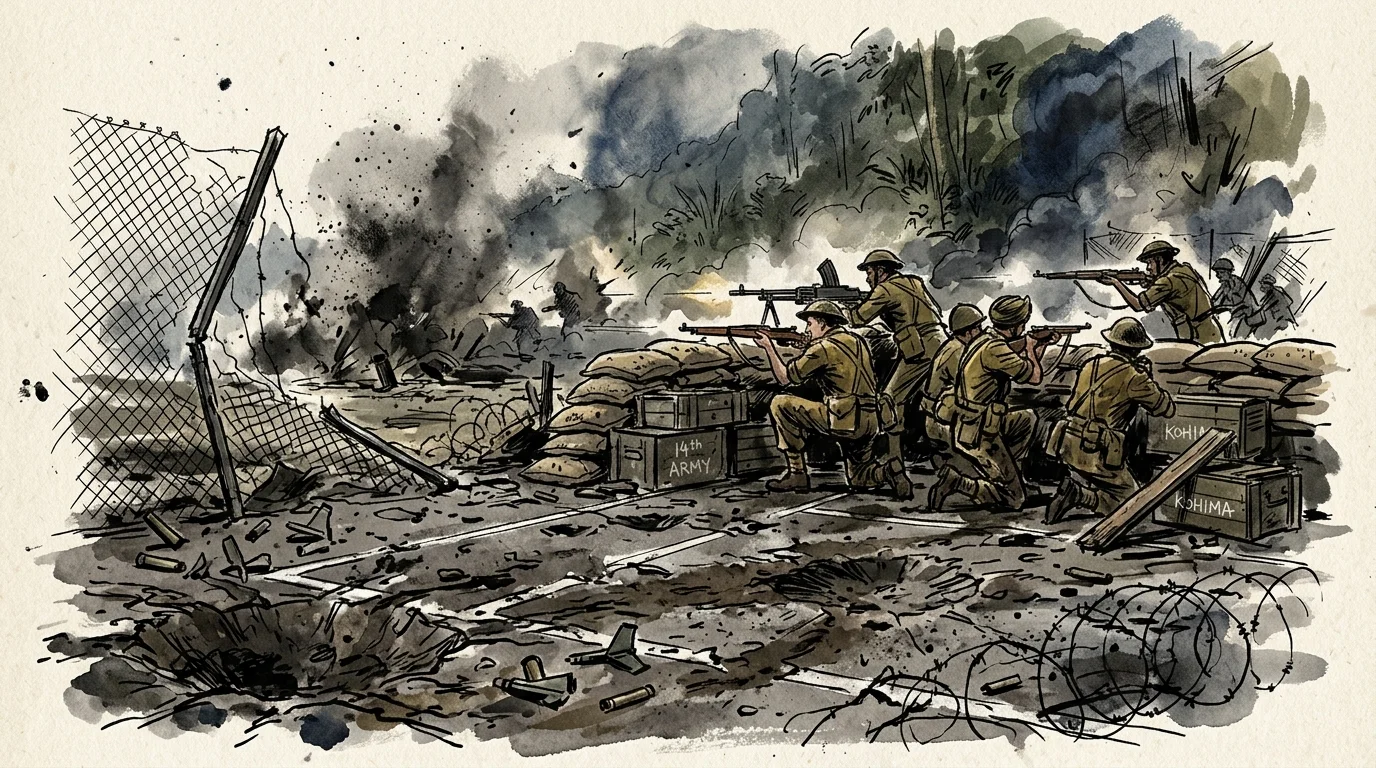
Between March 8 and July 18, 1944, Imperial Japanese forces launched Operation U-Go, a massive invasion aimed at pushing across the Burmese border into northeast India to cut off Allied supply routes to China and ignite an anti-British uprising. The offensive concentrated on two key mountain towns: Imphal and Kohima. At Kohima, a small garrison of around 1,500 Allied troops held off nearly 15,000 Japanese soldiers during a brutal three-week siege. The fighting degenerated into point-blank hand-to-hand combat across the deputy commissioner’s tennis court, with soldiers throwing grenades across the court lines in ferocious exchanges.
Supported by aerial supply drops organized by the U.S. Army Air Forces, the British Fourteenth Army—comprising over 120,000 troops, nearly 85 percent of whom were recruited from India—gradually broke the Japanese siege at Kohima and relieved the encircled forces at Imphal. Japanese commander Renya Mutaguchi refused to authorize a retreat despite severe supply shortages, leaving his troops exposed to torrential monsoon rains, tropical diseases, and total starvation. When Japanese forces finally retreated, they had suffered between 53,000 and 55,000 casualties—the worst land defeat in Imperial Japanese military history up to that date—while Allied casualties stood at approximately 16,500.
Voted by Britain’s National Army Museum as Britain’s Greatest Battle, the twin victories at Kohima and Imphal marked the definitive turning point of the Burma Campaign. The catastrophic failure of Operation U-Go completely destroyed the offensive capability of the Imperial Japanese Army in Southeast Asia. This decisive Allied triumph paved the way for the subsequent reconquest of Burma, secured vital air transport corridors over “The Hump” to China, and demonstrated the remarkable combat capability of multinational Commonwealth forces battling in extreme jungle environments.