9. The Zoot Suit Riots of 1943
The domestic front during World War II is generally remembered as an era of total national unity, characterized by victory gardens, war bonds, and Rosie the Riveter. But simmering beneath the patriotic surface were deep racial divisions that periodically exploded into violence. One of the most glaring examples is the Zoot Suit Riots, a series of racially motivated attacks that paralyzed Los Angeles in June 1943.
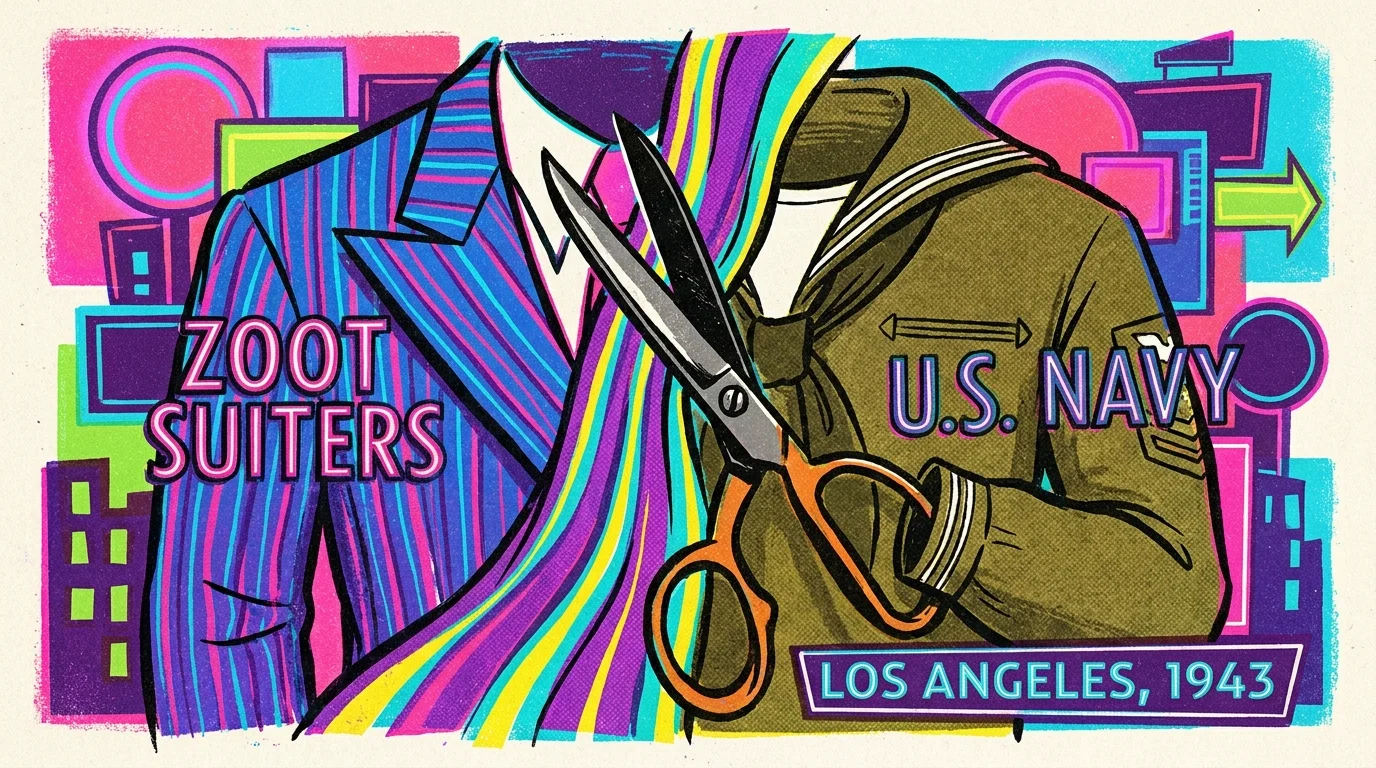
At the time, many young Mexican American men—often calling themselves pachucos—wore zoot suits. These outfits featured broad-shouldered coats and high-waisted, wide-legged trousers that tapered tightly at the ankles. Because the US War Production Board had implemented strict fabric rationing, white civic leaders viewed the excessive fabric of the zoot suits as an unpatriotic middle finger to the war effort. In reality, the outfits represented a form of cultural rebellion and identity.
Tensions flared when thousands of white servicemen stationed in Southern California began hunting down young Mexican Americans, African Americans, and Filipino Americans wearing the suits. Mobs of sailors and soldiers dragged teenagers out of movie theaters and diners, savagely beating them and publicly stripping them of their clothes while local police looked the other way or arrested the victims instead of the attackers.
The riots lasted for over a week until the military brass, fearing international embarrassment and pressure from the Mexican government, confined all sailors to their barracks. The Zoot Suit Riots expose the intense xenophobia operating within American borders even as the nation fought fascism abroad, fundamentally shaping the trajectory of the Chicano civil rights movement.