Every time you cast a ballot, benefit from a federal workplace safety regulation, or exercise a fundamental civil right, you interact directly with the legacy of executive power. The story of the United States is frequently told through the lens of its broad social movements and sweeping cultural shifts; however, individual choices made in the Oval Office have repeatedly altered the nation’s trajectory in a matter of hours. Understanding presidential decisions history requires you to look beyond the mythology of the men who held the office and examine the immense weight of the choices they made when faced with constitutional crises, economic ruin, or moral imperatives.
These turning points reveal how leaders wielding immense authority either stretched their constitutional bounds or restrained themselves for the greater good of the republic. You will find that the American presidents impact stretches far beyond their four or eight years in office. Their most daring moves established precedents that govern your life today. By exploring this unique facet of US political history, you can trace the direct lines from past executive orders and signed legislation to the contemporary debates surrounding government overreach, foreign policy, and civil rights. The following chapters detail eight pivotal choices that fundamentally shaped modern America, transforming abstract ideals into the concrete realities of the nation you know today.
George Washington and the Precedent of the Peaceful Transfer of Power (1796)
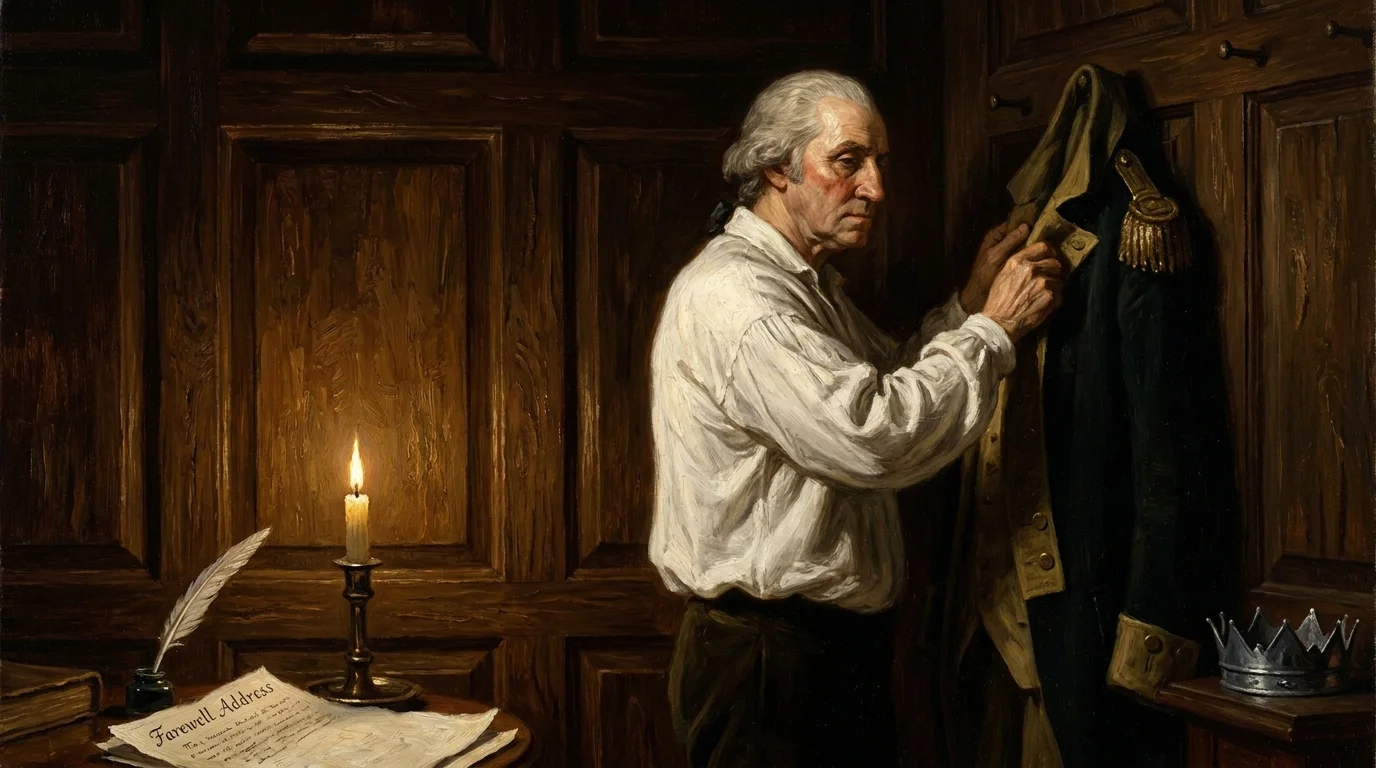
You cannot fully grasp the uniqueness of the American democratic experiment without returning to its infancy, when the very concept of a republic remained fragile. In 1796, George Washington made a decision that astonished the western world: he willingly surrendered immense power. Following the Revolutionary War, Washington possessed the personal popularity and military loyalty necessary to rule for life. Many of his contemporaries, accustomed to the European model of lifelong monarchs, expected him to hold the presidency until his death. Instead, Washington walked away, setting a precedent that became the cornerstone of American democracy.
On September 19, 1796, Americans opened the American Daily Advertiser to read a profound document—Washington’s Farewell Address. In this text, Washington did not merely announce his retirement; he issued a stark warning against the destructive nature of geographical divisions and political factions. He urged the young nation to maintain its unity and avoid the pitfalls of permanent foreign alliances. By stepping down after two terms, Washington established an unwritten rule of executive restraint that lasted for over a century and a half, ultimately codified into law with the 22nd Amendment in 1951.
This early example of US political history demonstrated that the office of the presidency was greater than any single individual. The peaceful transfer of power—a concept that seems routine to you today—was a radical innovation in the late eighteenth century. Washington’s decision proved that a government could endure a change in leadership without collapsing into civil war or succumbing to a dictatorship. He laid the psychological and legal groundwork for an enduring republic, ensuring that authority flowed from the electorate rather than the force of an individual personality.