2. The New York Slave Revolt of 1712
When you learn about the early days of American slavery, the curriculum generally focuses on southern plantations. But colonial New York relied heavily on the brutal exploitation of enslaved Africans to build its infrastructure. By the early 18th century, enslaved individuals accounted for roughly twenty percent of New York City’s population. Operating in a dense urban environment allowed these oppressed individuals to communicate across households, paving the way for one of the earliest organized uprisings in American history.
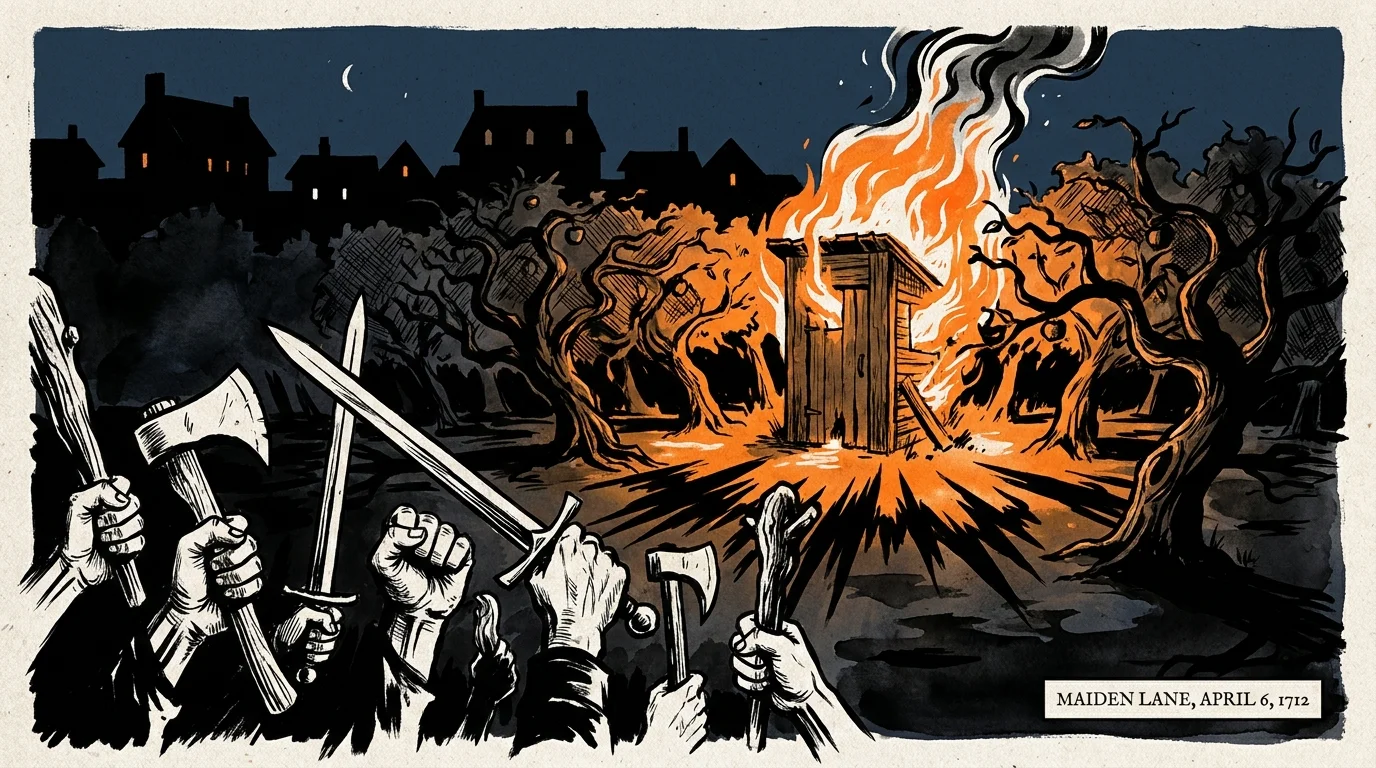
On the night of April 6, 1712, a group of twenty-three enslaved Africans gathered in an orchard near Maiden Lane in Manhattan. They set fire to an outhouse, using the blaze as bait. When white colonists rushed to extinguish the fire, the rebels ambushed them with guns, hatchets, and swords, killing nine men and injuring several others. The colonial militia quickly crushed the rebellion, capturing the insurgents who had fled into the surrounding woods.
The retaliation was swift and merciless. Colonial authorities executed twenty-one of the rebels through hanging, burning at the stake, and the breaking wheel. More significantly, the revolt fundamentally altered the legal landscape of the colony. New York lawmakers enacted harsh slave codes that stripped away the few remaining liberties held by Black residents. The new laws strictly prohibited enslaved people from gathering in groups of more than three, carrying firearms, or playing games of chance. Understanding this revolt is crucial; it demonstrates the fierce spirit of resistance among enslaved people while illustrating how early American lawmakers weaponized legislation to maintain racial control.