
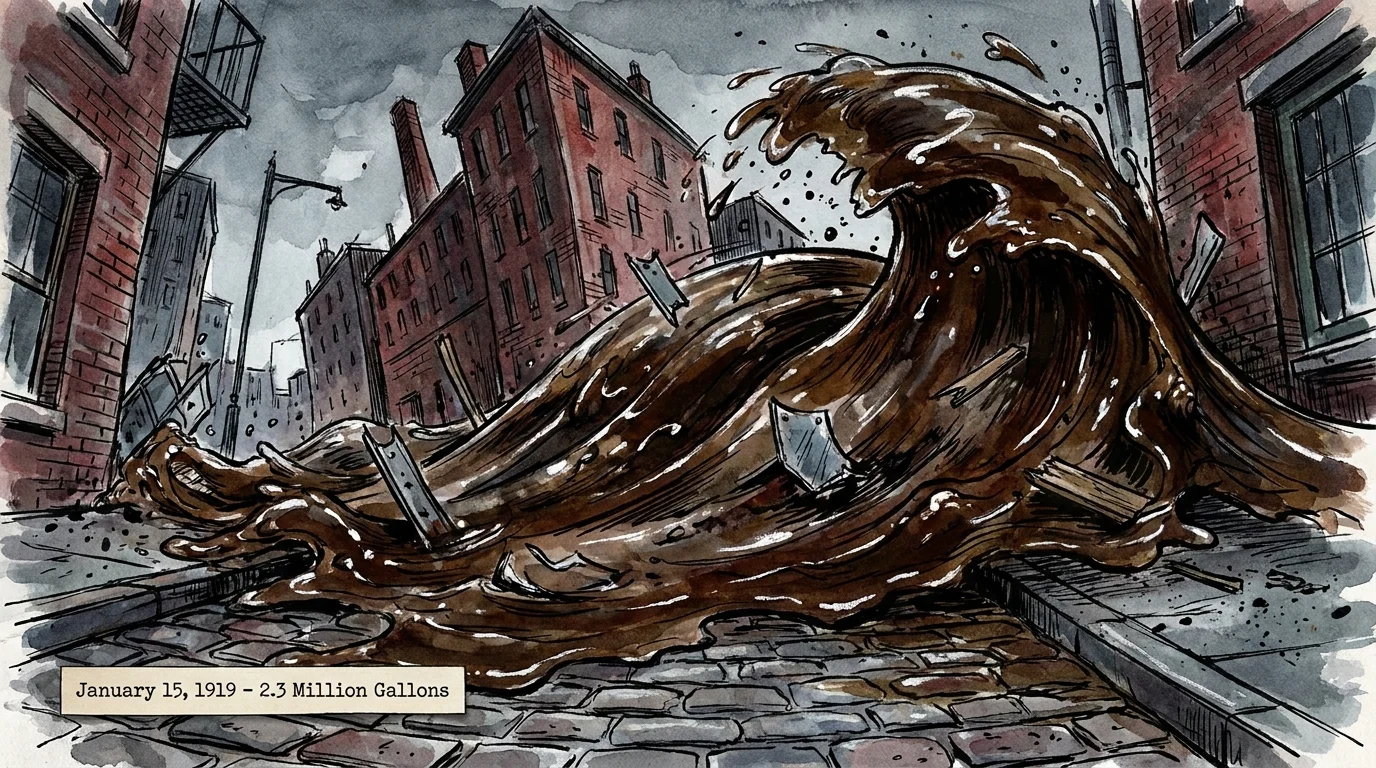
6. The Great Molasses Flood of 1919
It sounds like the setup to a joke, but the Great Molasses Flood was one of the most gruesome and highly consequential industrial disasters of the early 20th century. On January 15, 1919, the North End neighborhood of Boston experienced a catastrophe that reshaped American construction regulations and corporate liability.
The Purity Distilling Company operated a massive, 50-foot-tall steel storage tank holding 2.3 million gallons of molasses. The company used the sticky substance to ferment industrial alcohol for munitions manufacturing. To save money, the corporation severely cut corners during construction. The tank was built with thin, brittle steel and inadequate rivets. When an unusual winter warm spell hit Boston, the molasses inside fermented rapidly, increasing the internal pressure.
Around 12:30 PM, the tank burst. The rupture unleashed a 25-foot-high tidal wave of thick, brown sludge moving through the streets at 35 miles per hour. The sheer physical force of 11,900 tons of molasses snapped steel elevated railway girders, crushed homes, and drowned horses. Twenty-one people died, and over 150 suffered terrible injuries as they suffocated in the hardening syrup.
The disaster triggered a massive, multi-year civil lawsuit. The court ultimately found the corporation liable for the structural failures. This ruling served as a pivotal worked mini-example in legal history; it established the standard that engineers must possess specific professional certifications to approve structural blueprints, and it cemented the precedent that corporations could be held financially accountable for criminal negligence.