10. The Occupation of Alcatraz in 1969
Alcatraz Island is globally famous as a grim federal penitentiary that once housed Al Capone. But after the prison closed, the island served as the staging ground for an unprecedented act of indigenous defiance. For 19 months, a group of Native American activists reclaimed the rocky outpost, dramatically shifting the course of federal Native American policy.
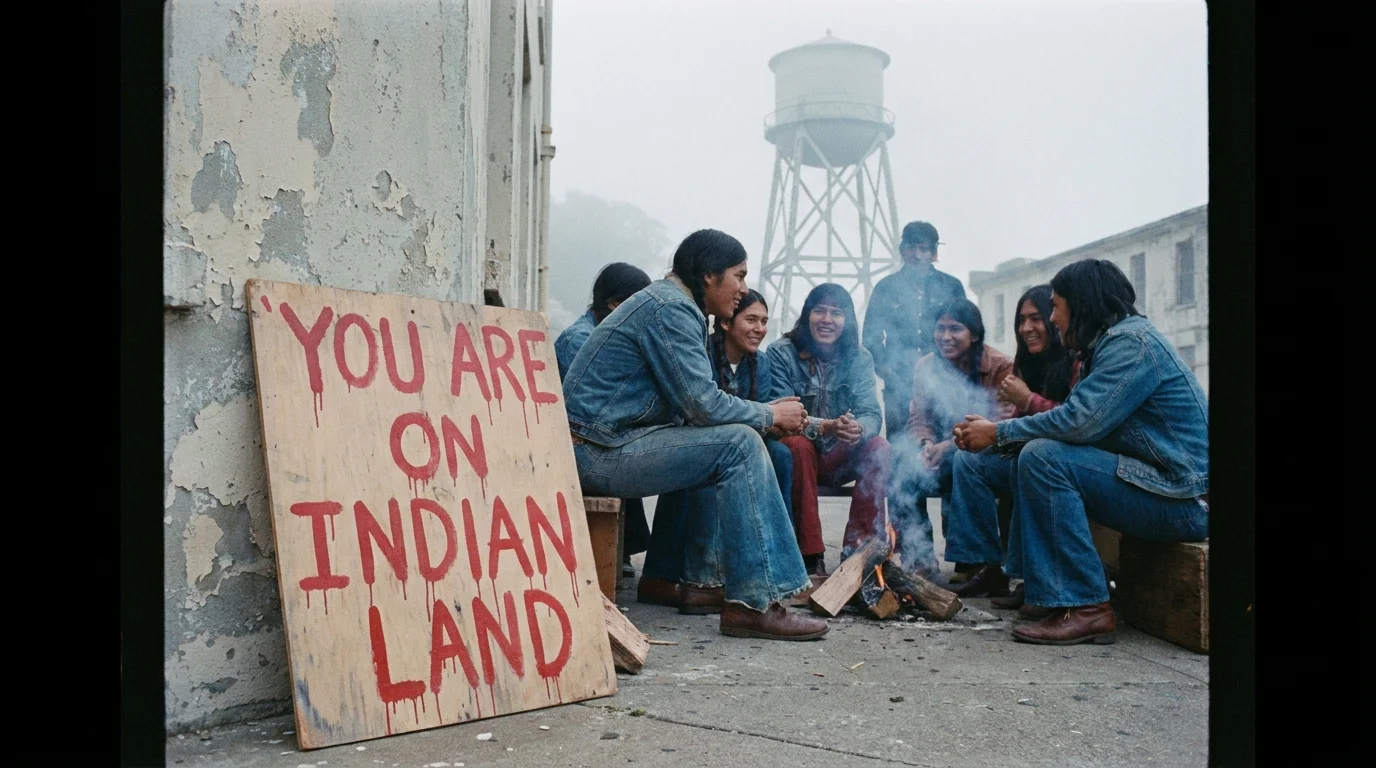
On November 20, 1969, a group calling themselves Indians of All Tribes sailed across the San Francisco Bay and occupied Alcatraz. Led by activists like Richard Oakes, the group cited the Treaty of Fort Laramie (1868), which stated that all out-of-use federal land should revert to native peoples. The occupiers painted signs demanding “Indian Property” and issued a brilliant, satirical proclamation addressed to “The Great White Father.” They offered to buy Alcatraz for 24 dollars in glass beads and red cloth—the same price supposedly paid by Dutch settlers for Manhattan island.
Living conditions on the island were brutal. The occupiers had no fresh water or electricity, relying on supply drops from sympathizers on the mainland. Despite the harsh realities, hundreds of indigenous people from various tribes traveled to the island to participate. The occupation garnered massive media attention, forcing the American public to confront the government’s horrific legacy of broken treaties and forced assimilation.
Although federal marshals eventually removed the last holdouts in June 1971, the occupation was a monumental success in the long run. It sparked the modern Native American civil rights movement. In direct response to the political pressure generated by the protest, President Richard Nixon officially ended the devastating federal policy of tribal termination and signed laws returning millions of acres of sacred land to various indigenous tribes.