4. The Deadly Peshtigo Fire of 1871
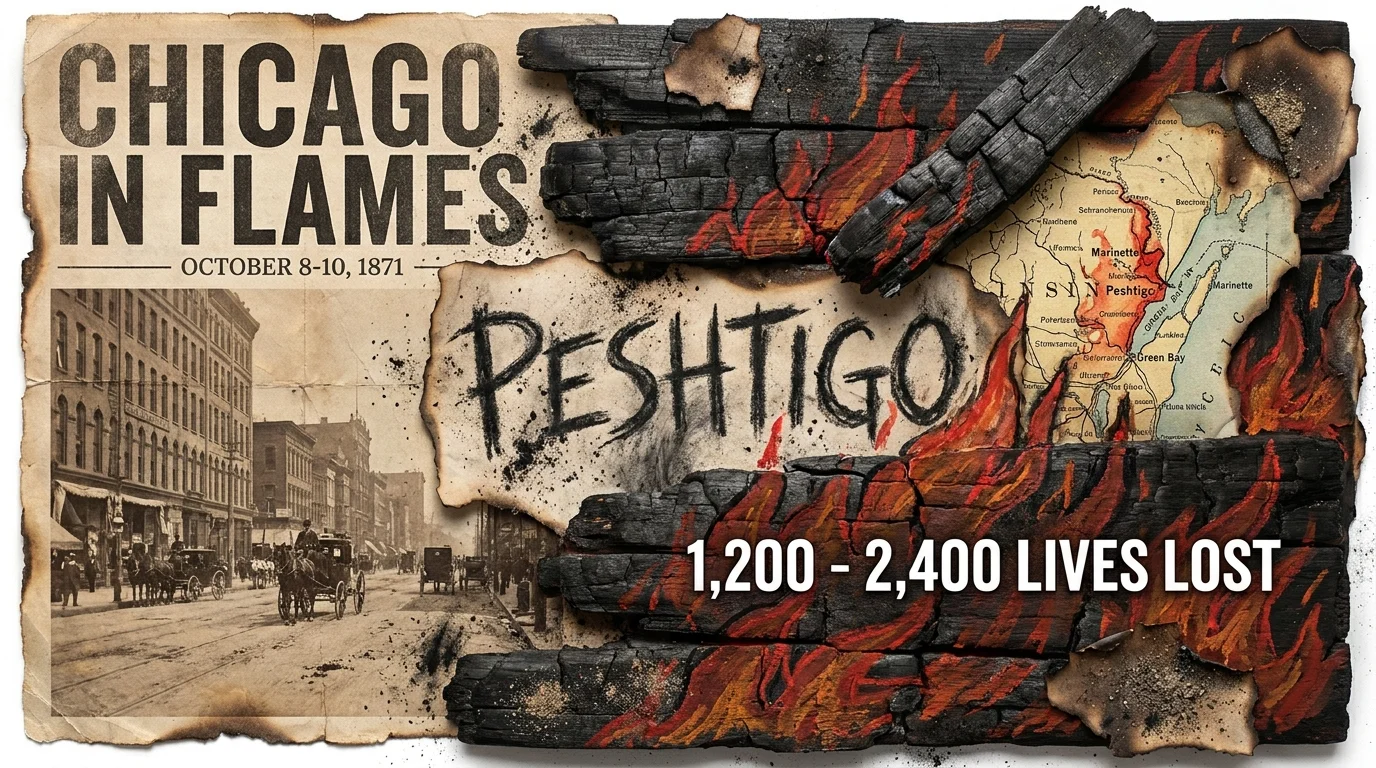
If you ask anyone about the greatest fire in American history, they will likely point to the Great Chicago Fire of October 1871. However, on the exact same night that Chicago burned, an infinitely more destructive inferno annihilated the logging town of Peshtigo, Wisconsin. The Peshtigo Fire remains the deadliest wildfire in American history, yet it has been almost entirely eclipsed by the tragedy in Illinois.
During the late 19th century, industrial logging operations in Wisconsin used reckless slash-and-burn tactics to clear land. They left massive piles of brush and sawdust baking under the sun during a severe autumn drought. On October 8, 1871, a strong weather front moved in, bringing gale-force winds. The scattered brush fires suddenly merged into a massive firestorm—a phenomenon that generates its own weather system, acting like a natural atomic bomb.
A wall of flame moving at roughly 110 miles per hour descended upon Peshtigo. The heat was so intense that it turned sand into glass and caused railcars to spontaneously combust. Desperate residents threw themselves into the freezing Peshtigo River to survive, splashing water on their heads as the flames sucked the oxygen directly from the air. When the smoke finally cleared, the fire had consumed 1.2 million acres of land and wiped out a dozen communities. An estimated 1,500 to 2,500 people lost their lives, dwarfing the 300 casualties of the Chicago Fire. This tragedy serves as a grim warning about the environmental costs of unchecked industrial expansion.