7. The Polio Vaccine: Conquering a Summer Terror
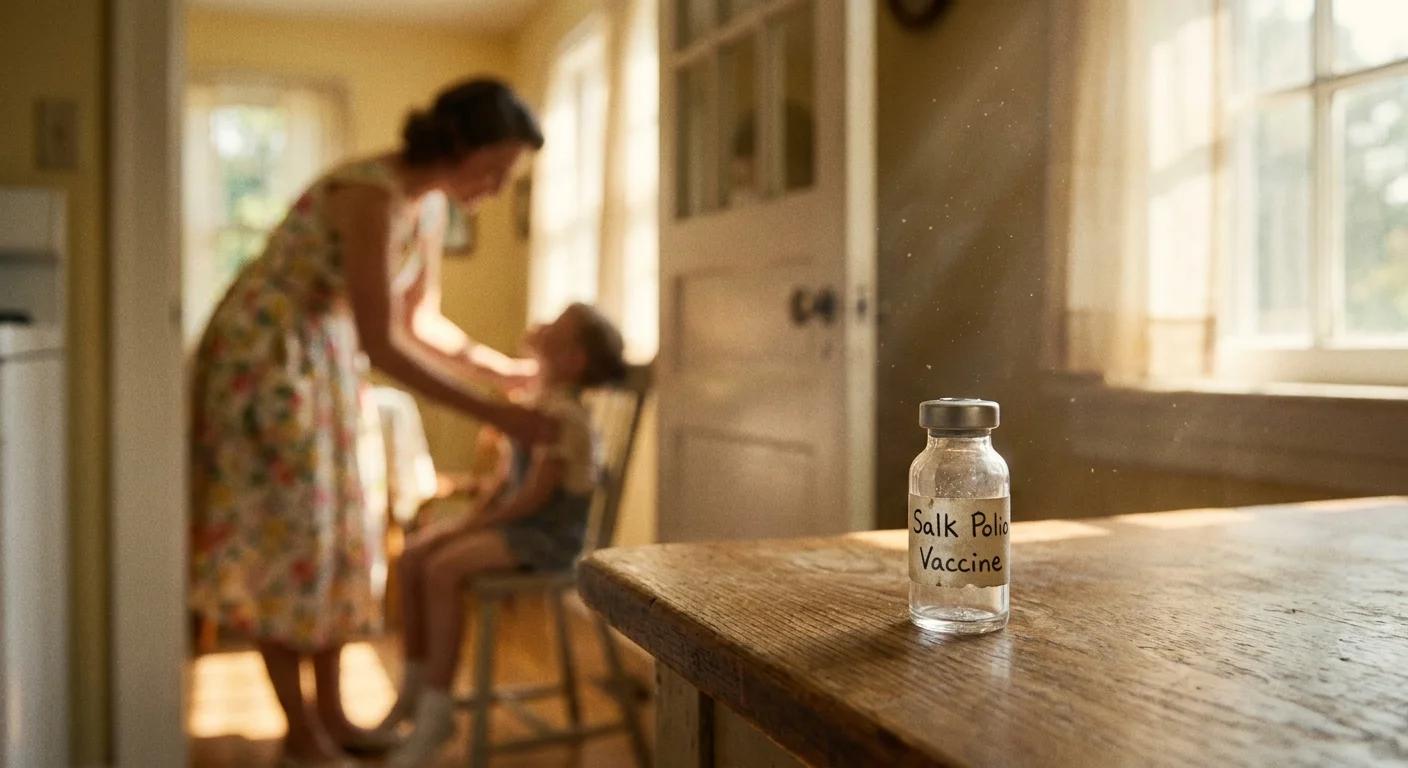
To understand the monumental impact of Dr. Jonas Salk’s polio vaccine, you must first understand the intense climate of fear that gripped mid-20th century America. Polio, or infantile paralysis, was a terrifying viral disease that struck primarily during the summer months. It paralyzed tens of thousands of children, leaving many confined to massive metal breathing machines known as iron lungs. Swimming pools were drained, movie theaters were shuttered, and parents kept their children indoors, terrified of an invisible enemy.
Funded by the March of Dimes—a grassroots charity fueled by the small donations of millions of ordinary Americans—Dr. Jonas Salk developed a vaccine using a killed version of the polio virus. In 1954, Salk launched one of the largest public health experiments in history. Over 1.8 million children, known as “Polio Pioneers,” participated in the double-blind trials.
On April 12, 1955, the results were broadcast across the nation: the vaccine was safe, effective, and potent. Church bells rang out, factory whistles blew, and people wept in the streets. When journalist Edward R. Murrow asked Salk who owned the patent to the vaccine, Salk delivered one of the most famous quotes in medical history: “Well, the people, I would say. There is no patent. Could you patent the sun?” By making the vaccine freely available, Salk helped eradicate polio from the United States by 1979, proving that scientific innovation combined with public goodwill could conquer humanity’s oldest plagues.