3. The Telephone: Voices Across the Void
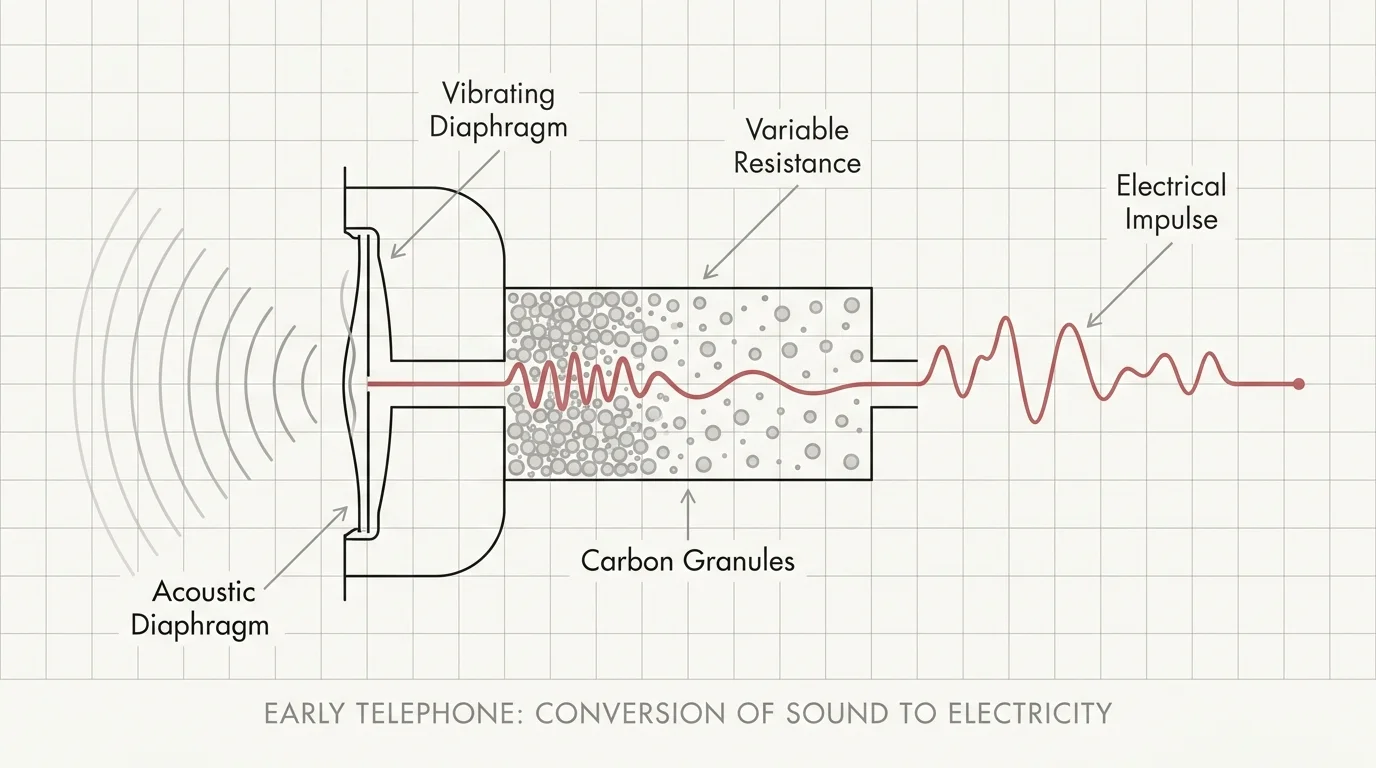
If the telegraph gave the world a nervous system, the telephone gave it a voice. Alexander Graham Bell, a Scottish immigrant to the United States who dedicated his early career to teaching the deaf, possessed a deep understanding of acoustics. He reasoned that if sound waves could be converted into fluctuating electrical currents, human speech could be transmitted over a wire.
The race to patent the telephone serves as one of the most dramatic worked examples of American intellectual property battles. On February 14, 1876, Bell’s lawyer rushed to the U.S. Patent Office to file his application. Just two hours later, Elisha Gray, a rival inventor, filed a caveat for a very similar device. Bell secured the patent, but the ensuing corporate war saw the Bell Telephone Company defend its claim in over 600 lawsuits—winning every single one, including a massive Supreme Court victory.
Beyond the courtroom drama, the cultural impact was staggering. On March 10, 1876, Bell spilled battery acid on his clothes and shouted into his device, “Mr. Watson, come here, I want to see you.” His assistant heard the plea clearly from the next room. Within a few decades, telephone wires webbed across urban skies. The telephone destroyed the isolation of rural American farmers, revolutionized business transactions, and created an entirely new workforce of female switchboard operators. It fundamentally shifted society from written correspondence to instantaneous, synchronous dialogue.