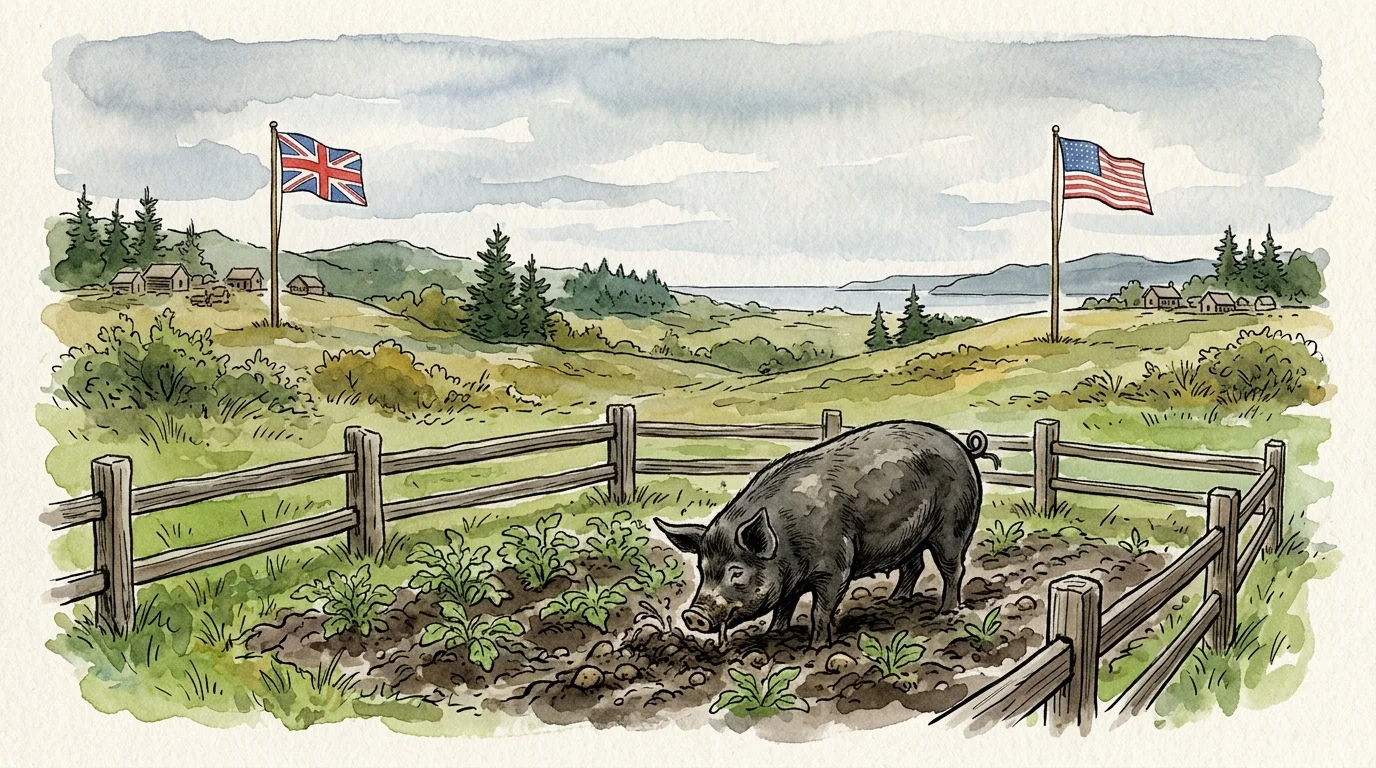
1. A
2. black
3. pig
4. foraging
5. between
6. British
7. and
8. American
9. flags
10. sparke
8. The United States and Great Britain Fought a War Triggered by a Pig (1859)
In the mid-nineteenth century, an ambiguous boundary treaty led two major global powers to the brink of open warfare over a stray livestock animal. The Oregon Treaty of 1846 established the border between the United States and British North America along the 49th parallel, but left the sovereignty of San Juan Island unclear. Both American settlers and British employees of the Hudson’s Bay Company occupied the island. Tensions peaked on June 15, 1859, when an American farmer named Lyman Cutlar found a large black pig belonging to British resident Charles Griffin rooting up his potato garden. In a fit of temper, Cutlar shot and killed the pig.
When British authorities threatened to arrest Cutlar, American settlers requested military protection. Captain George Pickett—who later achieved fame during the American Civil War—arrived with sixty-six U.S. soldiers and declared San Juan Island American territory. In response, the British dispatched three Royal Navy warships carrying over two thousand men. A tense standoff, known as “The Pig War,” ensued for four months as troops dug earthworks and leveled cannons at one another. Fortunately, British Admiral Robert L. Baynes refused orders from the local governor to land troops, famously remarking that he would not involve two great nations in a war over a pig. The confrontation ended peacefully without a single human casualty, showing how cool heads can avert major international conflicts.