12. Weimar Germany Experienced Hyperinflation of 4.2 Trillion Marks to One U.S. Dollar (1923)
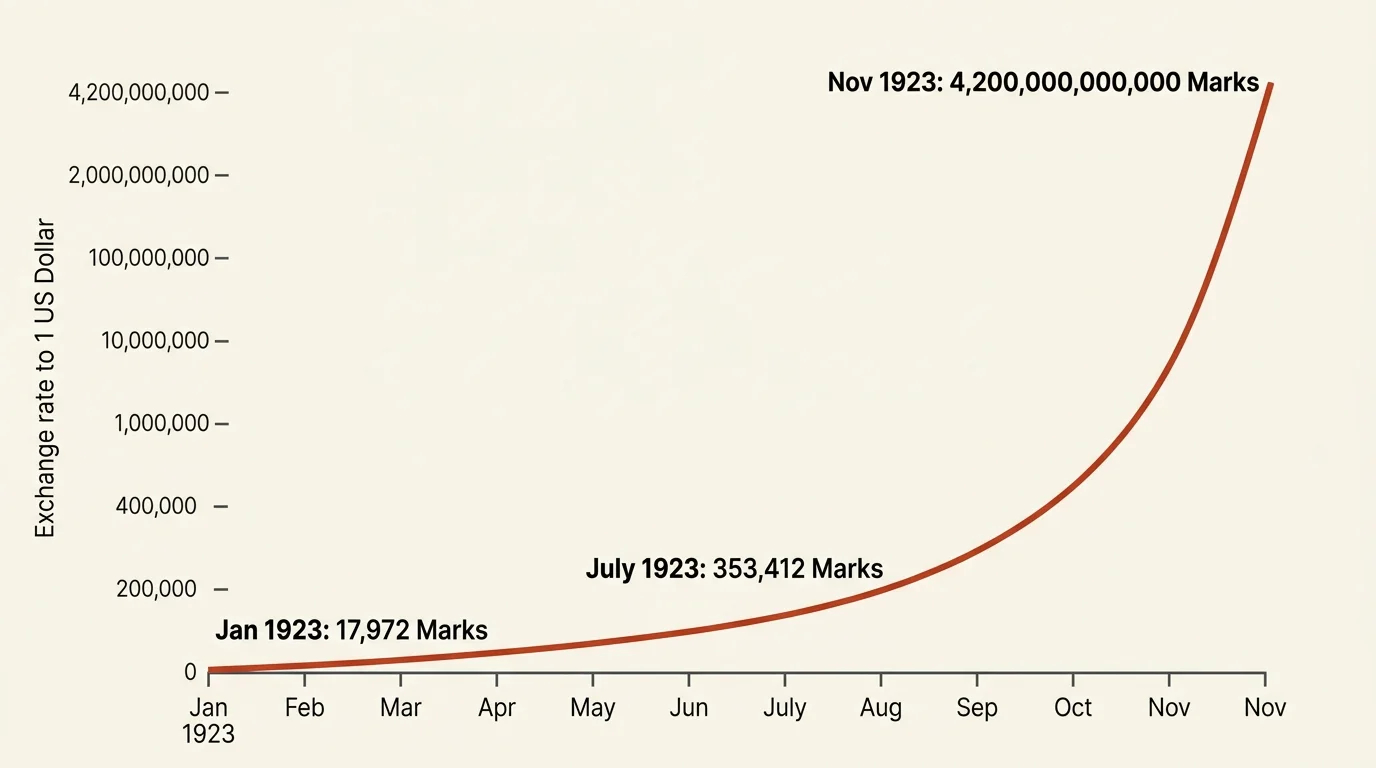
Economic disasters often feel abstract until you examine the stark numerical reality of hyperinflation in Weimar Germany during late 1923. Saddled with crippling World War I war reparations imposed by the Treaty of Versailles and dealing with French occupation of its industrial Ruhr region, the German government attempted to finance debt and pay striking workers by printing unchecked amounts of paper currency. This monetary flood collapsed the value of the German mark at a terrifying pace.
By November 1923, the exchange rate peaked at an unimaginable 4.2 trillion marks to a single U.S. dollar. The prices of basic goods spiraled completely out of control; a single loaf of bread that cost 250 marks in 1921 ballooned to over 200 billion marks by late 1923. Workers received wages twice daily in wheelbarrows, rushing into stores immediately to buy food before prices increased further during lunch breaks. Citizens burned stacks of paper currency in stoves because banknotes proved cheaper than buying actual firewood, and children used worthless blocks of cash as building toys. This catastrophic collapse offers a sobering lesson on the destructive power of reckless monetary expansion and institutional fiscal failure.