6. Woolly Mammoths Still Walked the Earth While Egyptians Built the Pyramids (c. 1650 BCE)
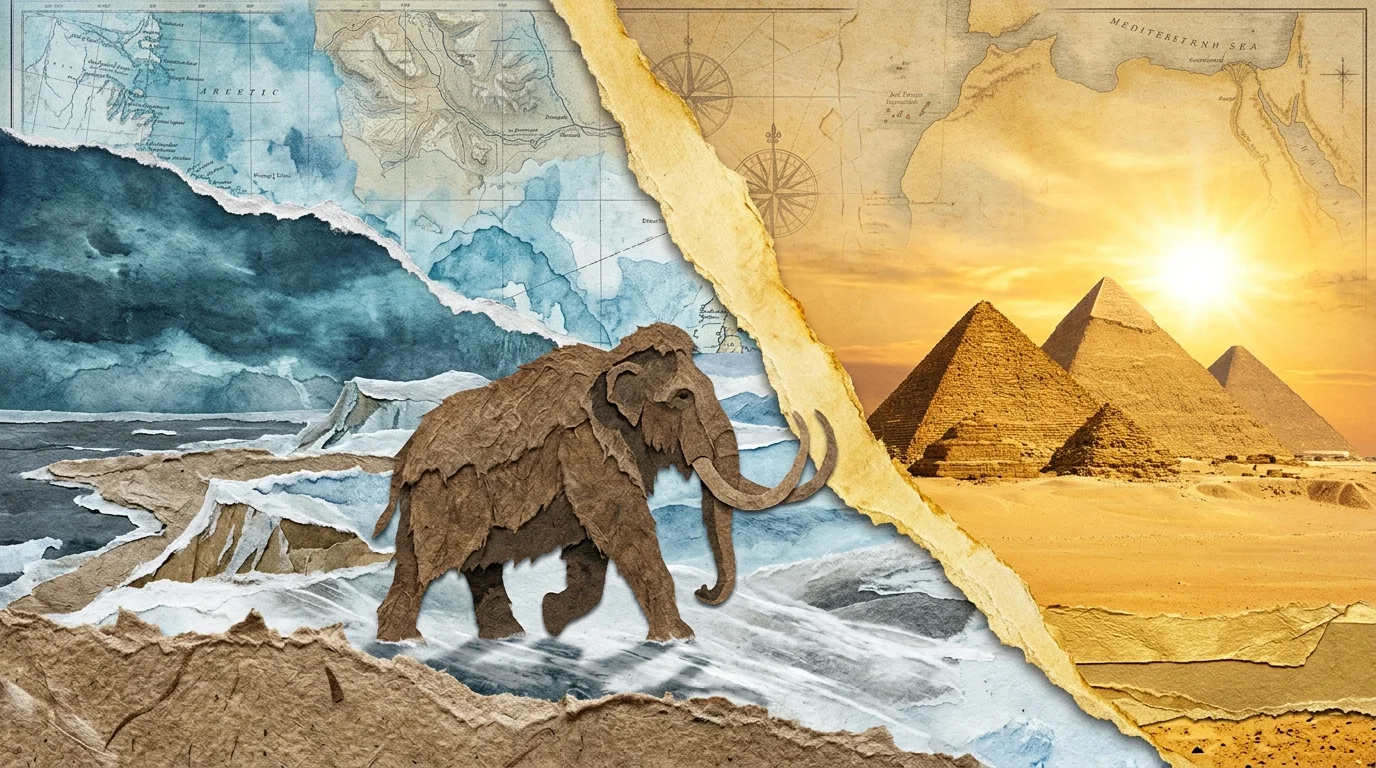
Most people assume that prehistoric megafauna like woolly mammoths died out entirely during the end of the last Ice Age, tens of thousands of years before human civilization took root. However, fossil evidence reveals that an isolated population of woolly mammoths survived on Wrangel Island, a remote Arctic island located off the northeast coast of Siberia, until approximately 1650 BCE. While mainland mammoth populations succumbed to climate warming and human hunting around 10,000 years ago, the rising sea levels trapped a subpopulation on Wrangel Island, where a cold climate and absence of human predators allowed them to endure.
This timeline creates an astounding reality: woolly mammoths roamed the earth for more than nine hundred years after the Egyptians completed the Great Pyramid of Giza around 2560 BCE. While pharaohs organized complex logistics, stonemasons carved limestone blocks, and scribes recorded kingdom finances in hieroglyphics, dwarf woolly mammoths were actively grazing on Arctic mosses and grasses. This lingering survival serves as a powerful reminder that species extinction does not happen simultaneously across the globe, creating extraordinary overlaps between natural history and early human civilizations.