Theodore Roosevelt and the Birth of the Square Deal (1901)
At the turn of the twentieth century, unchecked corporate monopolies dominated the American economy. Industrial titans controlled the railroads, coal mines, and oil production, wielding more practical power than the federal government itself. When Theodore Roosevelt unexpectedly ascended to the presidency following the assassination of William McKinley in 1901, he brought a fiercely independent spirit to the White House. Roosevelt made a conscious decision to redefine the relationship between the federal government, vast corporations, and the everyday American worker.
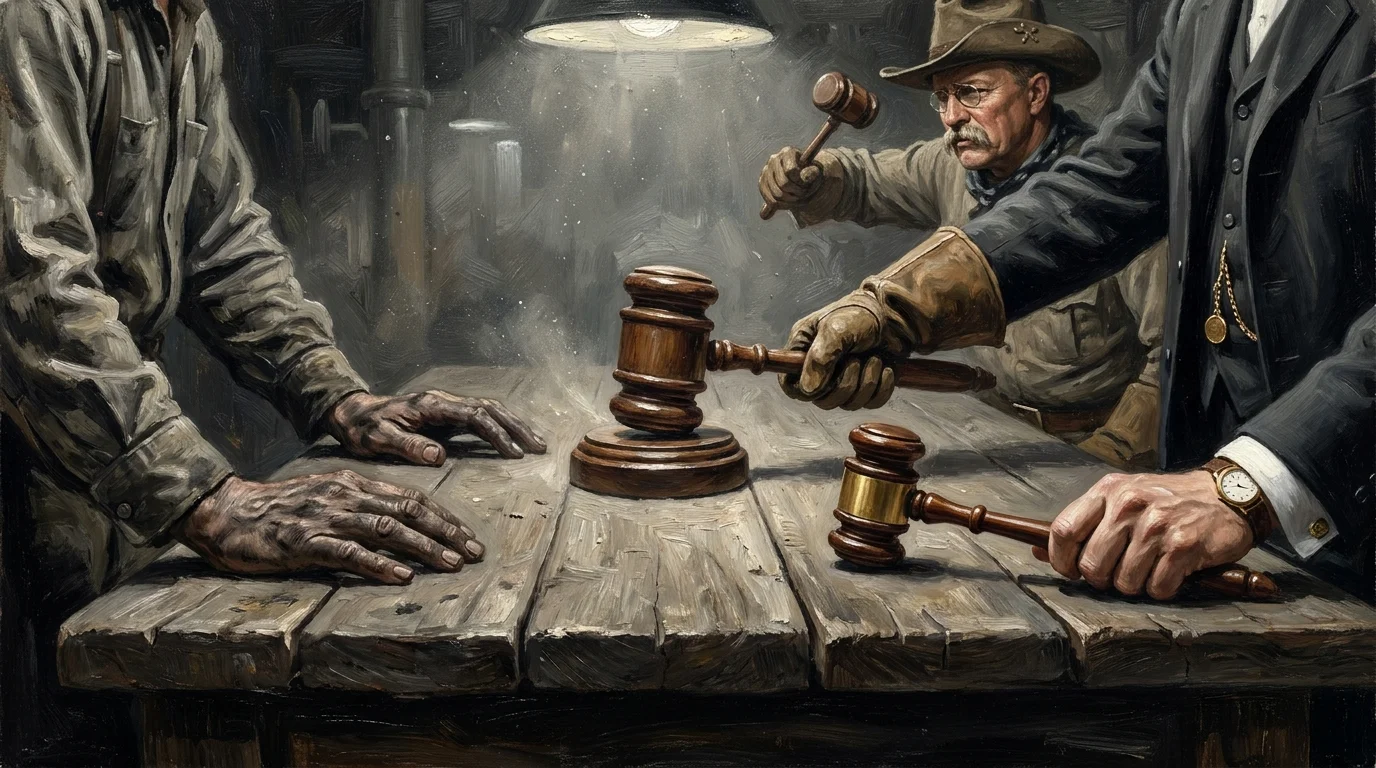
Roosevelt introduced his domestic program known as the Square Deal, which rested on three basic ideas: conservation of natural resources, control of corporations, and consumer protection. Instead of bowing to corporate interests, Roosevelt aggressively utilized the Sherman Antitrust Act to break up harmful monopolies. A prime worked example of this new executive assertiveness occurred when Roosevelt instructed his Attorney General to file suit against the Northern Securities Company, a massive railroad trust controlled by J.P. Morgan. In 1904, the Supreme Court ruled in Northern Securities Co. v. United States that the company was an illegal monopoly and ordered it dissolved.
This victory shocked the financial elite. It proved that no corporation, regardless of its immense wealth, stood above the law. Roosevelt further cemented his legacy during the 1902 coal strike, where, instead of deploying federal troops to crush the workers—as his predecessors had routinely done—he threatened to use troops to seize the mines if the owners refused to negotiate with the union. By asserting the president’s role as a steward of the public welfare, Roosevelt fundamentally altered the American presidents impact on the economy, establishing the foundation for the modern regulatory state that protects your labor and consumer rights today.