Abraham Lincoln Issuing the Emancipation Proclamation (1863)
When the Civil War erupted, Abraham Lincoln consistently stated that his primary objective was to preserve the Union, not to destroy slavery. Yet, as the brutal conflict dragged on, the political and military realities forced Lincoln to make one of the most significant choices in presidential decisions history. By the summer of 1862, Lincoln recognized that striking at the institution of slavery was a military necessity to crippling the Confederacy’s economic engine and preventing European powers from intervening on behalf of the South.
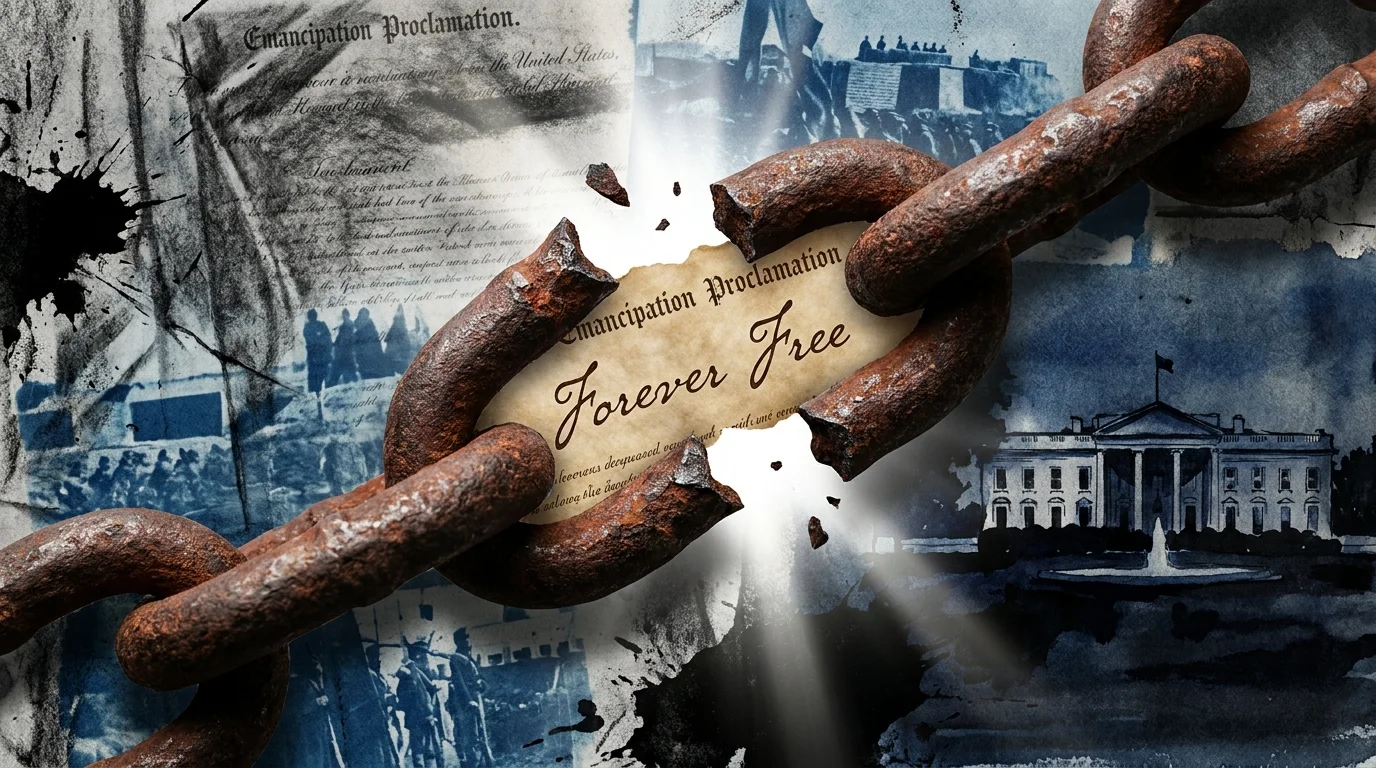
On January 1, 1863, Lincoln sat at a table in his executive office. Witnesses noted that his right hand trembled severely—not from hesitation, but because he had spent the morning shaking hundreds of hands at a New Year’s reception. Before signing the document, Lincoln remarked, “I never, in my life, felt more certain that I was doing right, than I do in signing this paper.” With the stroke of a pen, the Emancipation Proclamation declared that all persons held as slaves within the rebellious states “are, and henceforward shall be free.”
While the Proclamation did not immediately free every enslaved person—it did not apply to border states loyal to the Union—it fundamentally altered the moral character of the war. The conflict transformed from a territorial dispute into a righteous crusade for human liberation. The decision authorized the enlistment of Black soldiers into the Union Army, adding vital manpower that helped turn the tide of the war. Furthermore, Lincoln’s decree laid the irreversible groundwork for the 13th Amendment and the turbulent era of Reconstruction—the post-war period dedicated to rebuilding the shattered nation and integrating formerly enslaved individuals into society. Your understanding of American civil rights history must begin with this courageous, wartime maneuver.