When you study the past, you quickly discover that recorded history often surpasses fiction in sheer improbability. You might picture human history as a neat, linear progression of predictable events, yet the historical record routinely shatters those expectations through bizarre coincidences, administrative blunders, and astounding timeline overlaps. Exploring these surreal moments transforms how you understand the human story; it reveals that our ancestors navigated a world just as chaotic, unpredictable, and absurd as our own. From ancient labor strikes and prehistoric megafauna walking the earth alongside pyramid builders to dictators sharing coffee houses in 1913 Vienna, these fourteen surprising historical facts prove that truth remains far stranger than fiction.
1. History’s First Recorded Labor Strike Occurred in Ancient Egypt (1152 BCE)
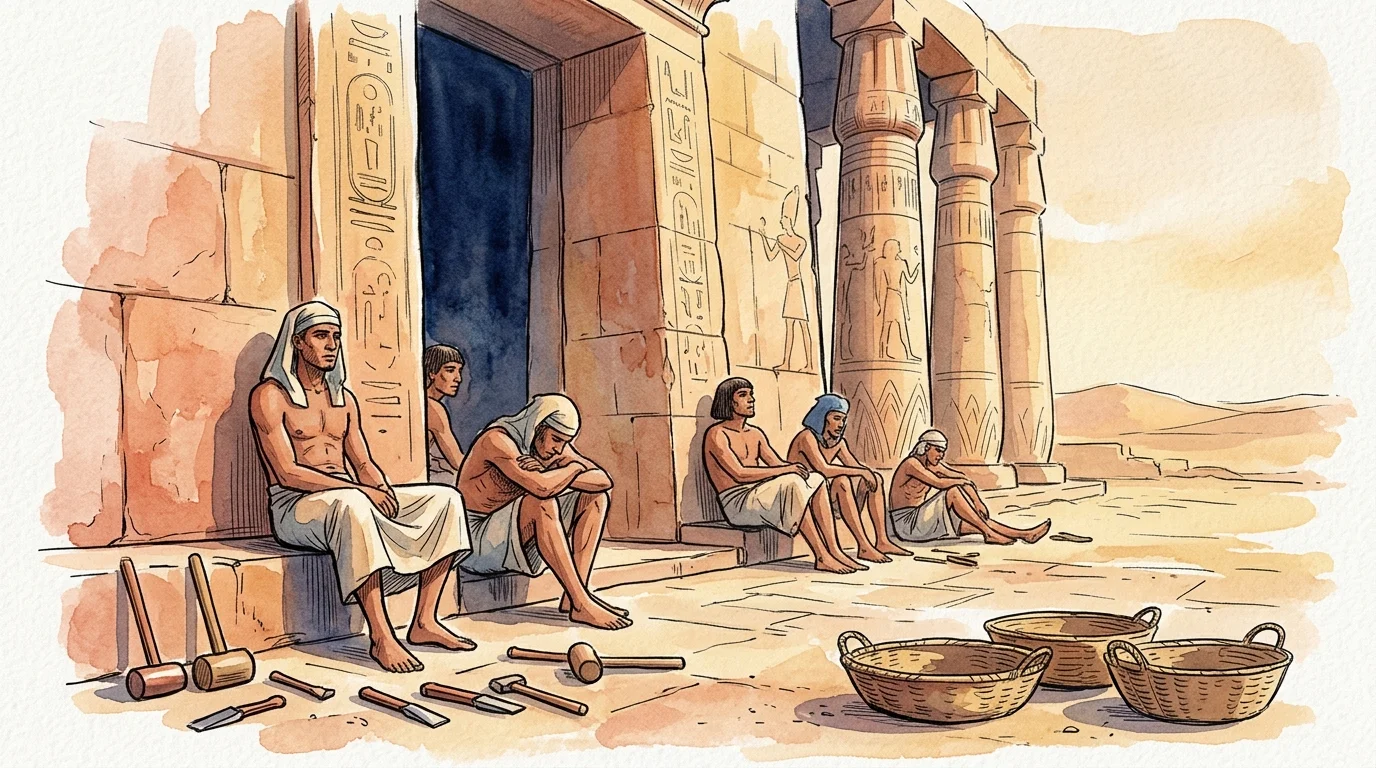
When you picture ancient Egypt, you likely envision enslaved masses working under the whips of brutal taskmasters. However, historical records from Deir el-Medina reveal a far more complex reality regarding ancient labor dynamics. On November 14, 1152 BCE, during the twenty-ninth year of Pharaoh Ramses III’s reign, royal tomb artisans and craftsmen staged history’s first recorded labor strike. Severe administrative corruption, bureaucratic inefficiency, and the immense financial strain of defending Egypt against invading Sea Peoples left government officials unable to pay the workers their monthly grain rations. Left with empty pantries for over eighteen days, the artisans laid down their chisels, walked off the job site, and marched directly toward the royal mortuary temples, including the famous Ramesseum.
The striking workers demanded their back pay; they shouted that their families faced starvation while royal granaries held ample grain. They successfully blocked access to the temple complexes, effectively shutting down religious functions and royal construction projects. Taken aback by the collective solidarity of the workforce, local authorities capitulated within days and delivered the overdue rations of grain, oil, and beer. This historical event demonstrates that collective bargaining and organized labor actions are not modern industrial inventions, but rather timeless human responses to economic exploitation. Primary papyrus scrolls documenting this strike, known as the Turin Strike Papyrus, offer you a rare glimpse into the daily struggles of ordinary working people over three millennia ago.