
The Gong Farmer: Excavating the Underbelly of Medieval Sanitation
Long before modern municipal plumbing transformed city living, human waste management relied entirely on manual labor. In medieval and Tudor England, homeowners deposited their waste into deep brick-lined pits known as cesspits or privies. When these pits filled up, the foul contents had to be physically removed and transported out of the city limits. This horrific responsibility fell to the gong farmer. The term derived from the Old English word “gang,” meaning “to go,” reflecting the undeniable necessity of the profession.
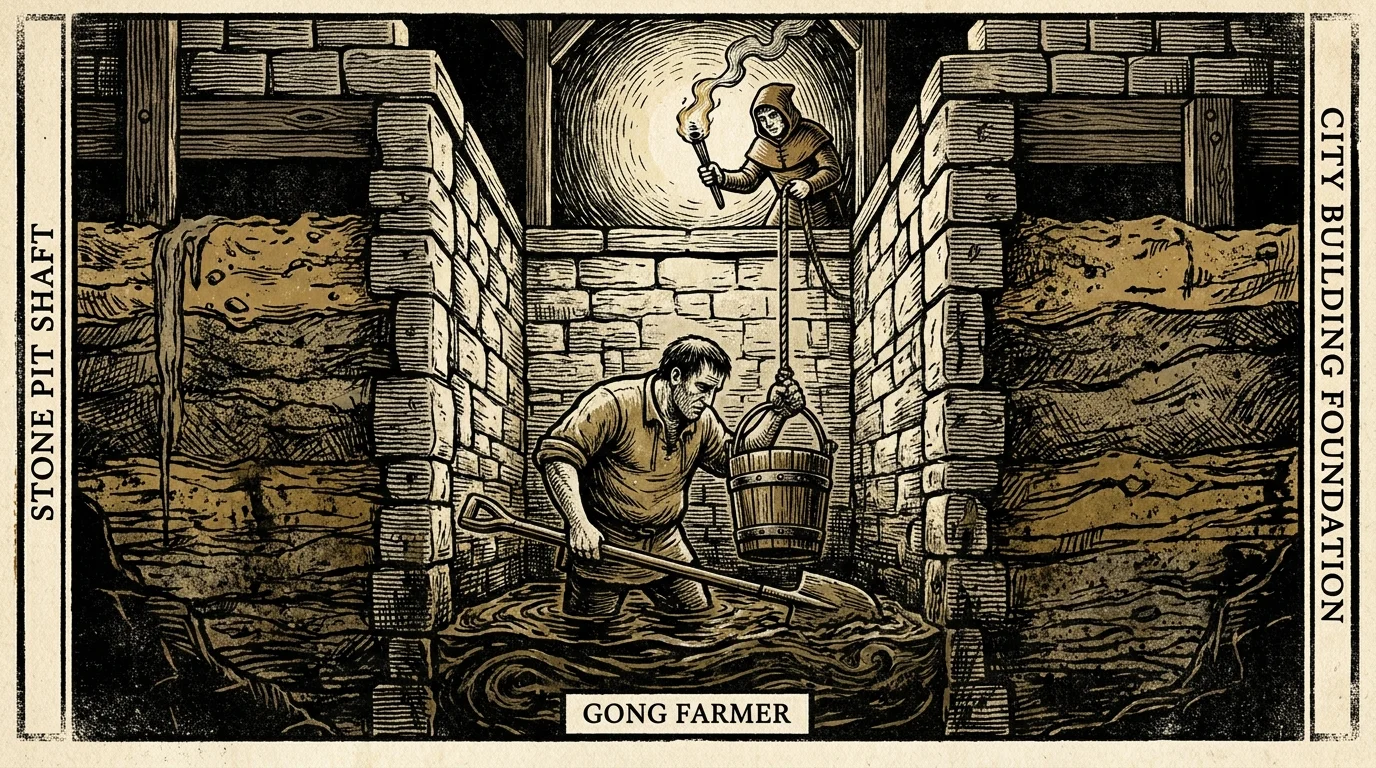
Because the stench of an open cesspit could easily overwhelm a neighborhood, city authorities passed strict laws regulating when and how gong farmers could operate. They were legally required to work exclusively under the cover of darkness, typically between the hours of nine at night and five in the morning. For this reason, citizens often referred to them as “night-soil men.” Working by the dim light of lanterns, the gong farmers descended into the cramped, suffocating pits. They shoveled the raw waste into heavy wooden buckets, hauled it up to the surface, loaded it into horse-drawn carts, and transported it to designated municipal dumps located well outside the city walls.
You cannot overstate the physical dangers associated with this line of work. Beyond the obvious risk of contracting deadly bacterial infections like cholera or dysentery, gong farmers frequently encountered pockets of lethal methane gas trapped beneath the waste. Asphyxiation was a constant threat. In one famously tragic case documented in 1326, a London gong farmer named Richard the Raker fell through the rotten wooden floorboards of his own privy and drowned in the accumulated waste. The work was so hazardous and universally despised that gong farmers actually commanded relatively high wages compared to other manual laborers, earning up to two shillings a day in Tudor times—a small fortune for a working-class man.
Despite their crucial role in preventing devastating plagues and keeping urban centers habitable, society completely ostracized the gong farmers. The smell of the waste permeated their skin and clothing so deeply that they were forced to live in segregated enclaves on the fringes of town. The profession endured for centuries until the widespread installation of flushing toilets and the construction of comprehensive underground sewer networks in the late nineteenth century finally relegated the gong farmer to the annals of peculiar history facts.