The Lector: Bringing Literature and Radical Politics to the Factory Floor
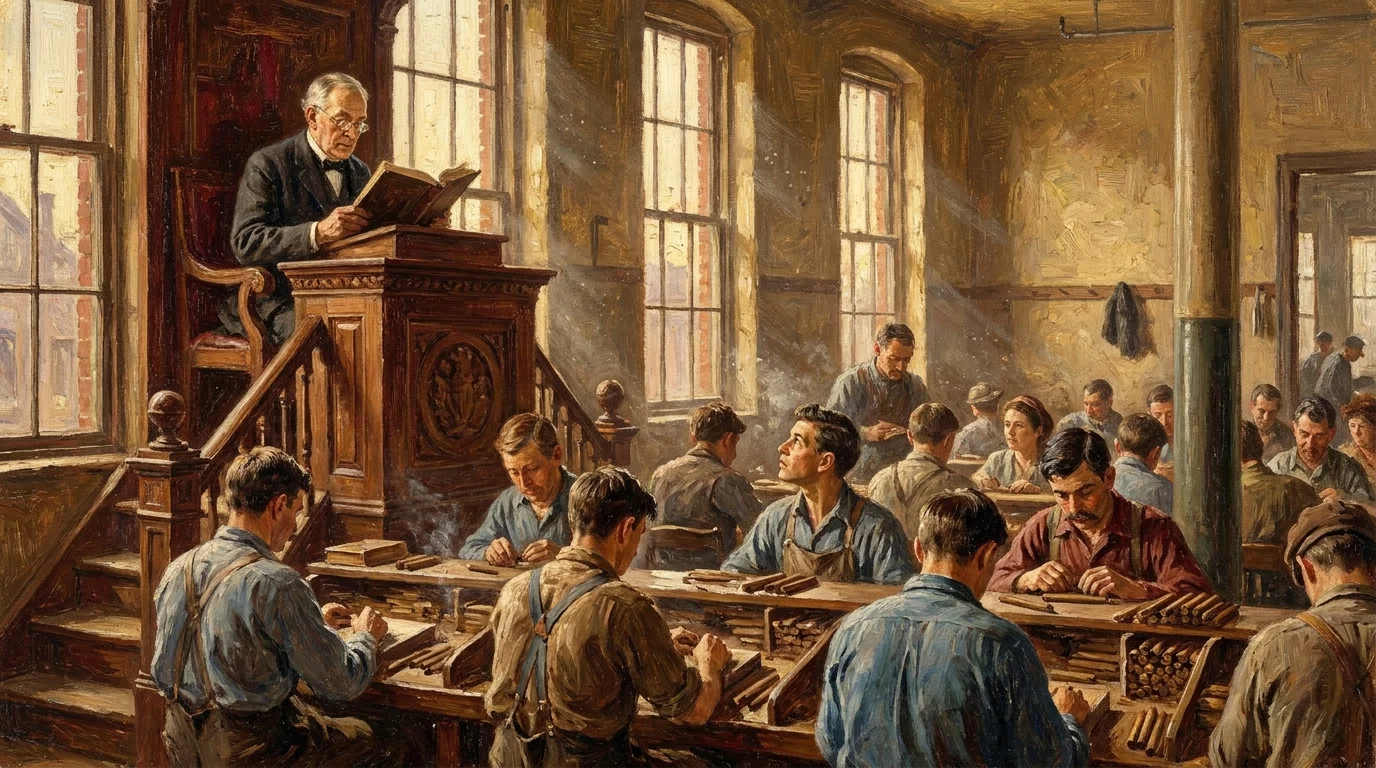
When you picture an early twentieth-century factory floor, you likely imagine a chaotic, deafening environment filled with grinding machinery and exhausted, silent workers. However, the cigar factories of Cuba and Florida operated under entirely different rules. Hand-rolling cigars was a quiet, highly repetitive task that required immense manual dexterity but very little mental engagement. To fight the crushing boredom, cigar workers pooled their own money to hire a lector—a professional reader who stood on an elevated platform and read aloud to the factory floor for hours at a time.
The lector held an incredibly prestigious position within the cigar-making community. They did not merely read whatever they pleased; the workers functioned as a democratic committee, holding votes to determine the reading material for the week. During the morning shifts, the lector read local, national, and international newspapers, translating articles on the fly and keeping the workforce deeply informed about global politics. In the afternoons, they shifted to classic literature and fiction, performing dramatic readings of authors like Émile Zola, Victor Hugo, and Miguel de Cervantes. The lectors possessed booming, theatrical voices, bringing complex characters to life and transforming a mundane workshop into an active intellectual hub.
Because the workers controlled the reading material, the lector quickly became a conduit for radical political thought. You can trace the rise of unionization, socialist ideals, and anarchist philosophies in cities like Tampa, Florida, directly back to the literature consumed on the factory floor. The lectors educated the workers on their labor rights and frequently read manifestos that encouraged strikes and collective bargaining. Factory owners grew increasingly terrified of this dynamic, highly educated workforce.
The tension culminated in severe crackdowns. During a massive strike in Ybor City, Florida, in 1931, factory owners finally seized the opportunity to ban lectors entirely. The owners argued that the readers incited communist uprisings and disrupted production. To ensure the lectors could not return, management installed radios and piped in heavily sanitized, pre-approved music and conservative news broadcasts. This deliberate destruction of intellectual culture permanently erased a unique profession that had successfully bridged the gap between manual labor and classical education.