The Resurrectionist: Supplying the Gruesome Demand for Medical Science
The dawn of modern medicine relied on a very dark, heavily guarded secret. During the late eighteenth and early nineteenth centuries, elite medical schools in Edinburgh, London, and Philadelphia desperately needed fresh human cadavers to teach anatomy and perfect surgical techniques. However, the law only permitted anatomists to dissect the bodies of executed murderers. Because the supply of legally available corpses fell drastically short of the scientific demand, medical institutions quietly created a highly lucrative black market for human remains. The men who serviced this market were known as resurrectionists, or body snatchers.
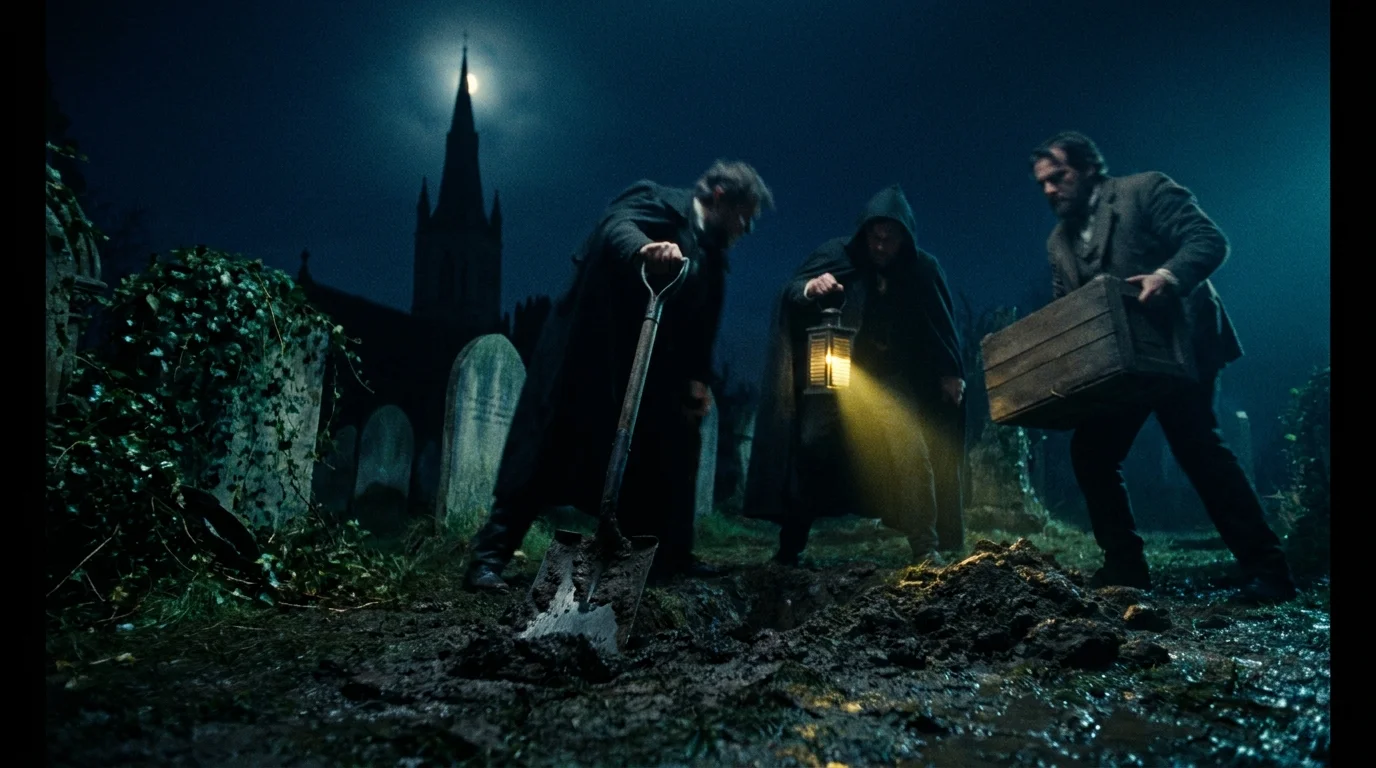
If you examine the daily operations of a resurrection gang, you will find a highly organized, physically demanding, and remarkably stealthy enterprise. These teams targeted fresh graves under the cover of darkness. Instead of digging up the entire grave, a skilled resurrectionist dug a small vertical shaft at the head of the coffin. They would use an iron crowbar to snap the wooden lid, slip a rope around the corpse’s neck or under its arms, and haul the body to the surface. To avoid theft charges, they meticulously stripped the corpse of its clothes and jewelry, throwing the garments back into the grave before filling the hole and smoothing the dirt to hide their tracks. Legally speaking, stealing a dead body constituted a mere misdemeanor, whereas stealing the burial clothes was a severe felony.
The medical establishment deliberately funded this grisly trade. Eminent surgeons, such as Sir Astley Cooper in London, openly boasted to parliamentary committees that they could obtain the body of anyone they desired, regardless of the person’s social standing. Cooper and his colleagues paid resurrectionists handsomely, often bailing them out of jail or supporting their families when the law occasionally caught up with them. The public lived in absolute terror of these gangs, leading to the invention of mortsafes—heavy iron cages placed over fresh graves—and the construction of watchtowers in cemeteries where armed guards stood watch until the bodies decomposed beyond anatomical use.
The situation eventually spiraled completely out of control. The high prices paid for fresh corpses tempted some individuals to bypass the graveyard entirely and resort to murder. The infamous Burke and Hare murders in Edinburgh in 1828 exposed the horrifying extent of the corpse trade. This public outcry forced the British government to pass the Anatomy Act of 1832, which allowed medical schools to legally claim unclaimed bodies from workhouses and hospitals. By increasing the legal supply of cadavers, the government successfully collapsed the black market, ending the era of the resurrectionist and closing a grim chapter in the history of medical advancement.