The Sin Eater: Trading Spiritual Salvation for a Loaf of Bread
If you ventured into the rural communities of Wales, the Welsh Marches, or parts of Scotland during the eighteenth and nineteenth centuries, you might encounter a figure wrapped in profound social stigma. The sin eater took on one of the most psychologically burdensome past jobs imaginable: absorbing the sins of a recently deceased person so their soul could enter heaven smoothly. This practice thrived in the murky space between official church doctrine and deeply entrenched folk religion, addressing the terrifying prospect of a loved one dying suddenly without receiving their final religious rites.
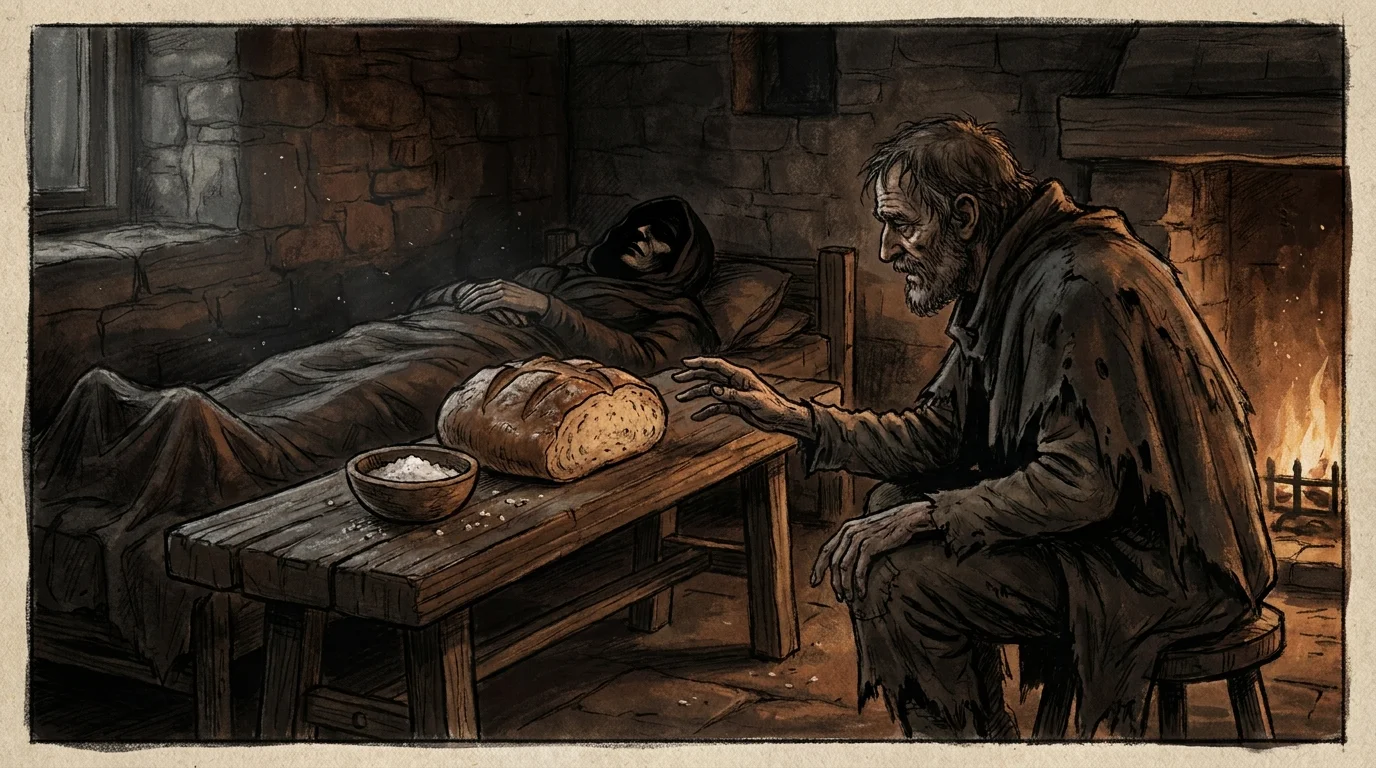
The ritual possessed a dark, theatrical simplicity. When a person died, the family placed a piece of bread and a pinch of salt directly onto the corpse’s chest. They believed the food physically absorbed the unconfessed sins of the deceased. The family then summoned the local sin eater, who entered the house, consumed the bread and salt, and drank a bowl of ale. Upon swallowing the food, the sin eater symbolically took the dead person’s spiritual transgressions into their own soul. The family would pay the sin eater a meager sum—often just a few pennies—and then promptly chase them out of the house, occasionally beating them with sticks or shouting curses.
You can clearly see the profound isolation required to perform this work. Communities universally reviled sin eaters, viewing them as walking vessels of dark magic and spiritual corruption. They lived on the absolute fringes of society, often driven to the profession by extreme poverty. Because they carried the cumulative sins of every corpse they serviced, neighbors refused to speak to them or look them in the eye. They traded their own eternal salvation to secure a temporary, miserable physical survival.
Historians point to Richard Munslow as the last known sin eater, who died in 1906 in the English county of Shropshire. Unusually, Munslow was a relatively wealthy farmer who took up the practice out of a sense of misplaced community duty following the tragic deaths of his own children. With his passing, the tradition faded into obscurity, leaving behind one of the most heartbreaking and peculiar history facts concerning how our ancestors handled grief, guilt, and the terrifying unknowns of the afterlife.