The Dawn of the Twentieth Century: Theodore Roosevelt and Calvin Coolidge
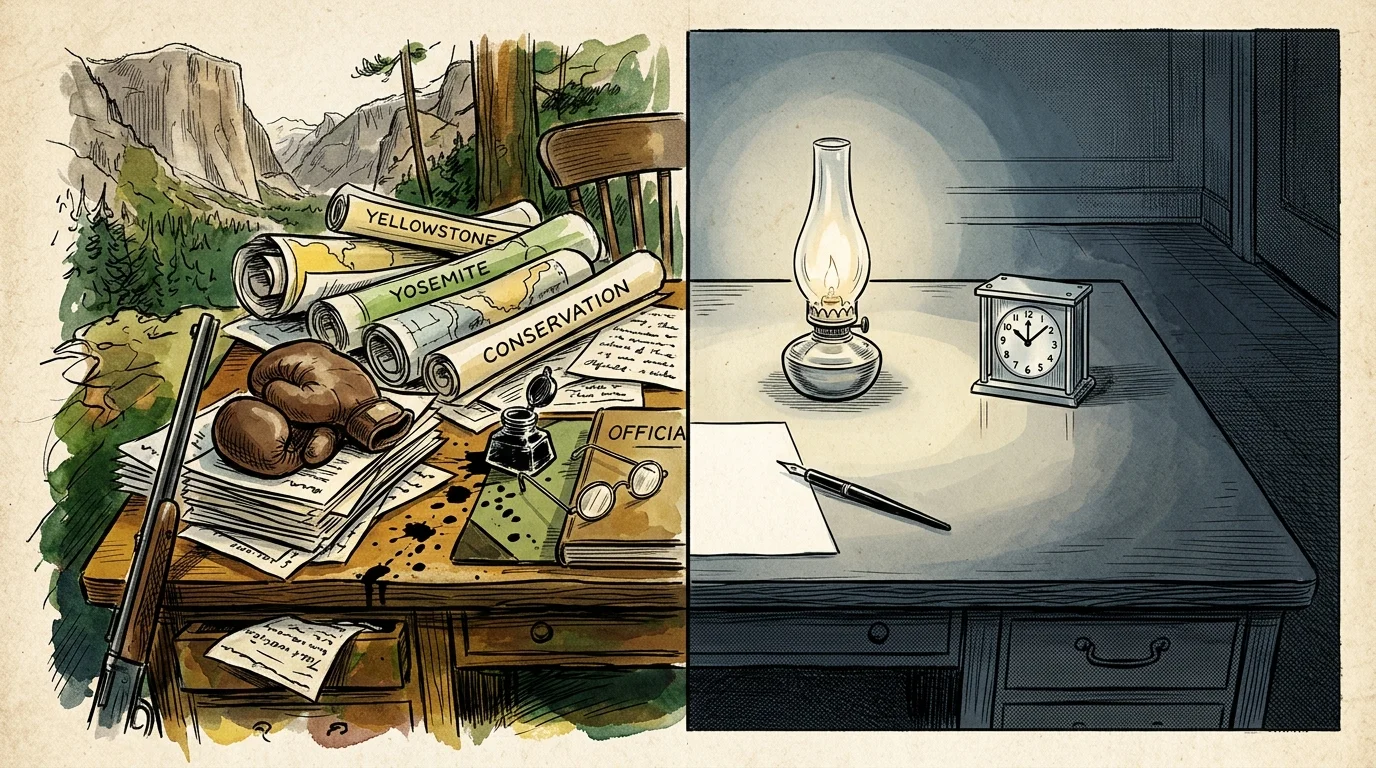
The dawn of the twentieth century brought vibrant new energy to the White House. When an anarchist assassinated William McKinley in 1901, Theodore Roosevelt became the youngest president in American history at age forty-two. Roosevelt had accepted the vice presidency because New York political bosses wanted to bury his progressive ambitions in a powerless office. That calculation backfired spectacularly. Roosevelt fundamentally transformed the executive branch. He used the presidency as a “bully pulpit” to enact sweeping antitrust legislation, regulate the food and drug industries, and champion environmental conservation. Roosevelt negotiated the construction of the Panama Canal, projecting American naval power globally. If you want to understand the origins of the modern, highly visible presidency, you must study Theodore Roosevelt’s aggressive centralization of power.
Calvin Coolidge presented a stark contrast to Roosevelt’s explosive energy. When Warren G. Harding died from a heart attack in August 1923, Coolidge was visiting his family in rural Plymouth Notch, Vermont. A telegraph messenger arrived in the middle of the night with the news. Coolidge’s father, a local notary public, administered the presidential oath of office in the family parlor by the flickering light of a kerosene lamp. Coolidge then quietly went back to sleep. He approached the presidency with a steady, low-drama philosophy, famously stating that the business of America is business. Coolidge actively reduced the federal debt, slashed taxes, and purged the corruption left behind by the Harding administration. His tenure provides a compelling example of how restrained, methodical leadership can successfully stabilize a nation following a major scandal.