The Great Railroad Strike of 1877
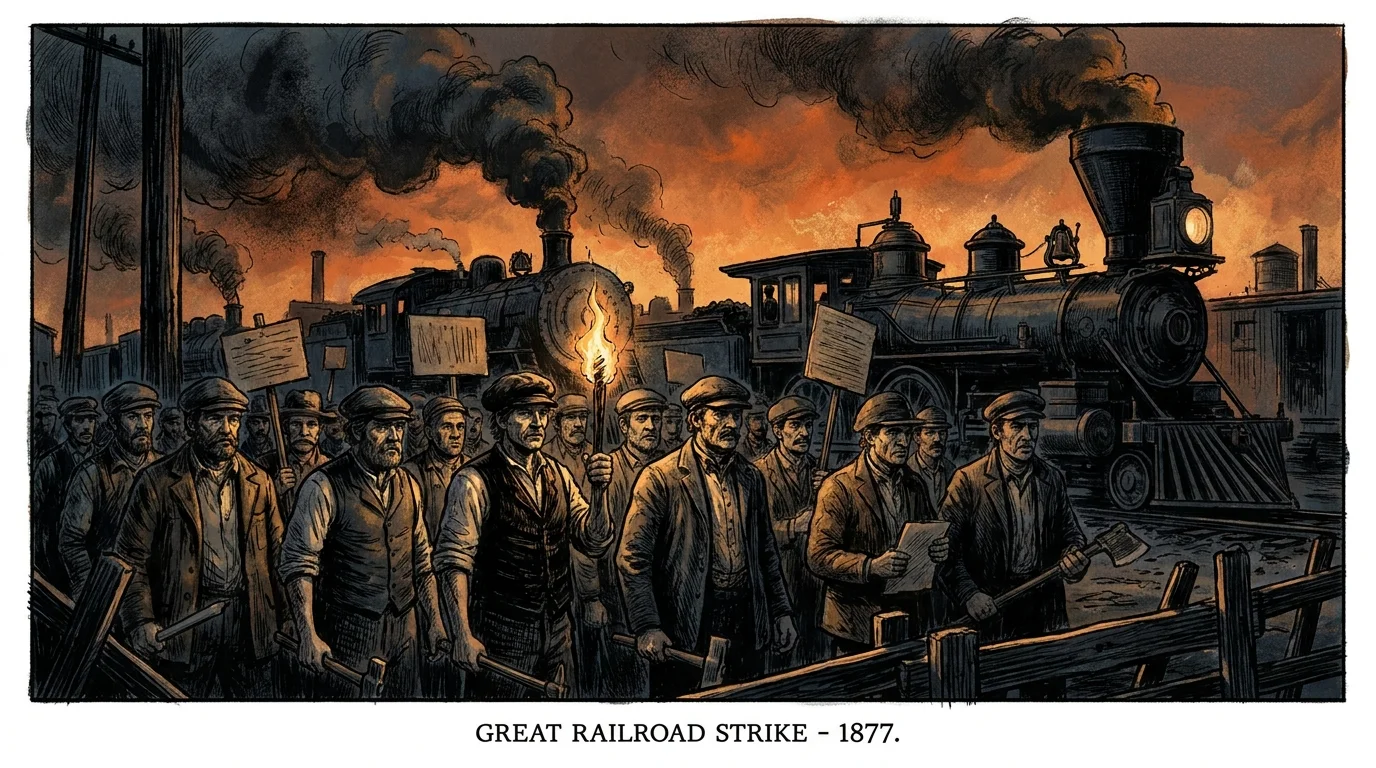
Modern workplace rights—like weekend limits, mandatory minimum wages, and basic safety regulations—did not manifest through polite requests from business owners. They were forged directly in the violent fires of the Great Upheaval of 1877. Following a severe economic depression known broadly as the Panic of 1873, major railroad companies decided to protect their shrinking profit margins by repeatedly slashing the wages of their laborers. In July 1877, exhausted workers for the Baltimore and Ohio Railroad in Martinsburg, West Virginia, finally had enough. They forcefully uncoupled the massive locomotives and refused to let any freight trains leave the station until their pay cuts were entirely reversed.
The strike spread like wildfire across the country, reaching from Maryland all the way to California. It evolved rapidly into the first nationwide general strike in American history, halting nearly all commercial freight movement. Terrified business owners demanded immediate government intervention to protect their assets. Heavily armed state militias and federal troops were deployed directly into American cities to crush the labor action. The ensuing violence resulted in the deaths of over one hundred workers and massive property destruction in major hubs like Pittsburgh and Chicago.
Although the strike was ultimately broken by overwhelming military force, it radically shifted the American socio-political landscape forever. Workers realized the tremendous economic power they held when organized on a massive, coordinated scale, leading directly to the rapid growth of formal labor unions like the Knights of Labor. The federal government was forced to recognize that ignoring the basic survival needs of the working class invited open political revolution. The collective bargaining power that protects your rights as an employee today traces its bloody origins back to the halted railyards of 1877.