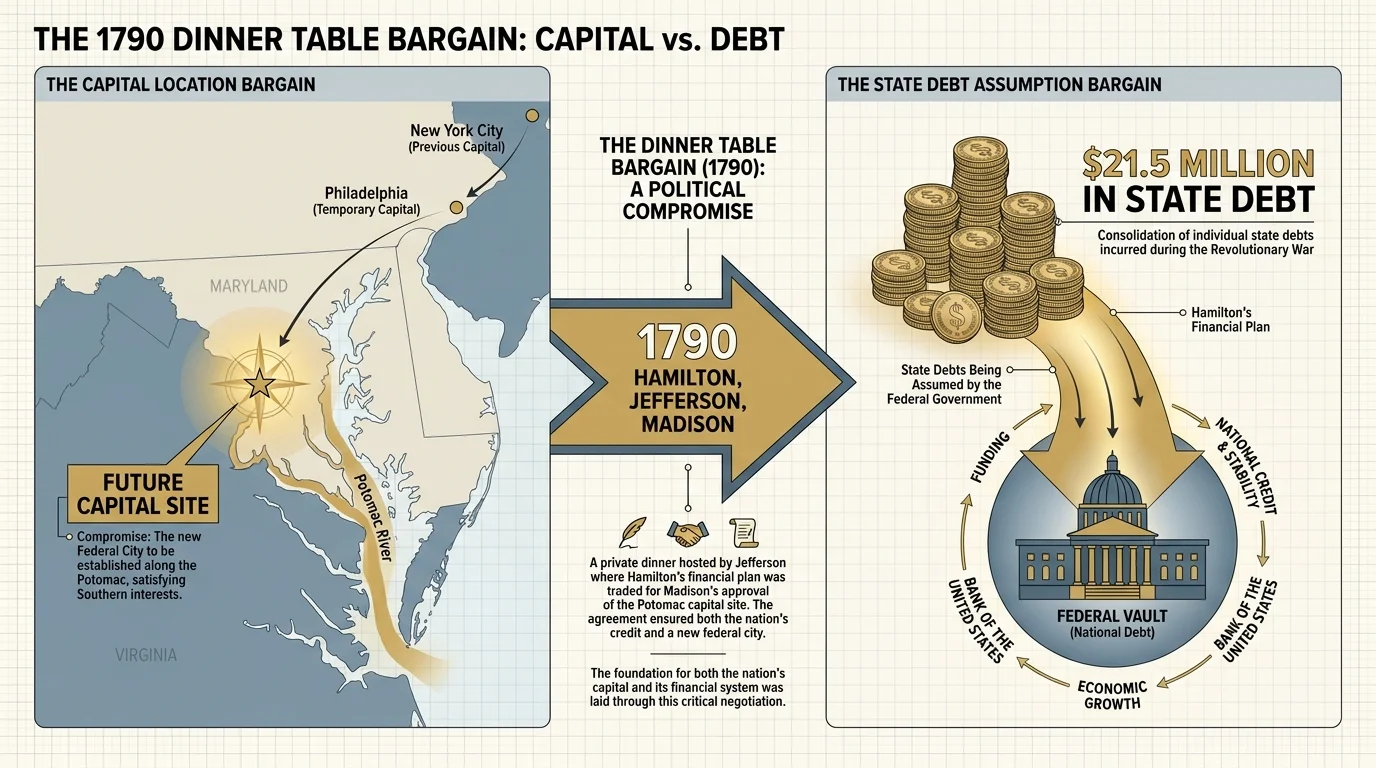
The Dinner Table Bargain of 1790
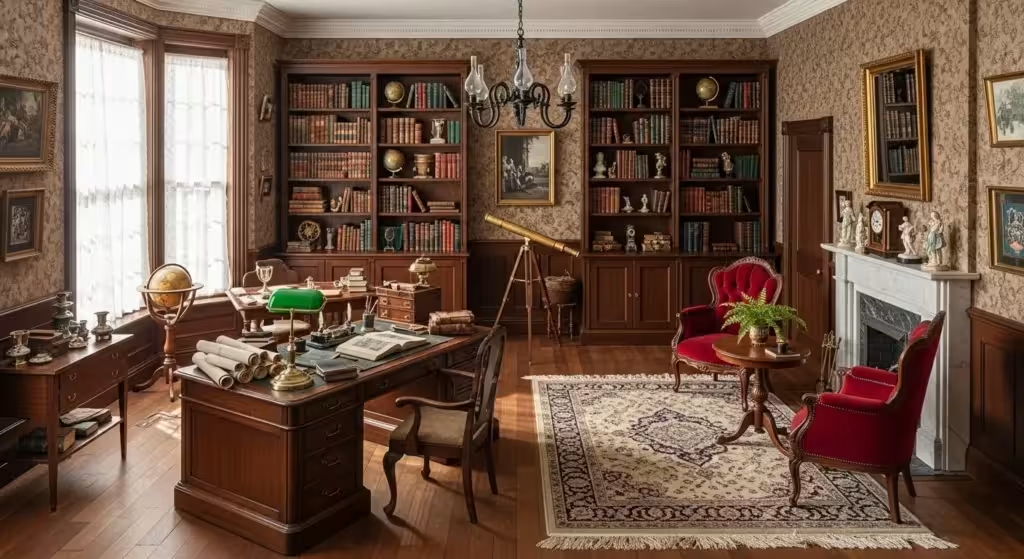
The robust financial foundation of the United States was not built in a grand legislative chamber; it was hammered out over wine and roasted meat in Thomas Jefferson’s private dining room. In 1790, the young nation faced an existential economic crisis. Treasury Secretary Alexander Hamilton desperately wanted the newly formed federal government to assume the massive war debts incurred by the individual states during the Revolutionary War. He knew this bold move would establish a strong national credit line and permanently tie wealthy domestic investors to the success of the federal government.
James Madison and Thomas Jefferson strongly opposed the ambitious financial plan. Representing agrarian Southern interests, they feared Hamilton’s strategy would consolidate too much economic power in the North and create an overbearing, corrupt federal bureaucracy. The intense political gridlock threatened to tear the fragile new Constitution apart. Seeking a practical compromise to save the union, Jefferson hosted a private, unrecorded dinner with Hamilton and Madison in New York City.
During this quiet meeting, the three men struck a monumental deal. Madison agreed to round up the necessary southern congressional votes to pass Hamilton’s financial plan. In exchange, Hamilton agreed to use his extensive political influence to move the nation’s permanent capital out of Philadelphia to a swampy southern location along the Potomac River. This obscure dinner completely transformed American history. It allowed Hamilton to build the robust capitalist infrastructure that powered future American economic dominance, while physically placing the seat of federal power squarely between the North and the South. When you analyze the modern American economy or walk the monumental streets of Washington D.C., you are experiencing the direct results of this secret political trade.