Understanding how vice presidents step into the Oval Office gives you vital insight into the resilience of the American republic. Since the foundation of the United States, fifteen leaders have navigated the challenging transition from second-in-command to the presidency, shaping political history through elections, assassinations, and unprecedented resignations. Examining these shifts reveals how constitutional ambiguities transformed into rock-solid precedents that ensure continuous governance during crises. You will see how these fifteen individuals overcame unique historical hurdles, redefining both the White House and executive power. Grasping this lineage allows you to better evaluate current political structures and anticipate how future crises might be resolved when the nation abruptly requires a new commander-in-chief.
The Early Republic Successions: John Adams and Thomas Jefferson
The architects of the United States Constitution originally designed a flawed electoral system. During the first few presidential elections, the candidate receiving the most electoral votes became president, and the runner-up became vice president. This system forced fierce political rivals to govern together. John Adams served two terms as George Washington’s vice president before narrowly winning the bitter election of 1796. Adams struggled to navigate the immense shadow left by Washington. When you study the Adams administration, you discover a deeply polarized nation teetering on the brink of war with France. Adams signed the controversial Alien and Sedition Acts into law, hoping to crush political dissent, but this aggressive maneuver ultimately doomed his reelection campaign.
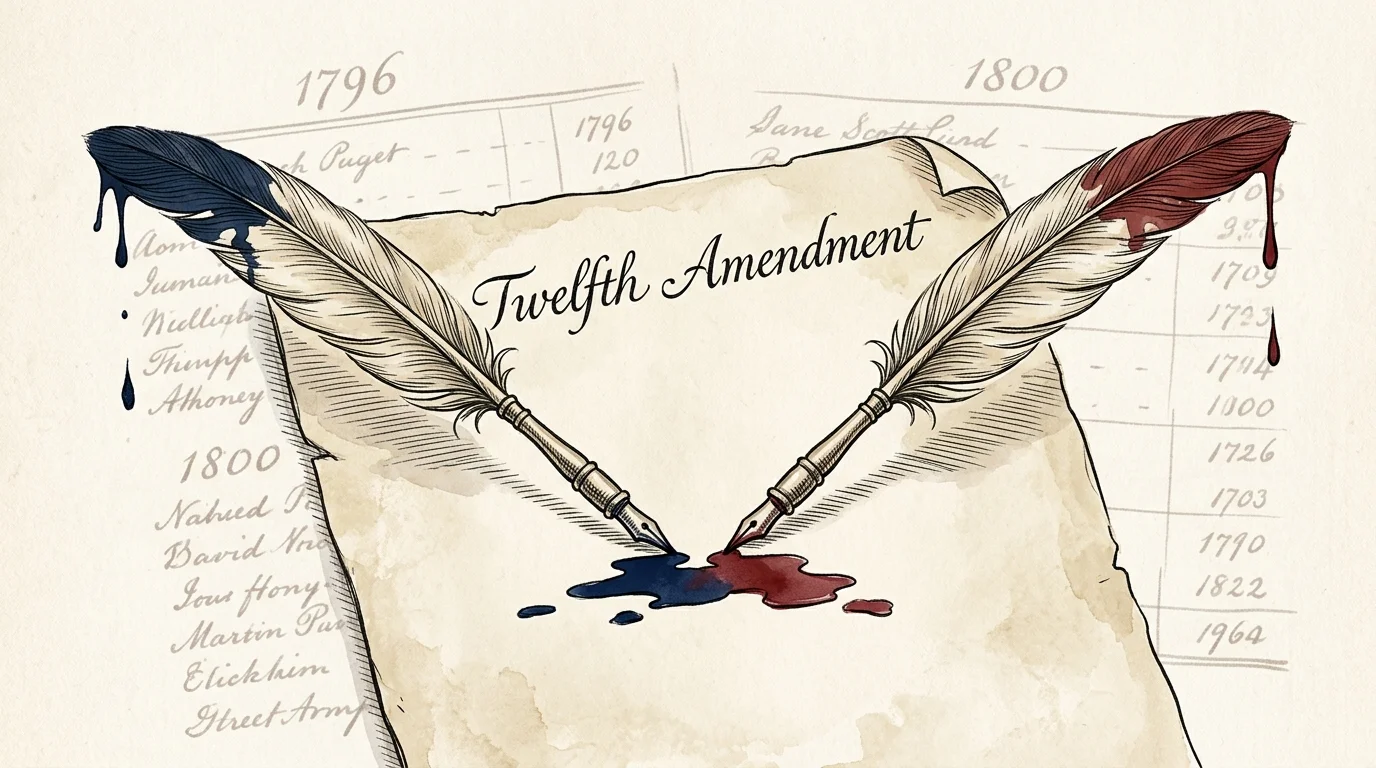
Thomas Jefferson served as the vice president under Adams, despite leading the opposing Democratic-Republican faction. Jefferson continuously undermined Adams’s policies from within the executive branch. The turbulent election of 1800 saw Jefferson defeat Adams, marking the first peaceful transfer of power between opposing political parties in American history. This chaotic election forced Congress to pass the Twelfth Amendment, which mandated separate electoral ballots for the president and vice president. Jefferson utilized his time in the White House to expand executive power dramatically, most notably by authorizing the Louisiana Purchase in 1803. By analyzing Jefferson’s transition from an obstructionist vice president to an imperial president, you gain a clear understanding of how executive power dynamically expands during moments of national opportunity.