9. The Battle of Los Angeles Triggers Mass Paranoia
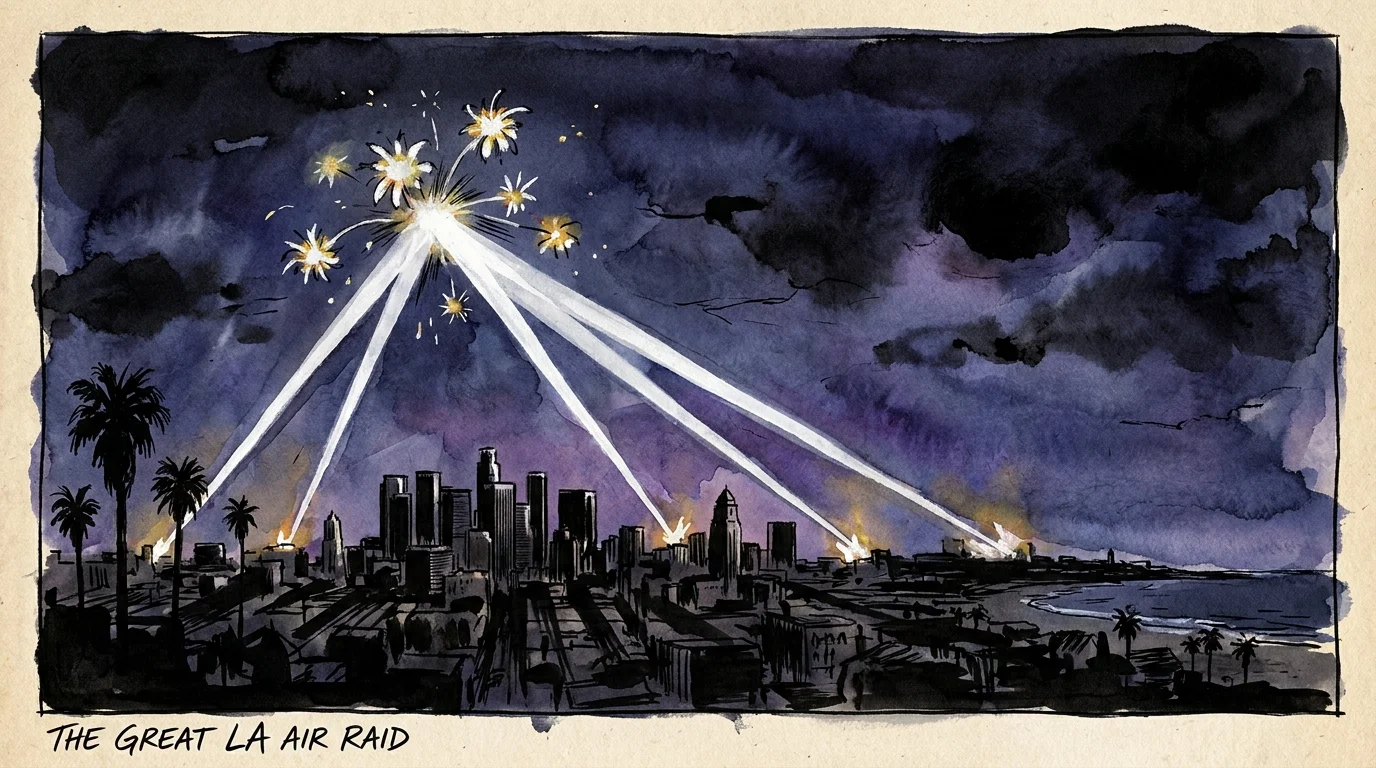
Fear makes you see things that are not there, and mass panic can mobilize an entire military infrastructure against a phantom threat. In the early hours of February 25, 1942, less than three months after the devastating Japanese attack on Pearl Harbor, air raid sirens wailed across Los Angeles, California. A total blackout plunged the bustling metropolis into absolute darkness. Searchlights crisscrossed the sky, and anti-aircraft gunners nervously scanned the clouds for incoming Japanese bombers.
Suddenly, the military opened fire. For over an hour, coastal artillery batteries unleashed an incredible barrage, firing more than 1,400 high-explosive shells into the night sky over Southern California. Citizens cowered in their homes as shrapnel rained down on rooftops, streets, and parked cars. Five civilians died during the chaos—not from enemy bombs, but from heart attacks brought on by sheer terror and car accidents in the pitch-black streets.
When the sun rose, the military discovered exactly what they had been shooting at: absolutely nothing. Secretary of the Navy Frank Knox later dismissed the entire incident as a false alarm driven by severe war nerves, though some researchers suggest a stray meteorological weather balloon triggered the initial firing. The Battle of Los Angeles provides a crucial psychological lesson for the modern era. When you allow anxiety and paranoia to dictate your actions, the defensive measures you take can cause vastly more damage than the threats you are trying to avoid.