3. The Pig War Almost Ignites Global Conflict
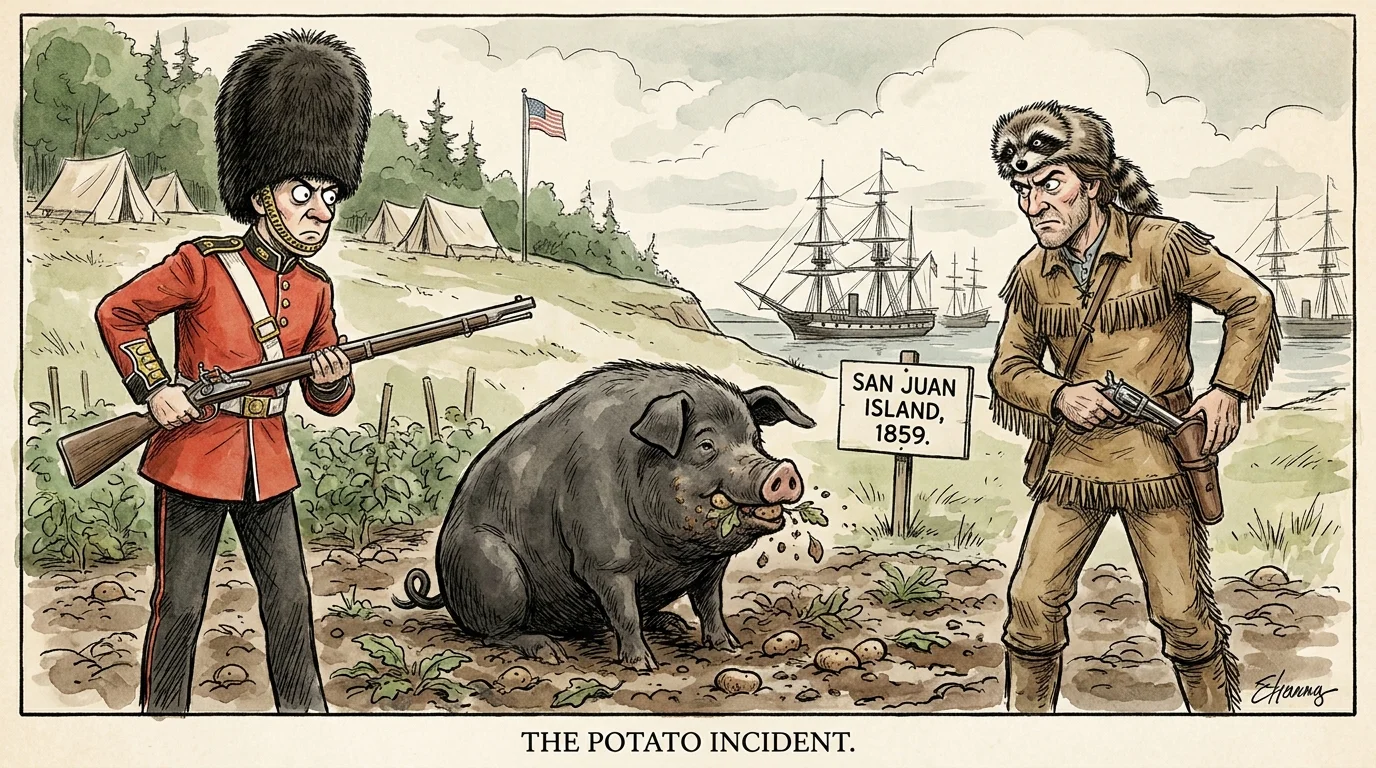
History frequently hinges on monumental ideologies, but sometimes it turns on a single, hungry farm animal. In the summer of 1859, the United States and the British Empire nearly declared war over a wandering pig on San Juan Island, a small landmass situated between the Washington Territory and Vancouver Island. The 1846 Oregon Treaty featured ambiguous language regarding the maritime boundary, leading both nations to claim the island and allow their citizens to settle there concurrently.
The tension exploded on June 15, 1859, when an American farmer named Lyman Cutlar found a large black pig rooting through his potato patch. Frustrated by the animal’s repeated trespassing, Cutlar shot and killed the pig. The animal belonged to an employee of the British Hudson’s Bay Company. When British authorities threatened to arrest Cutlar, American settlers requested military protection. The United States quickly dispatched Captain George Pickett—who would later gain infamy in the American Civil War—with a company of soldiers. Great Britain responded by sending three heavily armed warships to the island’s coast.
Within weeks, hundreds of American soldiers faced off against Royal Navy gunboats mounting massive cannons. Fortunately, British Admiral Robert Baynes refused orders to engage, stating it was foolish to plunge two great nations into a war over a squabble about a pig. The two sides negotiated a peaceful joint military occupation that lasted for 12 years until Kaiser Wilhelm I of Germany arbitrated the final border dispute in favor of the United States. This bizarre standoff proves that effective diplomatic de-escalation remains your greatest tool for preventing minor sparks from triggering massive infernos.