6. The Peshtigo Fire Obliterates a Town in Minutes
When you ask people about the worst fire in American history, almost everyone names the Great Chicago Fire of 1871. However, on the exact same night—October 8, 1871—a far more terrifying and deadly inferno consumed the lumber town of Peshtigo, Wisconsin. While the Chicago fire killed approximately 300 people, the Peshtigo fire incinerated between 1,500 and 2,500 men, women, and children, earning the grim title of the deadliest wildfire in recorded human history.
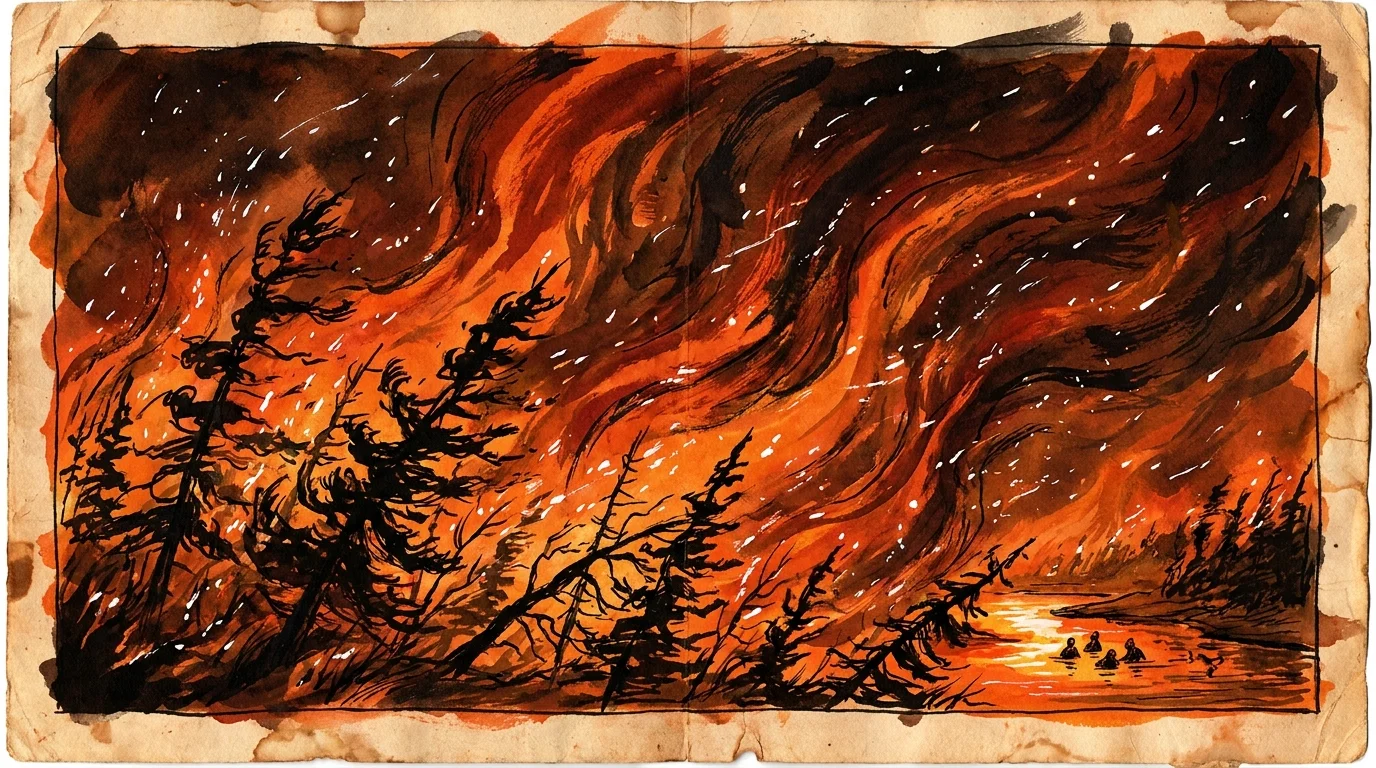
The conditions leading to the disaster were a perfect storm of human industry and environmental vulnerability. The region had suffered a prolonged drought, and lumberjacks had left massive piles of dry timber slash across the forest floors. When shifting autumn winds whipped small land-clearing fires into a singular, monstrous blaze, the phenomenon created a firestorm—a literal tornado of flame. The fire moved so incredibly fast that it generated its own weather system, throwing superheated winds that caused buildings to spontaneously combust before the actual flames even arrived.
Survivors like Reverend Peter Pernin documented the sheer horror of the night, describing how people and livestock threw themselves into the freezing waters of the Peshtigo River to avoid being baked alive by the radiant heat. Because the telegraph lines burned down, news of the Wisconsin tragedy did not reach the outside world until days later, completely overshadowed by the high-profile destruction in Chicago. Examining the Peshtigo Fire teaches you to look beyond mainstream media narratives; the most devastating historical events often occur quietly in the shadows of more famous headlines.