Frontier Grit: Surveyors, Canal Boys, and Bartenders
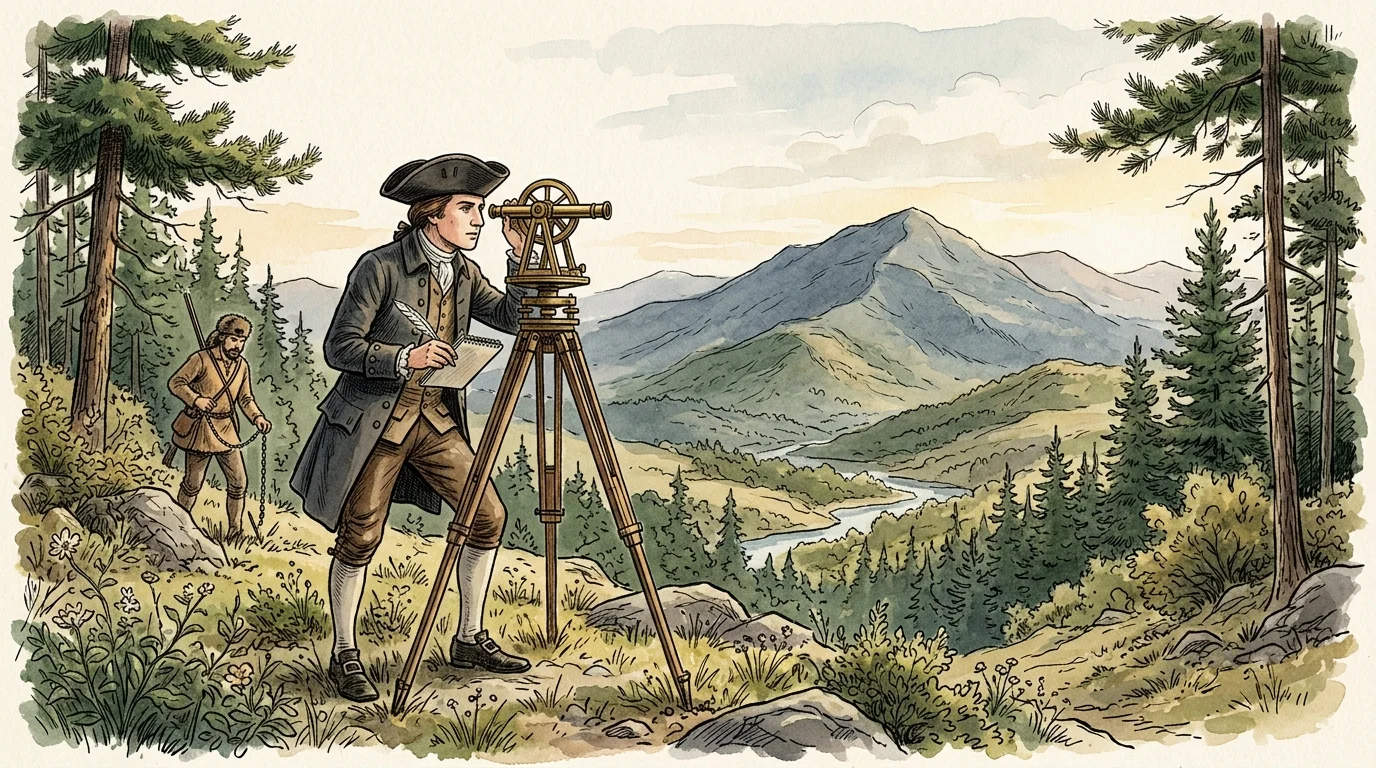
The early American frontier was an unforgiving environment that demanded physical endurance and relentless adaptability. George Washington famously set the precedent for frontier leadership long before the Revolutionary War. At just sixteen years old, Washington worked as a professional land surveyor. Tasked with mapping the uncharted Shenandoah Valley for Lord Fairfax, the young Virginian spent weeks sleeping under the stars, negotiating rugged terrain, and surviving on wild game. This demanding job earned him a lucrative doubloon a day, but more importantly, it trained him to read topography—a skill that would later prove indispensable when positioning the Continental Army against British forces.
Decades later, James A. Garfield experienced the brutal realities of frontier logistics as a canal boy in Ohio. Long before he became a scholar, a Union general, or the twentieth president, a teenage Garfield drove mules that pulled heavy barges along the Ohio and Erie Canal. The work was notoriously dangerous and physically punishing. Garfield fell into the murky canal waters more than a dozen times and eventually contracted a severe case of malaria that nearly ended his life. This brush with mortality convinced him to leave the towpath and pursue formal education, permanently altering his trajectory.
Perhaps the most unexpected frontier profession belongs to Abraham Lincoln, who holds the distinction of being the only licensed bartender to become president. In 1833, a young Lincoln partnered with a man named William Berry to purchase a general store in the pioneer town of New Salem, Illinois. They officially acquired a tavern license, allowing them to sell spirits by the pint alongside household goods. The business venture, known as Berry and Lincoln, proved disastrous. Berry struggled with alcoholism, and the store quickly accumulated massive debts. Lincoln jokingly referred to this financial burden as his personal “National Debt,” spending years paying off the creditors. Yet, standing behind that wooden counter taught Lincoln how to handle rough frontiersmen, settle disputes with humor, and master the art of conversational storytelling that would define his political career. Furthermore, his early physical jobs, including splitting rails and working as a champion catch-as-catch-can wrestler, solidified his reputation as a common man of the people.