The Great Railroad Strike of 1877
The rapid, unchecked industrialization of the United States came at a brutal cost to the working class, a reality that reached a violent boiling point during the Great Railroad Strike of 1877. Following the severe economic depression triggered by the Panic of 1873, major rail companies continuously slashed worker pay while maintaining high dividends for their wealthy shareholders. When the Baltimore and Ohio Railroad announced a sweeping 10 percent wage cut—the second such reduction in just eight months—the workers finally retaliated.
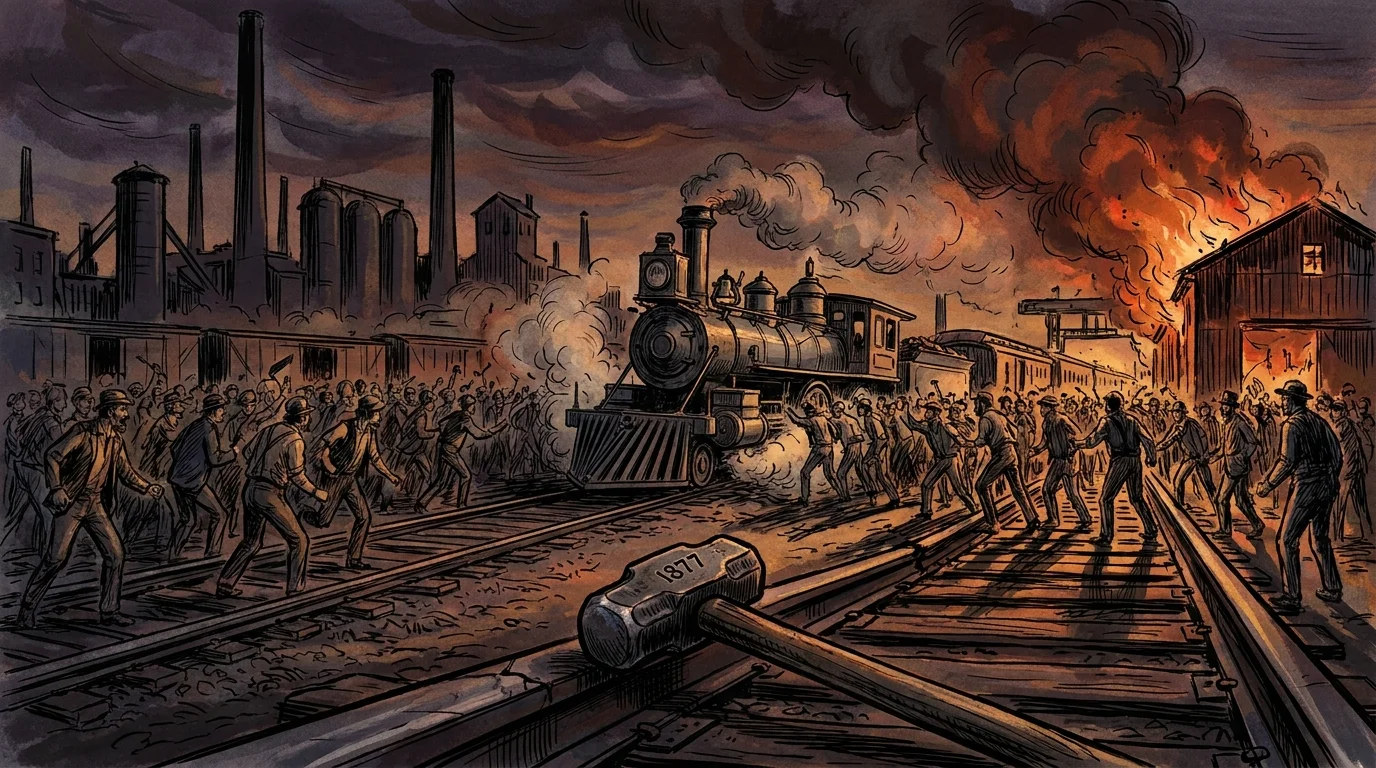
Spontaneous strikes erupted in Martinsburg, West Virginia, as workers physically uncoupled locomotives and refused to let any freight trains leave the station until their wages were restored. The rebellion acted as a spark on dry tinder, quickly spreading along the rail lines to New York, Pennsylvania, Illinois, and Missouri. The strike effectively paralyzed the nation’s vital transportation and commercial network. In major hubs like Pittsburgh, you saw massive crowds of furious workers and sympathetic citizens clashing violently with local state militias. When militia members fired into the crowds, the enraged workers responded by burning down the sprawling rail yards, destroying over a thousand railcars and dozens of buildings.
Governors across the country found themselves entirely unable to suppress the massive, decentralized unrest, prompting President Rutherford B. Hayes to deploy federal troops from city to city to systematically crush the strikes. Over 100 people died in the nationwide clashes before the trains resumed moving. This chaotic event marked the very first major national labor conflict in American history. It awakened the working class to their massive collective power, terrified industrial capitalists into building fortress-like National Guard armories in the center of major cities, and set the stage for decades of fierce, bloody labor disputes.