The Battle of Blair Mountain
When you think of domestic warfare, the Civil War naturally dominates the conversation, but the largest armed uprising since that conflict occurred deep in the coalfields of West Virginia. In August 1921, approximately 10,000 union coal miners marched against notoriously abusive mine operators and their allied local law enforcement. The miners demanded basic human rights, fair wages, and freedom from the oppressive company-town system that dictated every aspect of their lives—from the housing they rented to the company scrip they used to buy groceries.
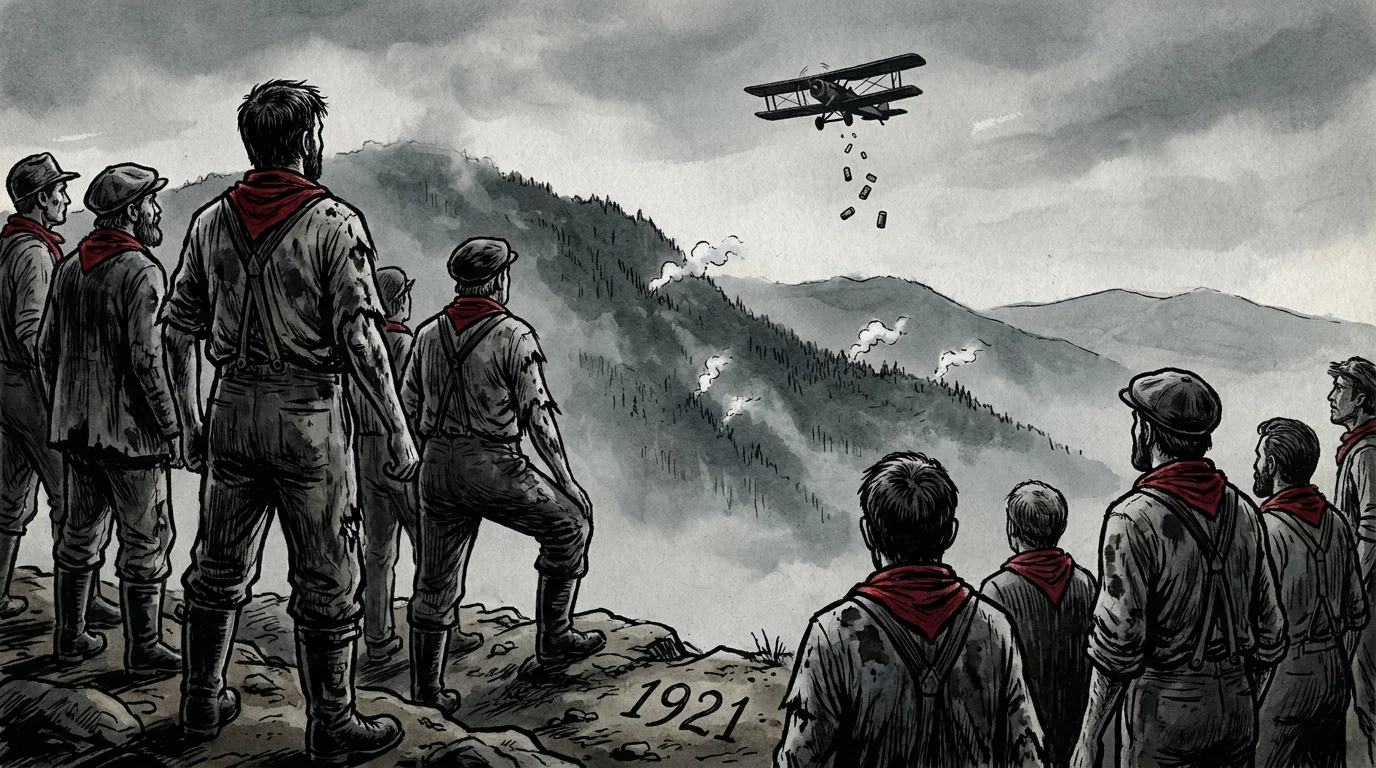
The breaking point came following the assassination of Sid Hatfield, a pro-union police chief who had previously defended miners against private detectives hired by the coal companies. Enraged by his murder, miners tied red bandanas around their necks to identify one another—cementing the origins of the term “redneck” in labor history—and marched toward Mingo County to free imprisoned union organizers. Sheriff Don Chafin, heavily funded by the coal syndicate, assembled a private army of 3,000 heavily armed guards, state police, and deputized citizens to block the miners at the steep ridges of Blair Mountain.
The ensuing five-day battle featured intense, grueling trench warfare and sustained machine-gun fire. In a shocking escalation, the coal operators even chartered private biplanes to drop homemade gas bombs and explosives directly onto the striking workers. The violent stalemate only ended when President Warren G. Harding dispatched federal troops, prompting the patriotic miners to lay down their weapons rather than fire upon United States soldiers. Hundreds of miners were subsequently indicted for treason and murder. Though the union decisively lost the immediate physical battle, this massive labor uprising exposed the horrific conditions of industrial work and laid the essential groundwork for the sweeping labor protections enacted during the New Deal a decade later.