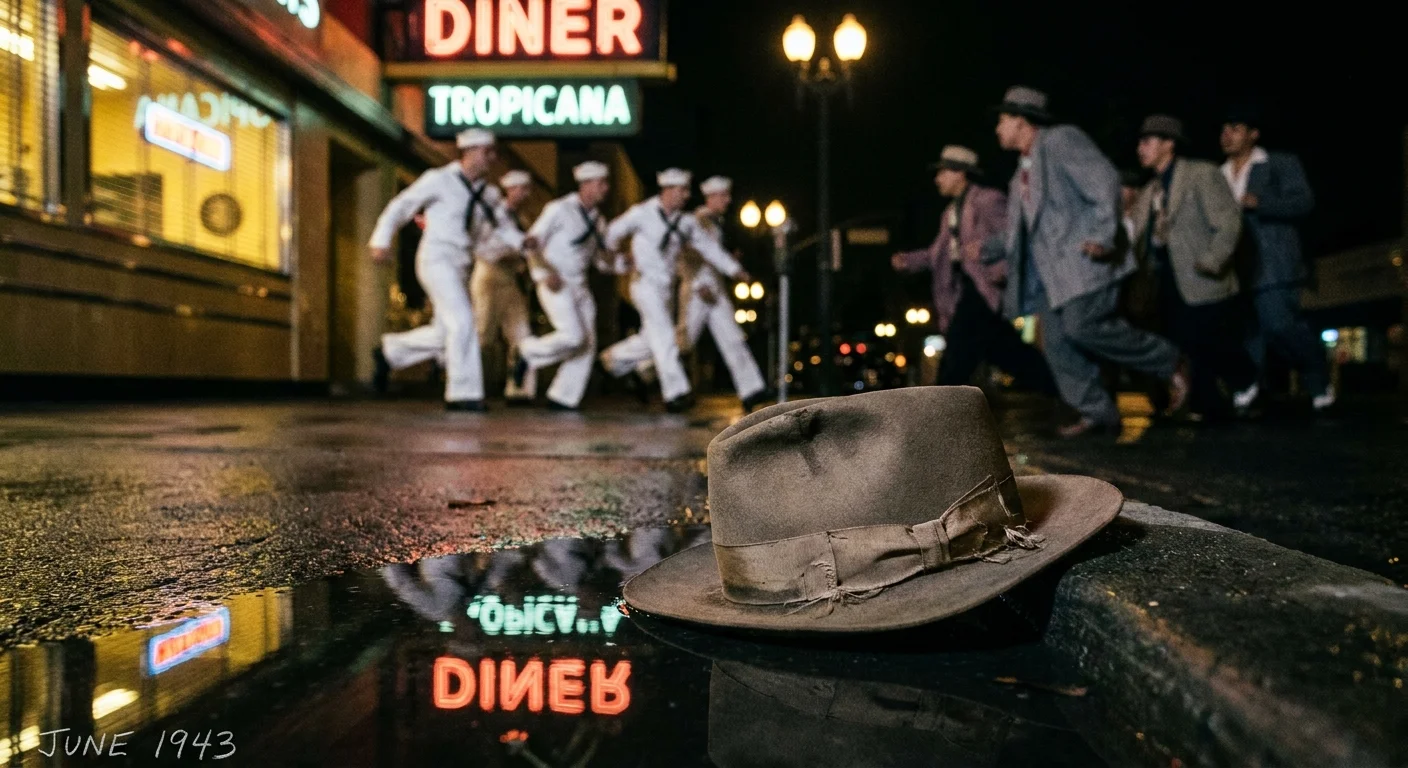
The Zoot Suit Riots of World War II
The home front during World War II is typically remembered as a unified time of patriotic sacrifice and rationing, but profound racial tensions simmered just beneath the surface of American cities. In June 1943, Los Angeles erupted into sustained violence during what became known as the Zoot Suit Riots. White servicemen stationed in the city began systematically attacking Mexican American youths, alongside some Black and Filipino men, who favored wearing distinctive oversized, draped suits.
The conflict did not occur in a vacuum; it was preceded by the highly publicized Sleepy Lagoon murder trial, which the local press used to baselessly frame young Mexican Americans as inherently violent gang members. Furthermore, the voluminous fabric required to tailor a zoot suit was viewed by some as an unpatriotic defiance of wartime fabric rationing regulations. Fueled by xenophobia and sensationalist journalism, mobs of sailors and soldiers roamed the city streets in taxicabs for several days. They dragged teenagers out of movie theaters, diners, and streetcars, brutally beating them and publicly stripping them of their clothing.
Local law enforcement largely stood by and watched the assaults; when they did intervene, they inexplicably arrested the bleeding victims for “disturbing the peace” rather than apprehending the military aggressors. First Lady Eleanor Roosevelt accurately described the events as race riots rooted in long-standing discrimination, a statement that infuriated the Los Angeles mayor. Eventually, military commanders confined service members to their bases, and the city council passed a ridiculous ordinance banning the wearing of zoot suits entirely. This violent clash exposes the deep-seated racial prejudices that persisted domestically even as the nation fought a war against fascism abroad, challenging you to recognize the stark contradictions inherent in the era’s patriotic narrative.