The Philippine-American War and Overseas Expansion
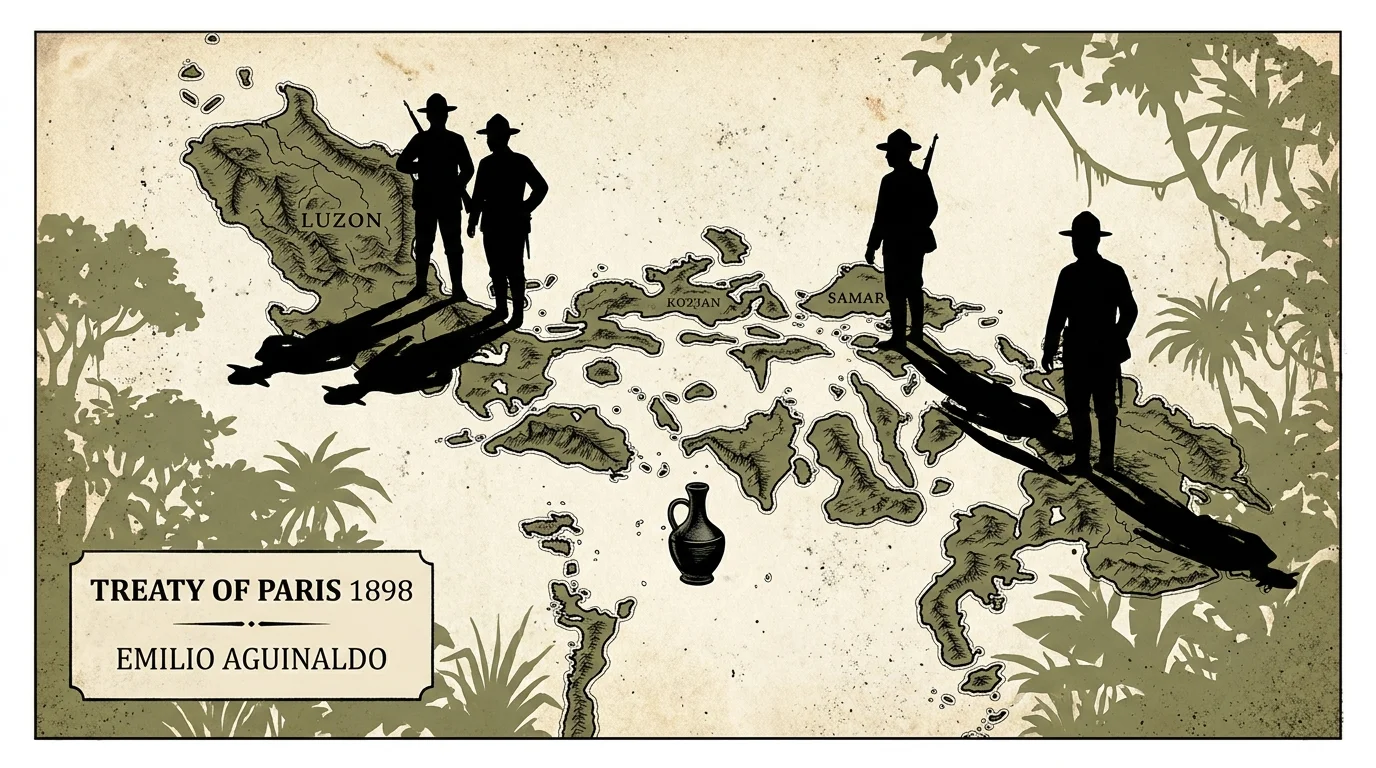
Textbooks frequently highlight the brief Spanish-American War of 1898 but conveniently omit the grueling, multi-year conflict that immediately followed it. When the United States acquired the Philippines from Spain through the Treaty of Paris, Filipino revolutionaries who had just finished fighting the Spanish for their independence simply redirected their resistance toward the new American colonizers. Between 1899 and 1902, the United States deployed over 125,000 troops to the archipelago to suppress the fierce insurgency led by Emilio Aguinaldo.
You might be shocked to learn the sheer severity of the military tactics utilized by American forces during this campaign. To break the guerilla resistance, the military established tightly controlled concentration camps, burned entire agricultural villages to starve out fighters, and utilized brutal torture methods like the “water cure” to extract information from captured suspects. In one infamous instance, General Jacob H. Smith ordered his troops to transform the island of Samar into a “howling wilderness” by killing any male over the age of ten capable of bearing arms.
The conflict extracted a staggering human toll. The war cost the lives of over 4,000 American soldiers, an estimated 20,000 Filipino combatants, and upwards of 200,000 Filipino civilians who perished from violence, famine, and cholera outbreaks exacerbated by the destruction of infrastructure. Back home, the Anti-Imperialist League—championed by prominent figures like Mark Twain and Andrew Carnegie—vehemently protested the war, arguing that ruling a foreign nation by force violated the core tenets of the United States Constitution. This brutal overseas campaign marked America’s definitive emergence as an imperial power, fundamentally shifting the nation’s global role and establishing controversial foreign policy patterns that endured throughout the twentieth century.