
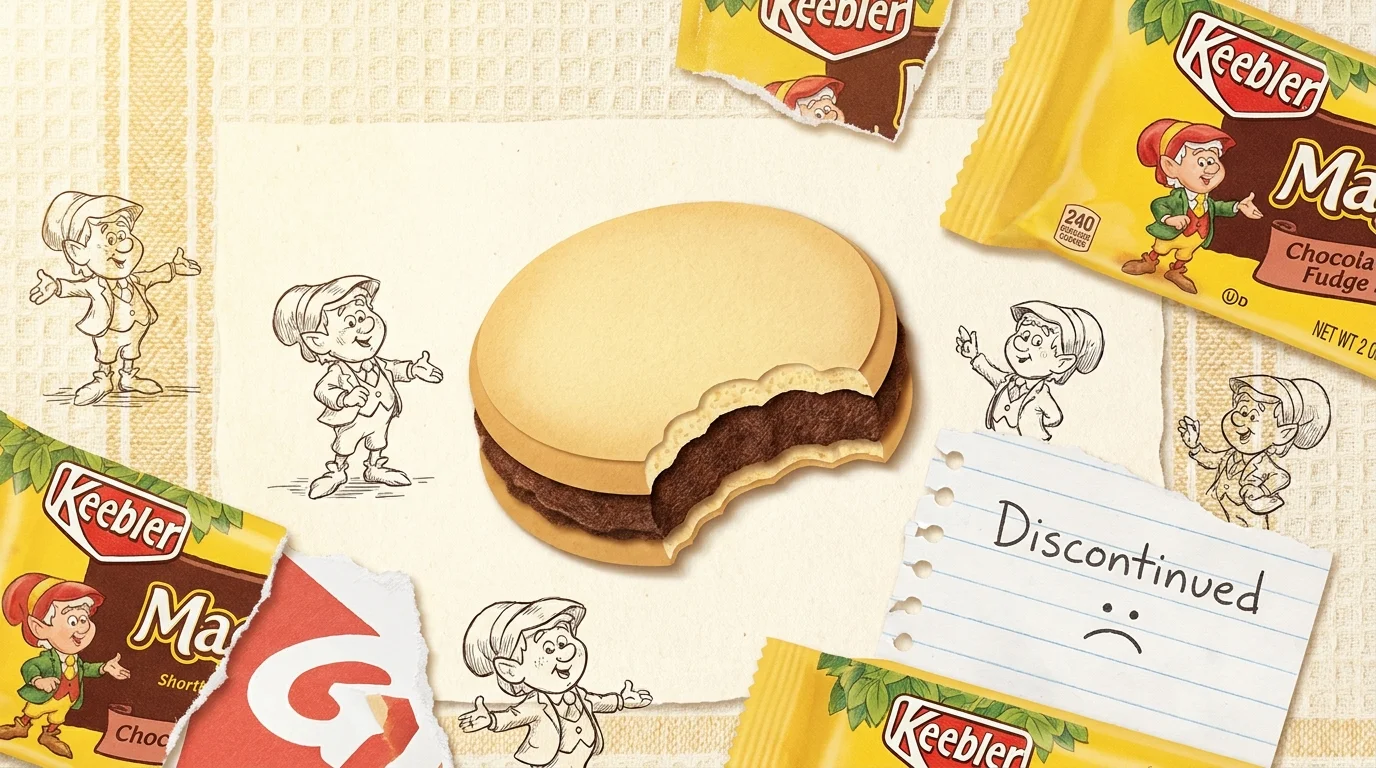
7. Keebler Magic Middles: The Discontinued Cookie Craze
Sometimes, amazing products vanish not because consumers reject them, but because corporate economics dictate their doom behind closed doors. Throughout the late 1980s and early 1990s, the Keebler Company sold a profoundly beloved treat known as Magic Middles. Unlike traditional chocolate chip cookies that mixed hard chocolate pieces into the dough, Magic Middles were thick, buttery shortbread cookies with a perfectly smooth, hollowed-out center injected with rich, molten fudge. They provided a unique textural experience that captured the hearts of millions of children and adults alike.
Keebler supported the brand with aggressive television marketing featuring their iconic animated elves, who claimed to use their magical treehouse technology to bake the fudge directly into the center of the cookie. Sales remained incredibly strong for years, and the cookie established a deeply loyal fan base. Yet, by the turn of the millennium, Magic Middles quietly vanished from grocery store shelves without any official announcement or explanation.
The true reason for their demise came down to the cold realities of corporate restructuring and equipment optimization. In 2001, the Kellogg Company acquired Keebler in a massive corporate buyout. When corporate executives audited Keebler’s manufacturing facilities, they discovered that the specialized injection machinery required to pump the soft fudge into the Magic Middles was highly expensive to maintain. More importantly, those specific production lines could only be used to make that single cookie. To maximize corporate profits, Kellogg’s decided to dismantle the specialized equipment and reallocate the factory floor space to produce more standardized, mass-market items that yielded higher profit margins. The tragic fate of Magic Middles highlights a vital business reality: strong consumer demand means absolutely nothing if the supply chain economics do not justify the manufacturing costs.