6. Orbitz Beverage: The Lava Lamp You Could Drink
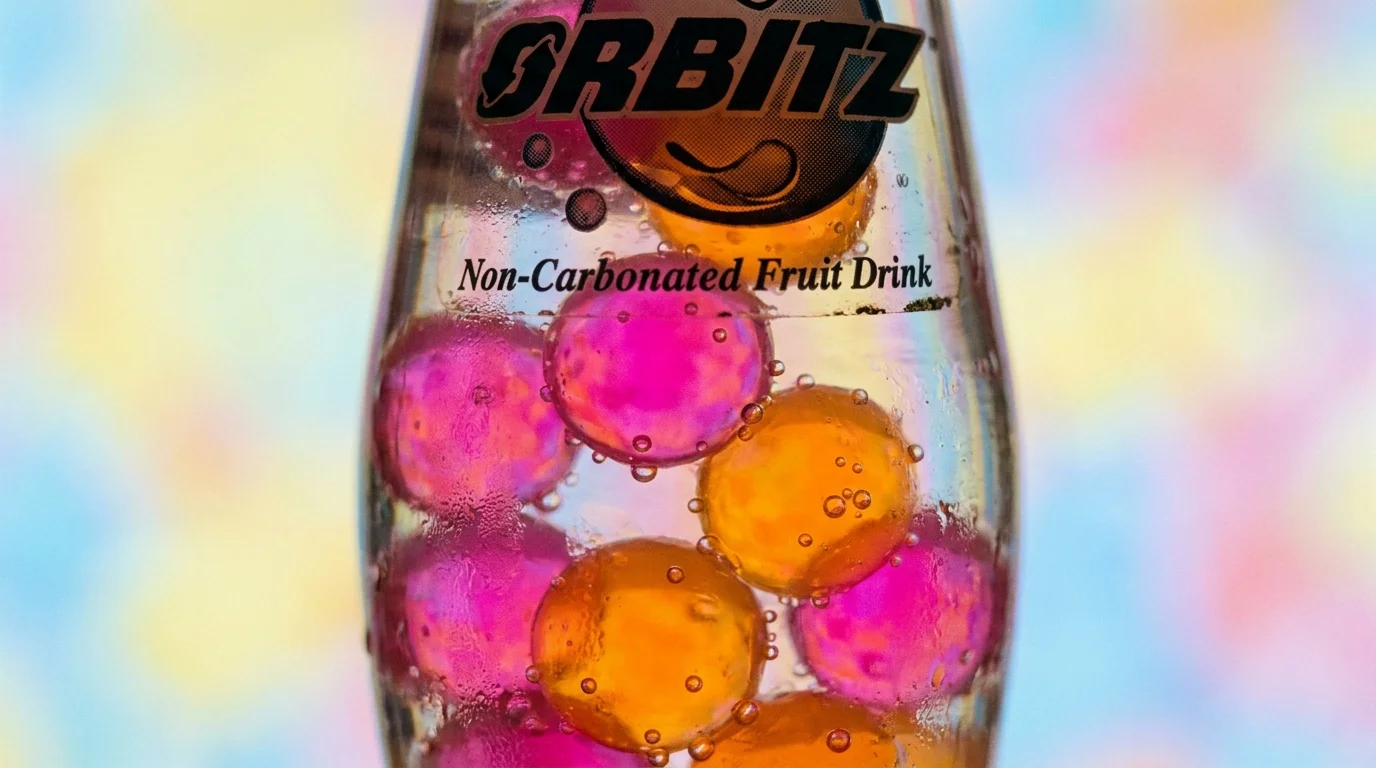
The late 1990s witnessed an explosion of eccentric, boundary-pushing consumer products driven by a booming dot-com economy and a cultural desire for extreme novelty. In 1997, the Clearly Canadian Beverage Corporation launched Orbitz, a product they boldly marketed as a “texturally enhanced alternative beverage.” Orbitz immediately captured attention because it looked absolutely mesmerizing on the store shelf. The clear glass bottles contained hundreds of small, brightly colored gelatinous spheres suspended perfectly motionless within a transparent, fruit-flavored liquid.
The company achieved this gravity-defying visual effect through legitimate scientific innovation. They utilized gellan gum to create a fluid with a specific yield stress, meaning the liquid behaved like a solid when sitting still, preventing the edible beads from floating to the top or sinking to the bottom. From a visual and marketing standpoint, Orbitz brilliantly capitalized on the era’s fascination with retro-futurism, looking exactly like a miniature lava lamp that you could drink.
However, the actual experience of drinking Orbitz was universally reviled. The texture of the gellan gum gave the liquid a distinctly syrupy, heavy mouthfeel that most consumers found deeply unpleasant. When you took a sip, the gelatinous balls provided a slimy contrast to the liquid, leading many taste-testers to compare the experience to drinking cold cough syrup mixed with tapioca pearls. While the stunning visual design drove massive initial sales from curious teenagers and novelty seekers, nobody wanted to drink it twice. Orbitz completely disappeared from stores within a year of its launch. Today, unopened bottles remain highly sought-after by collectors of nostalgia, but the product’s rapid demise proves that visual gimmicks cannot save a food item that fundamentally fails to taste good.