
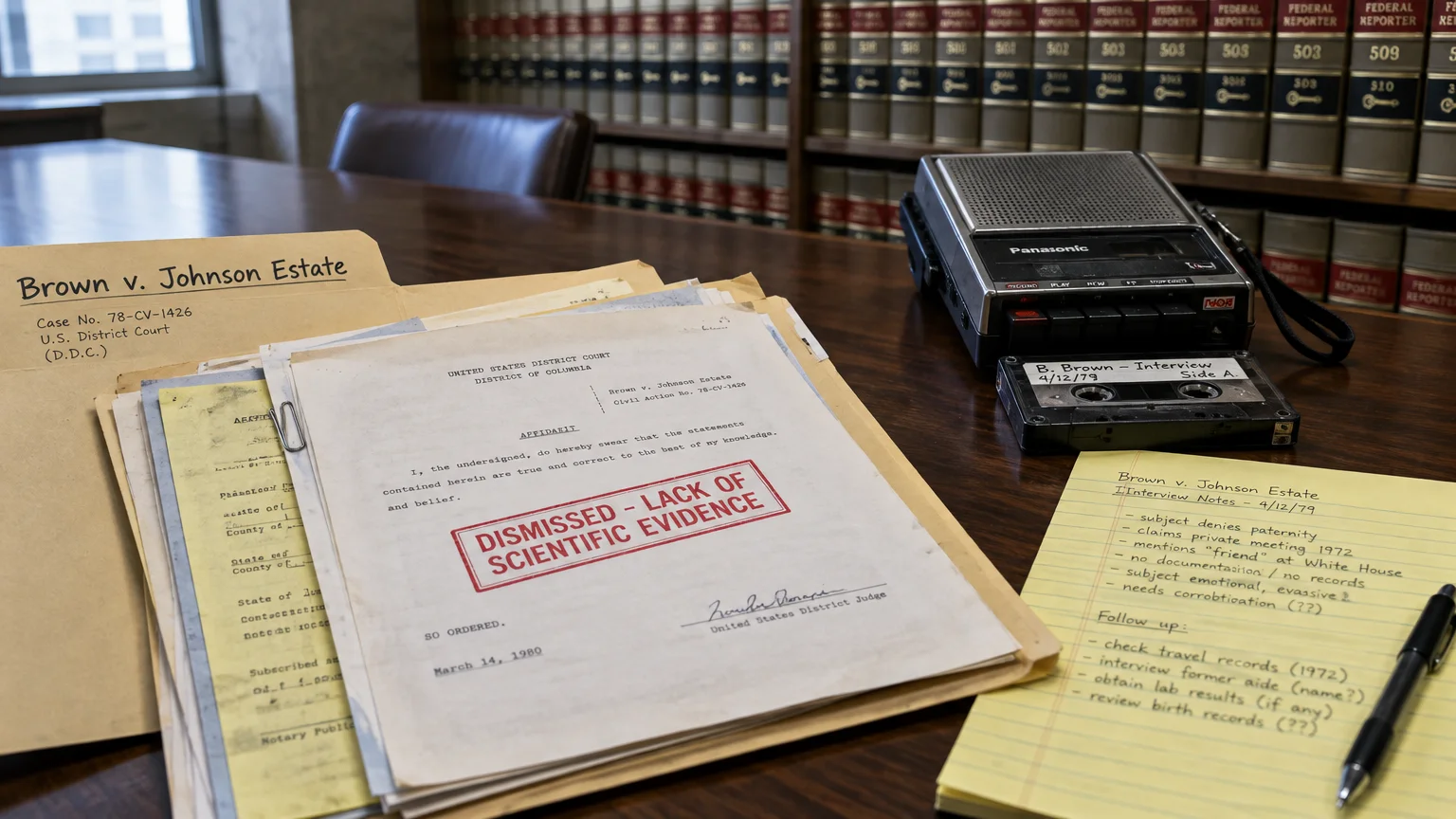
Lyndon B. Johnson and Steven Mark Brown: The Limits of Unsubstantiated Claims
Modern political eras also generated sensational paternity allegations that collapsed upon legal and historical examination. The disputed claims regarding Lyndon B. Johnson demonstrate how easy it is for unsubstantiated rumors to gain media momentum.
On December 27, 1950, a Texas woman named Madeleine Duncan Brown gave birth to a son named Steven Mark Brown. Decades later, Brown began publicly alleging that she had carried on a thirty-year extramarital affair with Johnson, who was then serving as a powerful United States Senator.
Brown claimed that Johnson had privately promised to support her child financially and provide for his education. However, she offered no contemporary letters, canceled checks, or third-party corroboration to support her extraordinary assertions.
The controversy intensified on June 19, 1990, when Steven Mark Brown filed a sensational $10.5 million paternity lawsuit in Texas against Johnson’s widow, Claudia “Lady Bird” Johnson. Brown demanded financial compensation and access to genetic samples from the former president’s immediate family.
The legal maneuver fell apart rapidly inside the courtroom. Later that same year, a Texas district court judge dismissed Brown’s lawsuit with prejudice, citing an utter lack of substantive evidence and a total failure to establish a legally viable claim.
Investigative historians who reviewed Johnson’s daily appointment books found numerous irreconcilable contradictions in Madeleine Brown’s timeline. Key meetings she claimed took place in Washington and Dallas directly conflicted with verified archival records of Johnson’s public schedule.
Without independent genetic corroboration or documentary proof, scholarly consensus rejects Steven Mark Brown’s claim. The case serves as an essential reminder that bold public accusations do not equal historical reality.