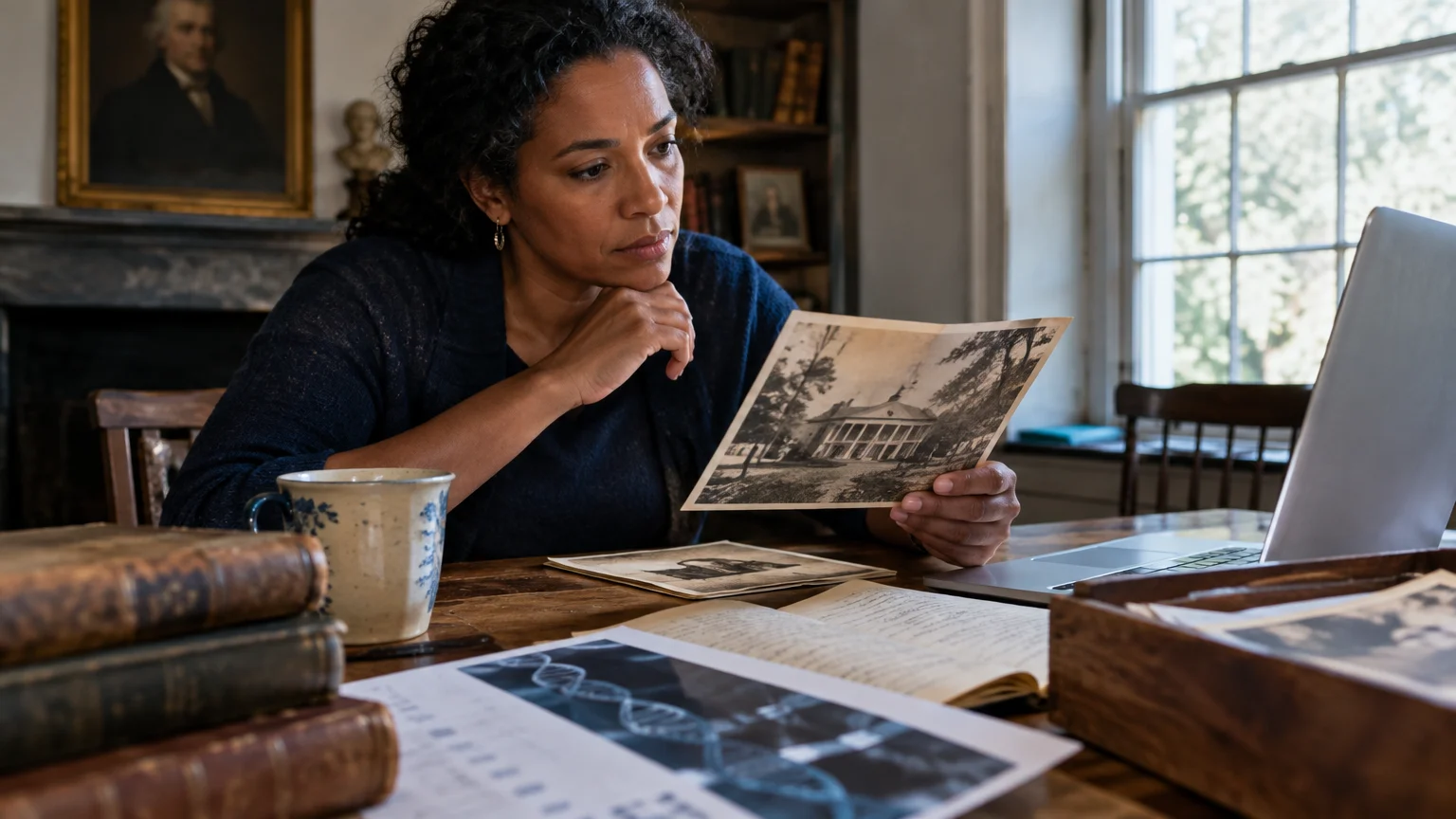
Thomas Jefferson and Sally Hemings: A Monticello Secret Solved by Science
Few domestic controversies in presidential history generated as much fierce debate as the relationship between Thomas Jefferson and Sally Hemings. Hemings was an enslaved woman at Monticello who served as half-sister to Jefferson’s deceased wife, Martha Wayles Skelton.
In the autumn of 1802, a vengeful journalist named James T. Callender published an exposé in the Richmond Recorder. Callender claimed that Jefferson had fathered multiple enslaved children with Hemings, sparking nationwide outrage.
Federalist opponents weaponized Callender’s article to attack Jefferson’s moral authority during his first term. Jefferson adopted a strict policy of silence; he never publicly confirmed or denied the allegations.
For nearly two centuries, mainstream historians dismissed the claim as partisan slander designed to damage the Democratic-Republican Party. Many biographers argued that Jefferson’s nephews, Peter or Samuel Carr, were the actual fathers of the Hemings children.
That long-standing defense collapsed under the weight of modern molecular genetics. On November 5, 1998, a groundbreaking scientific study led by Dr. Eugene Foster appeared in the prestigious journal Nature.
Foster’s team tracked Y-chromosome markers passed unchanged through male lineages. Because Jefferson had no surviving legitimate sons, researchers analyzed direct male descendants of his paternal uncle, Field Jefferson.
The genetic results established an irrefutable match between the Jefferson paternal line and descendants of Sally Hemings’ youngest son, Eston Hemings. Simultaneously, the tests completely excluded the Carr nephews from the genetic pool.
The scientific breakthrough prompted a comprehensive reassessment by academic historians. In January 2000, the Thomas Jefferson Foundation at Monticello published an exhaustive multidisciplinary report evaluating DNA findings alongside plantation record books.
The foundation concluded that Thomas Jefferson was almost certainly the father of Eston Hemings and likely fathered all six of Sally Hemings’ recorded surviving children born between 1795 and 1808. These children included Beverly, Harriet, Madison, and Eston.
When you walk the grounds of Monticello today, you see a completely integrated historical narrative. Curators now present the Hemings family not as an embarrassing footnote, but as a central component of Jefferson’s domestic world.