Bayard Rustin and the Master Plan of the Civil Rights Movement
Behind every soaring speech and peaceful march lies an exhausting matrix of logistical planning. Bayard Rustin was the operational genius who transformed the philosophical ideals of the Civil Rights Movement into massive, undeniable demonstrations. As a close mentor to Martin Luther King Jr., Rustin introduced King to the tactical applications of Mahatma Gandhi’s nonviolent resistance, shifting the movement away from spontaneous protests toward highly disciplined, strategic campaigns.
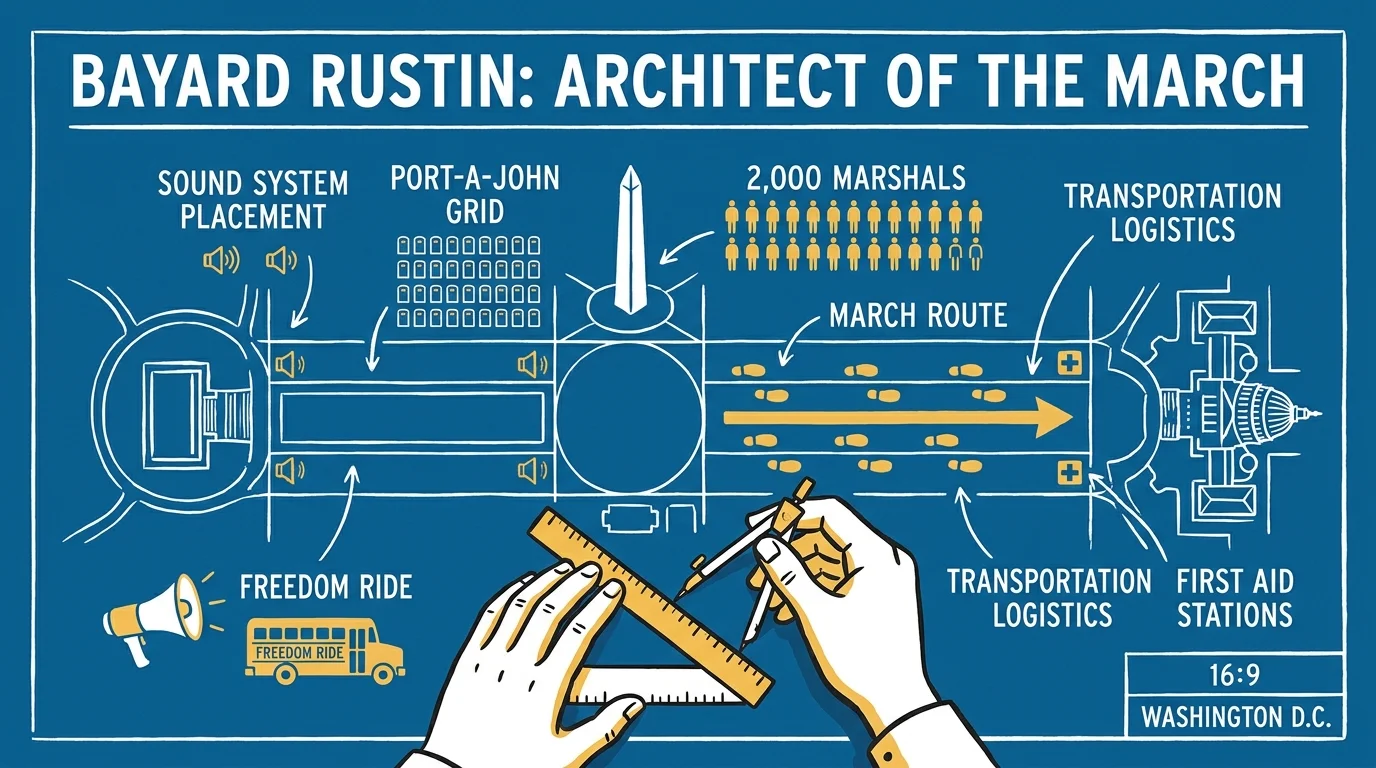
Rustin’s crowning achievement was organizing the 1963 March on Washington for Jobs and Freedom. The logistics required to safely transport, feed, and manage a quarter-million people in the nation’s capital were staggering. Rustin directed everything from chartering thousands of buses and trains to securing specialized sound systems so King’s “I Have a Dream” speech could be heard clearly by the massive crowd. He even organized the assembly of tens of thousands of peanut butter and jelly sandwiches to ensure the protesters were fed. He managed multiple command centers simultaneously, ensuring that the demonstration remained entirely peaceful and strictly adhered to the designated schedule.
Despite his indispensable brilliance, Rustin was pushed to the margins of the movement he helped build. As an openly gay man who had briefly associated with communist groups in his youth, he was viewed as a political liability. Opponents inside and outside the movement threatened to use his sexual orientation to discredit the fight for racial equality, forcing him to operate behind the scenes. Restoring Rustin to his rightful place among historical figures reminds you that the structural integrity of any great social movement depends heavily on those who are actively denied the spotlight.