Maurice Hilleman and the Conquest of Childhood Disease
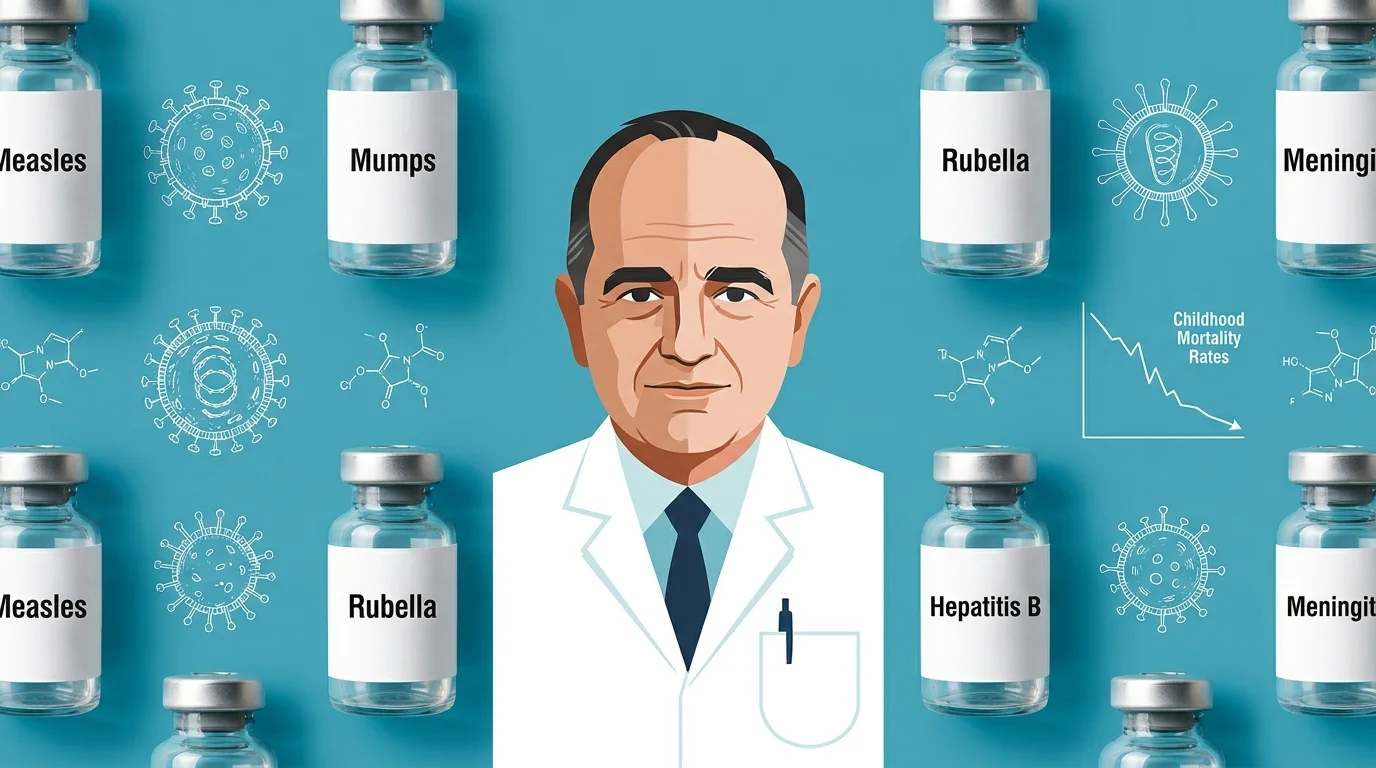
Scientific history frequently elevates the discoverers of theoretical physics or the inventors of atomic weapons, yet Maurice Hilleman arguably saved more lives than any other scientist in the twentieth century. Growing up on a rugged Montana farm during the Great Depression, Hilleman developed a pragmatic, no-nonsense approach to problem-solving that would later define his career in microbiology. Despite his monumental impact on global public health, his name remains largely unrecognized outside of virology circles.
Hilleman developed more than forty vaccines throughout his career. His most famous breakthrough began with a deeply personal emergency. In the middle of the night in 1963, his five-year-old daughter, Jeryl Lynn, woke up with a swollen jaw and a high fever. Recognizing the classic symptoms of the mumps, Hilleman swabbed the back of her throat, drove through the dark to his laboratory at Merck, and began culturing the virus in chicken embryos. He systematically weakened the virus over several years until it could safely provoke an immune response without causing the disease. The “Jeryl Lynn strain” is still the foundation of the mumps vaccine administered to children worldwide today.
His relentless drive did not stop there. Hilleman spearheaded the development of vaccines for measles, rubella, hepatitis A, hepatitis B, chickenpox, meningitis, and pneumonia. He pioneered the combination MMR vaccine, allowing children to receive protection from three deadly viruses in a single shot. Before his interventions, pediatric wards were routinely filled with children suffering from deafness, brain damage, or death caused by these diseases. By treating infectious diseases as mechanical problems to be systematically dismantled, Hilleman delivered practical, life-saving solutions that fundamentally altered human demographics.