7. The Kentucky Meat Shower Baffles Scientists
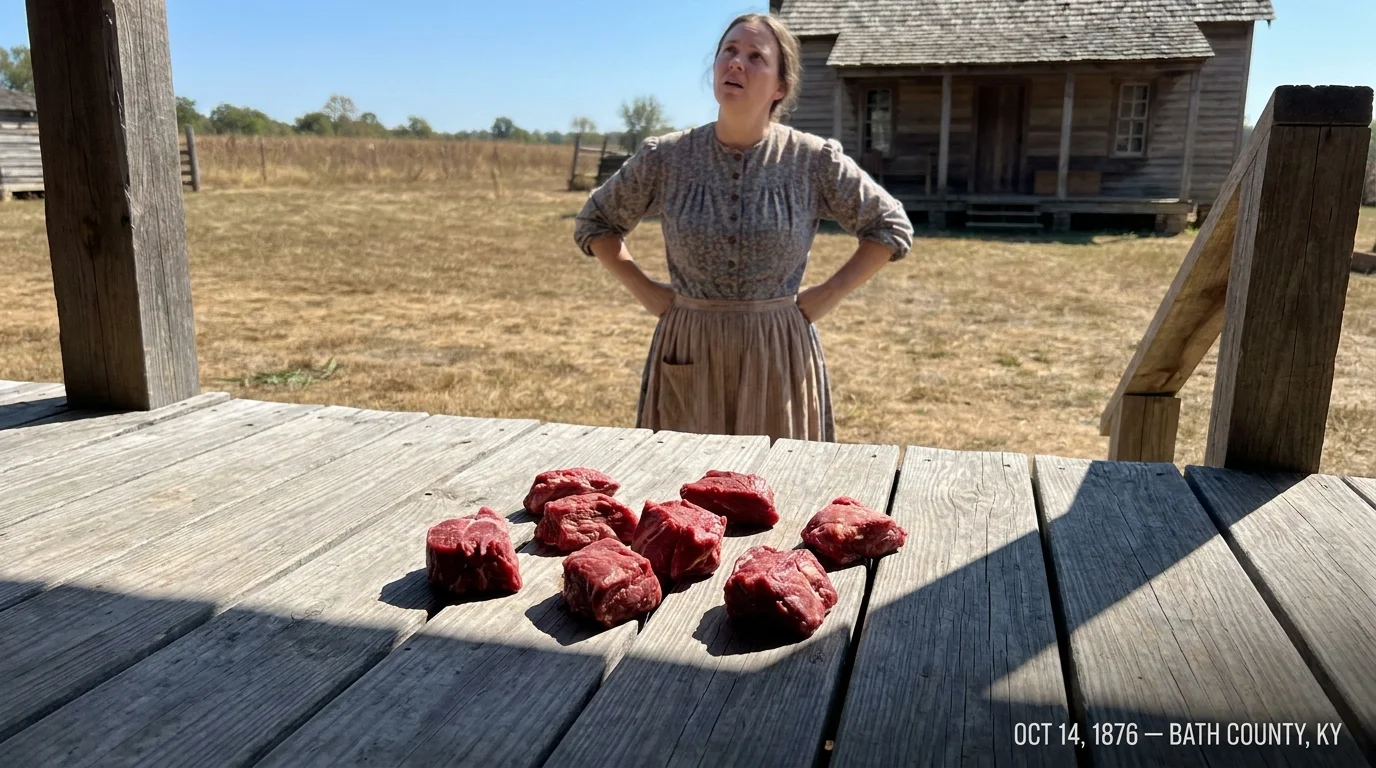
History occasionally drops an event so completely absurd that you must double-check the primary sources to ensure you are not reading fiction. On March 3, 1876, in the rural settlement of Olympia Springs within Bath County, Kentucky, flakes of raw meat began raining from a perfectly clear sky. The bizarre precipitation fell over a farm belonging to Mrs. Crouch, covering a localized area of roughly 100 by 50 yards. Pieces of flesh, measuring roughly two inches square, draped over fences, littered the ground, and stuck to nearby bushes.
Instead of running in terror, two remarkably brave—or perhaps profoundly foolish—local men volunteered to taste the fallen flesh. They reported that it tasted similar to mutton or fresh veal. The local media seized the story, drawing the attention of chemists, naturalists, and curious citizens from across the country. Initial theories ranged from a divine miracle to the biological growth of Nostoc, a type of cyanobacteria that swells into a jelly-like mass when exposed to rain. However, the sky had been clear during the meat shower.
Eventually, scientists analyzed preserved samples of the meat under early microscopes, identifying lung tissue, muscle, and cartilage from horses or human infants. The scientific consensus settled on the “vulture vomit theory.” A flock of buzzards likely gorged themselves on a dead animal nearby, took to the air, and simultaneously regurgitated their heavy meals to reduce flight weight as a defensive mechanism. You can view this strange historical footnote as a triumph of scientific inquiry over superstition. When faced with the seemingly impossible, applying systematic analysis usually uncovers a logical, albeit deeply unpleasant, explanation.