2. The New Madrid Earthquakes Reverse the Mississippi River
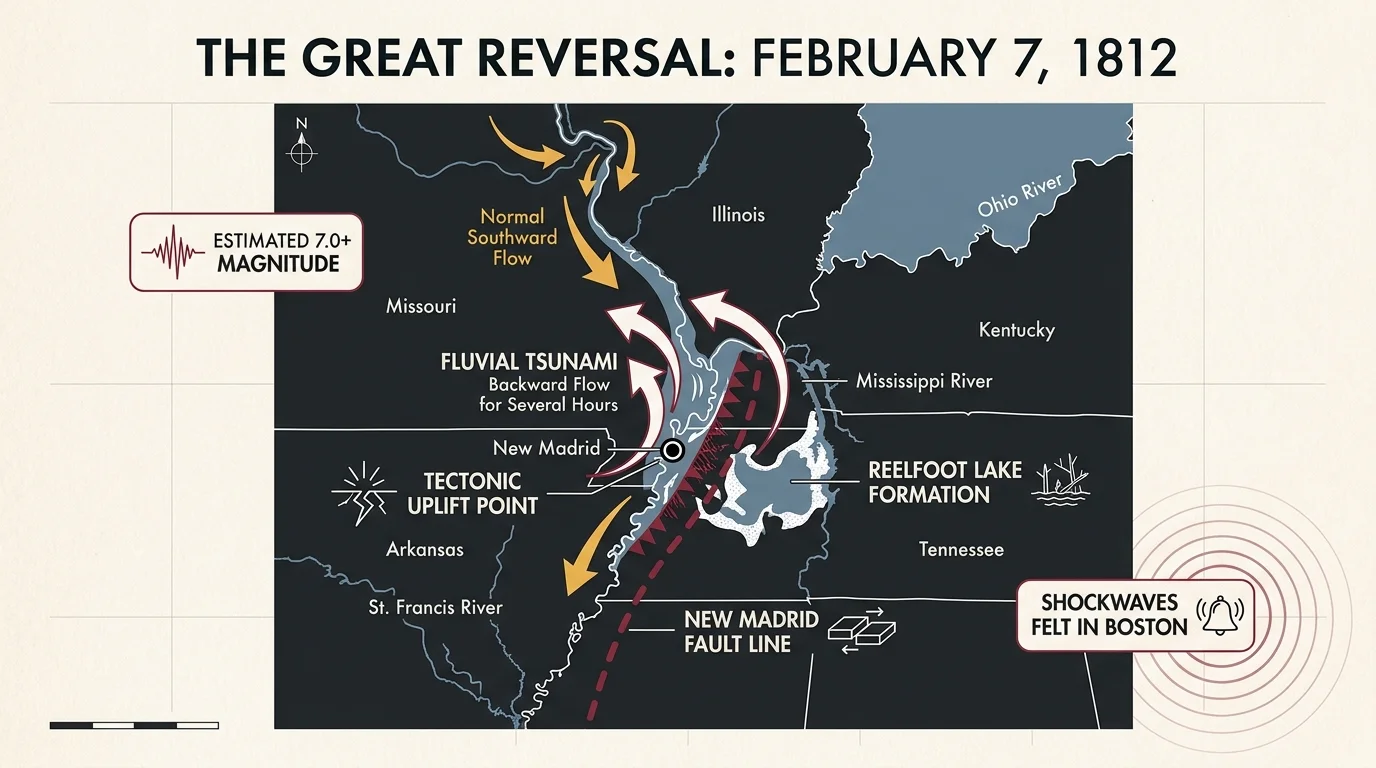
When you think of seismic danger zones in the United States, you instinctively look toward California and the Pacific coastline. However, the most profound series of earthquakes in recorded American history struck the Midwest. Between December 1811 and February 1812, the New Madrid fault line—located near the modern borders of Missouri, Arkansas, and Tennessee—unleashed three massive tremors. Geologists estimate these quakes surpassed a 7.0 on the modern Richter scale.
The violent shifting of the earth’s crust produced supernatural effects across the frontier landscape. The ground rolled in visible waves, vast tracts of forest disappeared into expanding fissures, and sulfurous gases erupted from the soil. The most unbelievable phenomenon occurred during the final quake on February 7, 1812. Tectonic uplift created a temporary dam across the Mississippi River, generating a fluvial tsunami. For several terrifying hours, the mighty Mississippi River flowed backward. The seismic violence also permanently altered the regional geography, carving out a massive basin that quickly filled with water to become Reelfoot Lake in Tennessee.
The sheer reach of the shockwaves defies imagination. You could hear church bells ringing from the vibrations as far away as Boston, Massachusetts, while President James Madison reportedly felt the tremors inside the White House. Studying the New Madrid earthquakes provides a vital, practical lesson in disaster preparedness: geological complacency is dangerous. You must understand the hidden fault lines beneath your own region, as nature rarely respects human expectations.