4. The Pure Finder: Scavenging for the Leather Industry
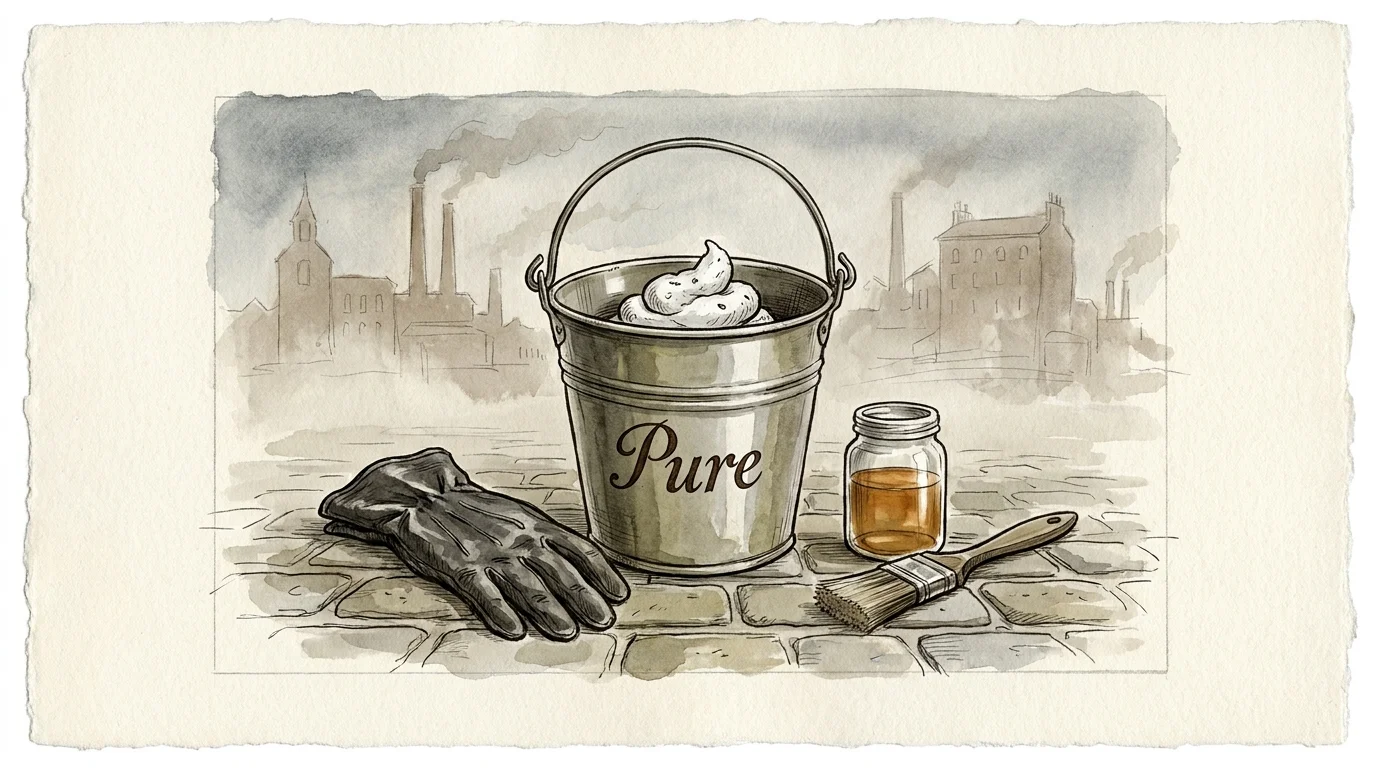
Walking the streets of Victorian London required a strong stomach, but for a specific group of marginalized workers, the city’s filth represented cold, hard cash. Among the most desperate historical careers was the pure finder. These individuals scavenged the streets, alleys, and parks for dog feces, which they scooped into covered buckets. They sold this pungent harvest to local tanneries, where it served a vital chemical function in the booming leather industry.
Tanners colloquially referred to the dog feces as “pure.” To transform stiff animal hides into soft, luxurious leather for bookbindings, gloves, and luxury shoes, tanners soaked the skins in a specialized chemical bath called a bate. Dog feces contain unique alkaline properties and bacterial enzymes that break down the fibrous tissues in the hides, making them supple without destroying the material. The demand for high-quality leather in the nineteenth century drove tannery owners to pay premium prices for fresh, uncontaminated buckets of pure.
Journalist Henry Mayhew documented the harsh realities of the pure finders in his 1851 survey of London’s working class. He discovered that the profession consisted almost entirely of elderly women who had no other means of survival and desperately wanted to avoid the horrors of the Victorian workhouse. They walked miles every day, competing fiercely over prime scavenging territories. A diligent pure finder could earn a meager but livable wage, provided they possessed an encyclopedic knowledge of where local stray dogs congregated. This bizarre history fact perfectly encapsulates the brutal efficiency of the Victorian economy, where human desperation met industrial necessity, leaving absolutely zero waste unexploited.