2. The Sin-Eater: Consuming the Transgressions of the Dead
Grief and superstition collided heavily in the isolated villages of Wales and the English Marches during the eighteenth and nineteenth centuries. When a family member died, the community faced a terrifying spiritual problem: what happened to the sudden, unconfessed sins the deceased harbored at the moment of death? To ensure the soul bypassed purgatory and entered heaven, families hired a sin-eater. This solemn, deeply stigmatized professional performed a ritual that literally required them to ingest the wrongdoings of the dead.
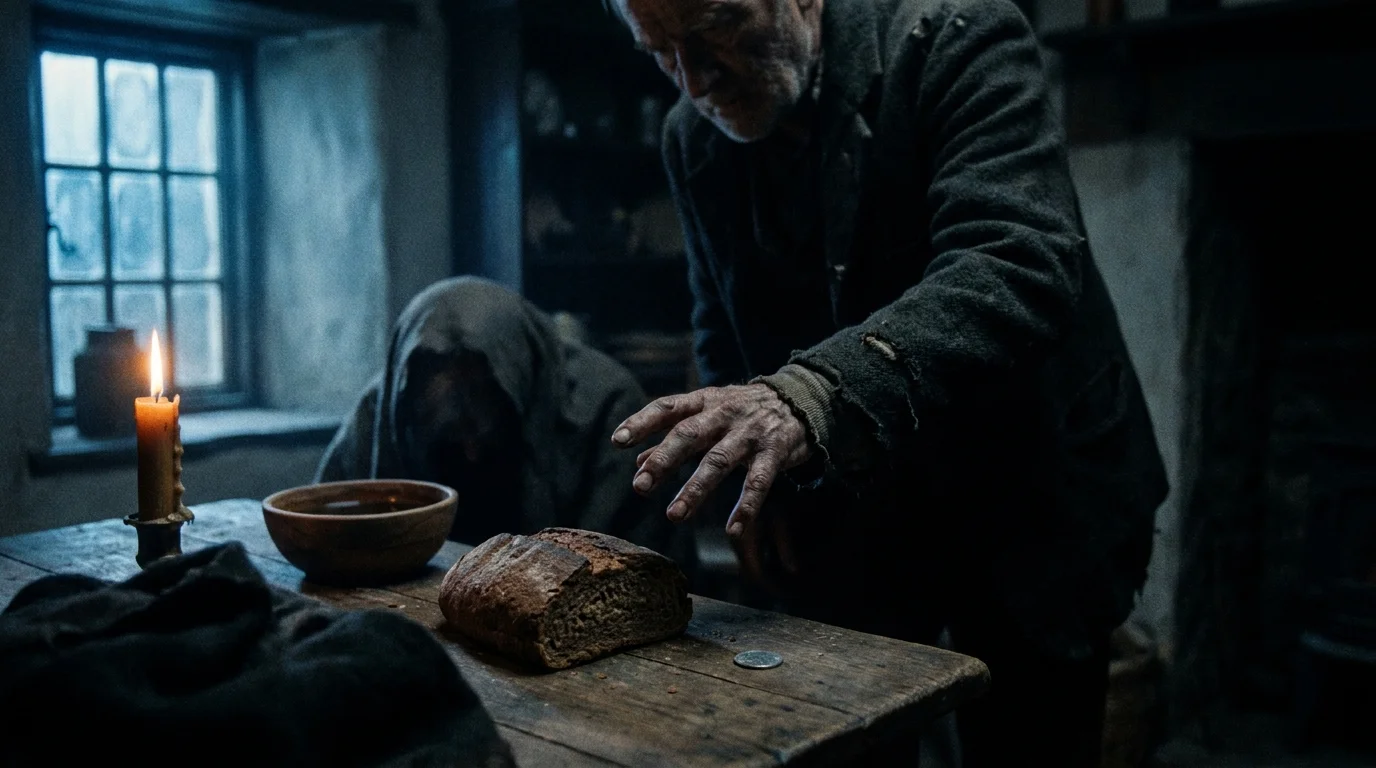
The process unfolded with grim precision. The mourning family placed a crust of bread and a bowl of ale over the chest of the deceased. They believed the food absorbed the lingering sins of the corpse. The sin-eater then entered the home, drank the ale, and ate the bread. By completing this meal, the sin-eater voluntarily took the deceased person’s sins upon their own soul. The family paid the worker a small fee—usually a mere sixpence—before immediately driving them out of the house, often chasing them away with sticks and verbal abuse.
Communities treated sin-eaters as outcasts. Villagers viewed them as spiritually contaminated, carrying the collective evils of generations. Most sin-eaters lived on the extreme fringes of society, driven to the profession by desperate poverty. They sacrificed their own spiritual salvation to afford their next meal. However, anomalies existed. Richard Munslow, the last known sin-eater who died in 1906, was a relatively wealthy farmer. Historians suggest Munslow revived the practice out of sheer kindness after a series of tragic child deaths in his village. He took on the strange burden to offer psychological comfort to his grieving neighbors, illustrating how weird jobs often fulfilled deep emotional needs in rural communities.