Understanding the educational backgrounds of American leaders gives you a direct window into how power and privilege have evolved in the United States. When you examine the US presidents who went to Ivy League schools, you uncover a fascinating timeline of political networking, intellectual development, and the shifting definition of elite status. From John Adams shaping early democracy at Harvard to modern leaders securing degrees from Yale and Columbia, these institutions have acted as crucial training grounds for the highest office. Tracing this academic lineage helps you see how university culture influenced executive decisions, policy frameworks, and the broader trajectory of American history.
The Early Republic and the Foundations of Ivy Influence
Long before the phrase “Ivy League” emerged in the 1930s as a sports conference moniker, the colonial colleges that would eventually form this elite group were already producing the architects of the American republic. If you look at the origins of American presidential history, you immediately encounter the deep influence of these early institutions. Harvard University and the College of New Jersey—which you now know as Princeton University—served as intellectual incubators for the nation’s founding generation.
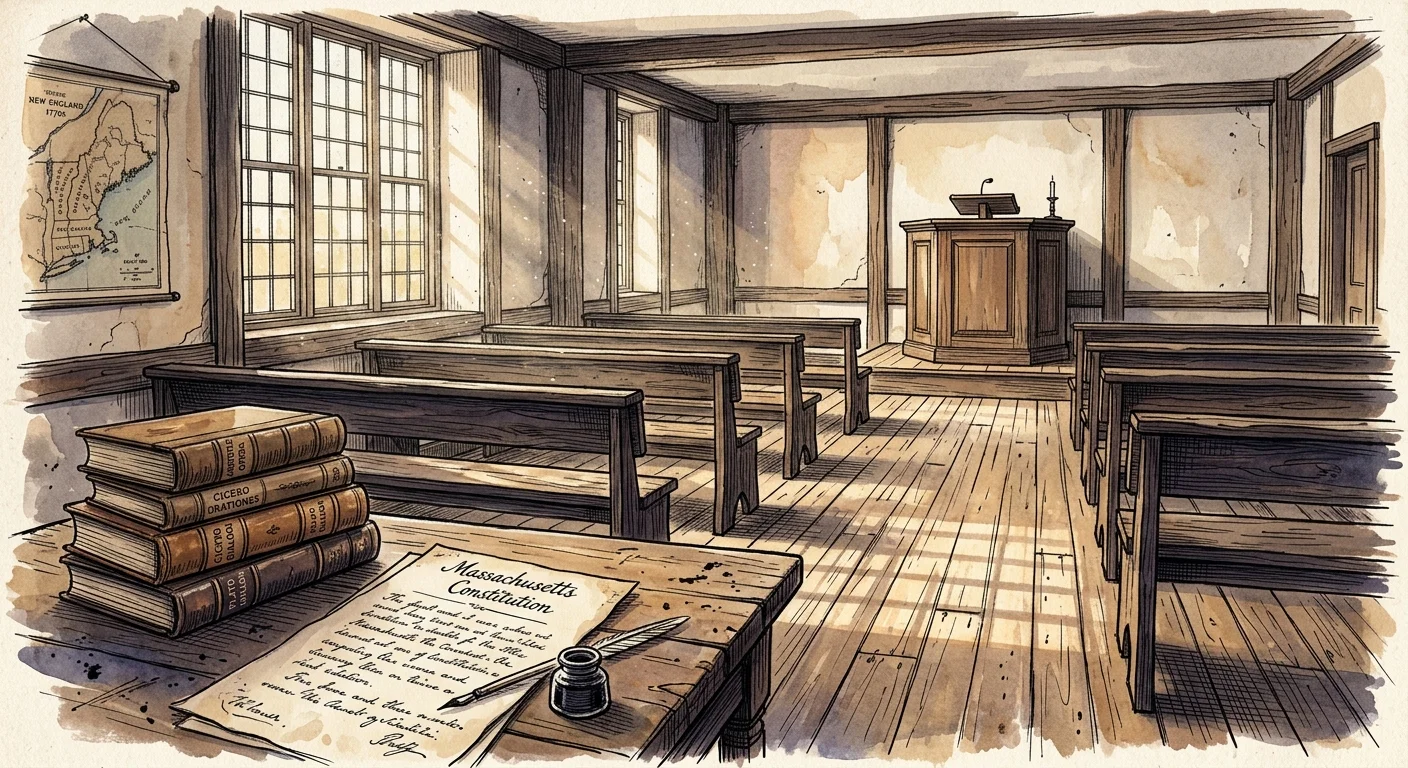
John Adams entered Harvard College in 1751. During this era, Harvard ranked its students not by academic merit, but by their family’s social standing. Adams ranked fourteenth in a class of twenty-four, a middling status that fueled his lifelong drive to prove his intellectual superiority. At Harvard, Adams immersed himself in the classics, history, and Enlightenment philosophy. His rigorous education provided him with the analytical tools he needed to draft the Massachusetts Constitution and advocate fiercely for independence. You can trace his reliance on structural government and checks and balances directly back to the classical texts he debated in Cambridge.
James Madison brought a different academic flavor to the presidency. He bypassed the local College of William and Mary in Virginia, primarily because the lowland climate threatened his fragile health. Instead, he traveled north to the College of New Jersey. Studying under the formidable Scottish minister John Witherspoon, Madison absorbed the principles of the Scottish Enlightenment. Witherspoon demanded that his students apply moral philosophy to real-world governance. Madison took this to heart. When you study the Federalist Papers or the US Constitution, you are reading the intellectual output of a man who spent his college years dissecting the mechanics of classical republics and the nature of human factionalism.
John Quincy Adams continued his father’s legacy by attending Harvard. Because he had spent much of his youth traveling through Europe as his father’s diplomatic secretary, John Quincy arrived at Harvard with an unparalleled worldly perspective. He possessed a staggering intellect and mastered multiple languages before he even set foot on campus. His time at Harvard cemented his belief in federal support for infrastructure, science, and education—a vision he relentlessly pursued, often to his political detriment, during his presidency.