The Overthrow of the Hawaiian Kingdom in 1893
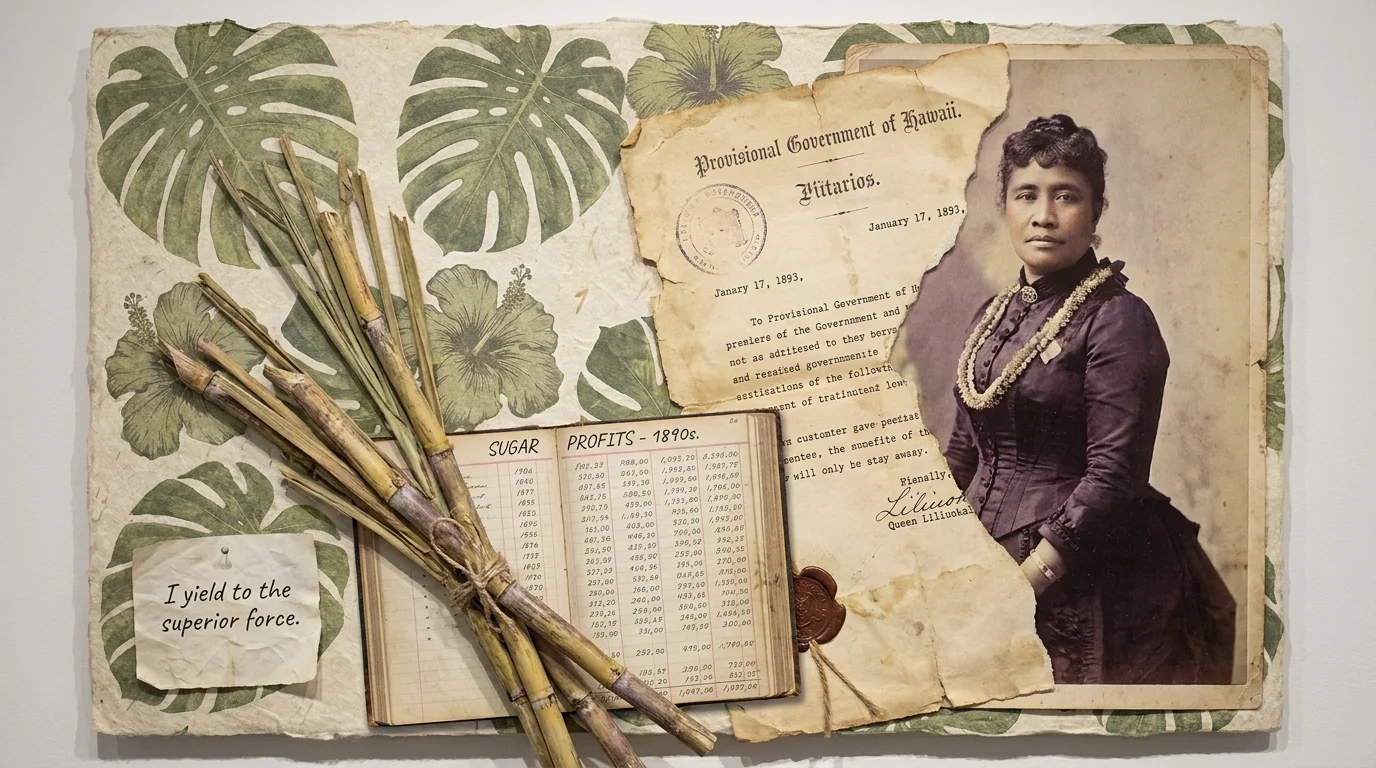
The United States’ massive transition from a continental republic to a global overseas empire pivots directly on a largely overlooked corporate coup in the middle of the Pacific Ocean. By the late nineteenth century, American sugar planters wielded immense economic influence within the sovereign Kingdom of Hawaii. When Queen Liliuokalani legally ascended to the throne, she immediately sought to restore political power to the native Hawaiian people and limit the encroaching dominance of foreign businessmen who controlled the agricultural economy.
In January 1893, a small group of American sugar planters and descendants of missionaries orchestrated an illegal overthrow of the Hawaiian monarchy. Crucially, they succeeded only because the United States Minister to Hawaii ordered heavily armed US Marines ashore to intentionally intimidate the Queen’s security forces. Desiring deeply to avoid bloodshed among her people, Queen Liliuokalani surrendered her absolute authority under protest, expecting the US government to eventually investigate the crime and restore her rightful sovereignty. Instead, the opportunistic businessmen established a provisional government and lobbied aggressively for immediate American annexation.
This aggressive takeover completely changed America’s geopolitical posture. By officially annexing Hawaii five years later, the United States acquired a crucial strategic naval base at Pearl Harbor, which subsequently dictated American military dominance in the Pacific theater during World War II. The illegal overthrow also inflicted severe, ongoing cultural and economic trauma upon Native Hawaiians. Understanding this event provides vital historical context for how corporate financial interests and military power have historically merged to project American influence across the globe.