The Toledo War of 1835
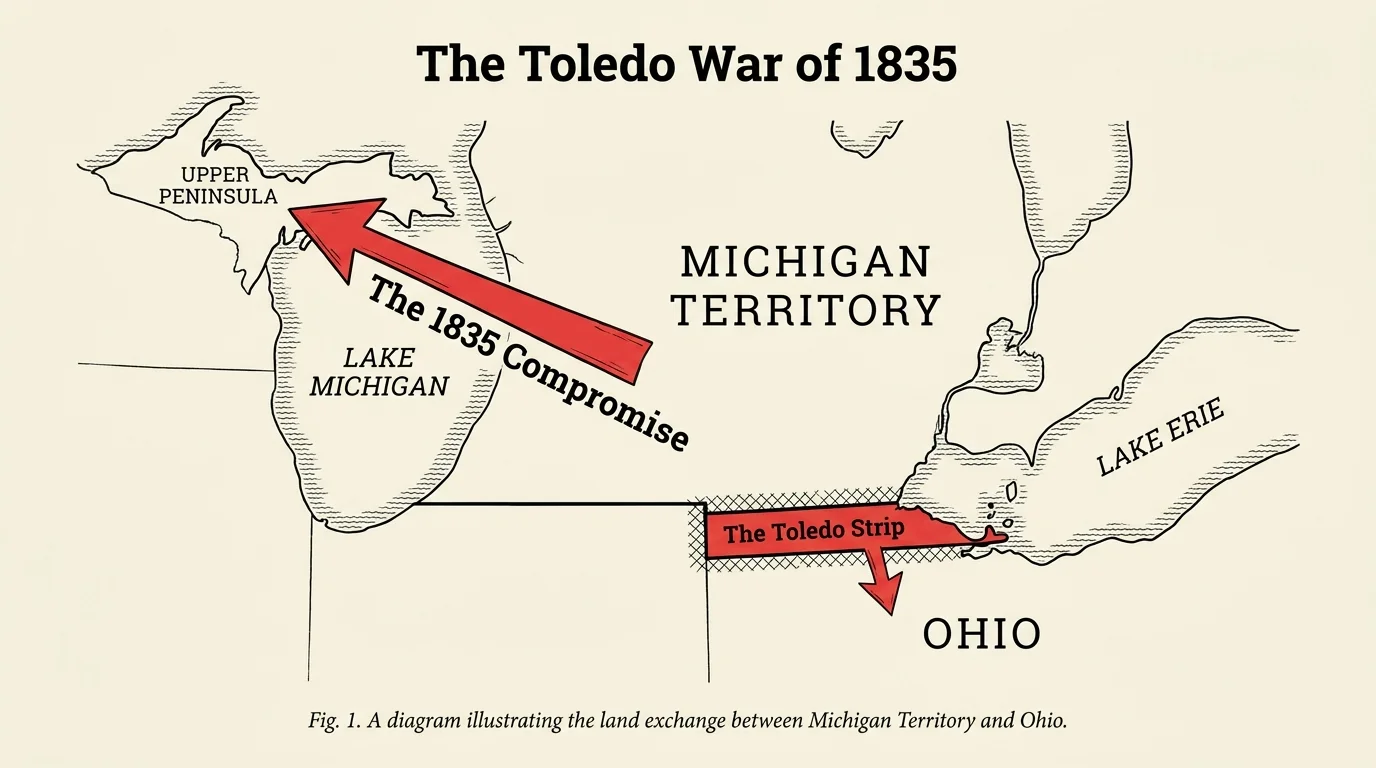
Cartographic errors rarely spark armed conflicts, but a mistaken map almost led to a bloody civil war between the established state of Ohio and the young Michigan Territory. The bizarre dispute centered heavily on the Toledo Strip, a narrow piece of land at the mouth of the Maumee River. Both sides claimed the territory, recognizing its immense economic value as a strategic shipping port on the Great Lakes. Partisan state militias mobilized rapidly, surveyed the disputed border under armed guard, and engaged in a series of bloodless skirmishes that history later dubbed the Toledo War.
President Andrew Jackson desperately intervened, needing Ohio’s crucial electoral votes to maintain his political party’s dominance. Congress proposed a rather bizarre compromise: Ohio would receive the contested Toledo Strip, and Michigan would be compensated with a massive, seemingly useless tract of snowy wilderness to the north, known today as the Upper Peninsula. Michigan reluctantly accepted the unequal deal in order to achieve official federal statehood.
At the time, Michiganders felt deeply cheated by the federal government. However, this forgotten boundary dispute completely altered the industrial map of the United States. The Upper Peninsula turned out to hold some of the richest copper and iron ore deposits in the world. These vast, untapped resources directly fueled the booming American Industrial Revolution. The heavy steel that built the expansive railroads, the suspension bridges, and the soaring skyscrapers of the late nineteenth century originated primarily in the rugged hills of the Upper Peninsula. This peculiar historical feud demonstrates perfectly how seemingly minor political concessions can inadvertently shape the economic destiny of a massive nation.